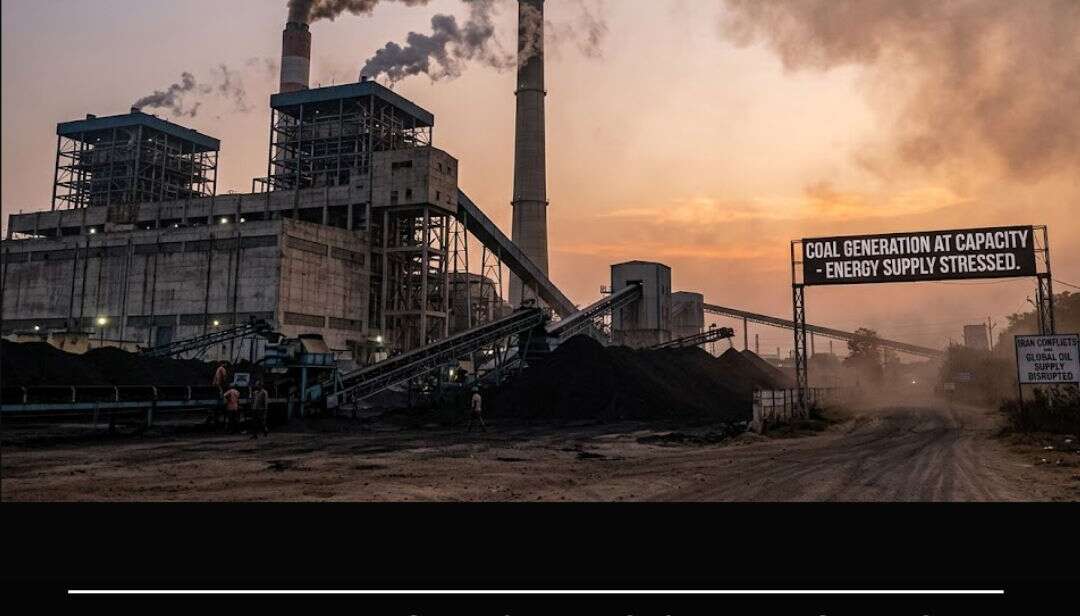
A brutal convergence of record-breaking heat and a war-driven energy shock is pushing India deeper into coal dependency — straining the world’s most populous nation at the precise moment its energy grid can least afford it. India’s power demand smashed through its all-time record on April 25, 2026, hitting 256 gigawatts (GW) — weeks ahead
A brutal convergence of record-breaking heat and a war-driven energy shock is pushing India deeper into coal dependency — straining the world’s most populous nation at the precise moment its energy grid can least afford it.
India’s power demand smashed through its all-time record on April 25, 2026, hitting 256 gigawatts (GW) — weeks ahead of the typical June-July peak season. With temperatures across northern and western states routinely exceeding 45°C, and the Iran war choking off critical fuel imports, coal has become the one lever India can actually pull.
A Grid Under Siege From Two Directions
The crisis gripping India’s energy system has two distinct but interlocking causes.
The first is heat. On April 27, air quality monitoring platform AQI reported that all 50 of the world’s hottest cities were located inside India — a staggering data point that underscores the severity of this summer’s conditions. Temperatures have reached 47.4°C in parts of the country, driving an explosion in air conditioning demand that power grids were not designed to absorb at this scale or this early in the season. Analysts now warn peak demand could surge to 270 GW — and potentially hit 283 GW if extreme heat persists.
The second cause is geopolitical. The US-Israeli strikes on Iran in late February 2026, and the subsequent closure of the Strait of Hormuz, triggered a fuel supply crisis that has hit India harder than almost any other country. As the world’s third-largest oil importer, India relied on Hormuz transit routes for approximately 41% of its crude oil imports, 55% of its LNG imports, and a staggering 88% of its LPG imports in the first nine months of FY2026. That pipeline has now been effectively severed.
Coal: India’s Shock Absorber of Last Resort
With LNG spot prices in Asia surging over 140% since the conflict began and crude supply from the Gulf disrupted by an estimated 3 million barrels per day, India’s energy planners have reached for their most reliable — if most carbon-intensive — resource.
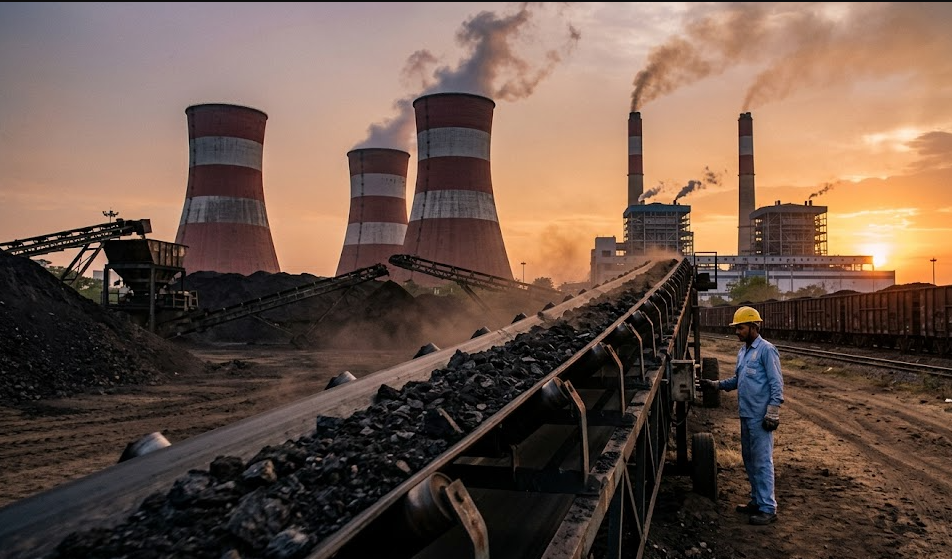
More than 70% of India’s electricity already comes from coal-fired plants, and that share is now rising. India’s Power Minister ordered coal-fired stations to operate at full capacity for a three-month period beginning April 1, anticipating the summer surge. The coal demand from power plants alone is projected to climb 11.5% in the April-to-June quarter.
The ripple effect extends beyond electricity generation. Petroleum coke — widely used as an industrial fuel — has seen supply chains severed by the Hormuz closure. Indian cement manufacturers, which import nearly half their petcoke from Saudi Arabia and the UAE, have been forced to pivot rapidly to coal as a substitute, intensifying demand further. The steel sector is absorbing its own shock: coking coal prices have risen sharply since March, with capesize freight rates jumping from $9.80 to $12.20 per tonne in the early weeks of the conflict alone.
The Supply Side Is Cracking
What makes the situation particularly precarious is that demand is surging precisely as domestic coal supply faces its own pressures. State-owned Coal India — the backbone of the country’s fuel infrastructure — reported a 9.7% decline in production for April, raising concerns about whether stockpiles will hold through the peak summer months. Compounding this, approximately 21 GW of coal and nuclear capacity remains offline due to maintenance shutdowns and forced outages.
For ordinary households, the consequences are already tangible. India has over 330 million LPG connections — cooking gas that is a daily necessity for hundreds of millions of families. Booking gaps of up to 45 days, cylinder shortages in multiple cities, and black-market prices reportedly reaching Rs 4,000 to Rs 5,000 per cylinder paint a picture of energy stress that goes far beyond power plants and industry dashboards.
The Long-Term Reckoning
India’s finance ministry has already flagged that its GDP growth forecast of 7.0%–7.4% for the financial year ending March 2027 faces “considerable downside risk” from rising energy costs and supply chain disruptions. Analysts at the Institute for Energy Economics and Financial Analysis (IEEFA) note, however, that the crisis is also accelerating a broader conversation about India’s renewable energy pathway — an irony of a coal surge potentially hastening the transition away from it.
For now, though, India is burning more coal. Not by choice, but by necessity — caught between a sky that won’t cool down and a sea lane that won’t open up.
Market Analysis
A quick snapshot of market trends, customer behavior, and competitor movements.