Share This Article
When the United States and Israel launched Operation Epic Fury against Iran on February 28, 2026 assassinating Supreme Leader Ali Khamenei and striking military, nuclear, and government targets across the country the strategic goals were defined and the military objectives were clear. What nobody fully anticipated was everything that came next: a cascade of consequences that have rippled from the Persian Gulf to European supermarkets, from ammunition factories to the global fertilizer supply, from mortgage rates in Ohio to drinking water in Kuwait.
Sixty days into the conflict, the Iran war has become something far larger and more complex than any pre-war planning assumed.
The Weapon of Mass Disruption Nobody Expected
The most penetrating assessment of the war’s unintended consequences came from an International Crisis Group director, who observed with blunt precision: “In the attempt to prevent Iran from developing a weapon of mass destruction, the US handed Iran a weapon of mass disruption.”
That weapon is the Strait of Hormuz the narrow channel through which approximately 20% of the world’s oil and gas supplies normally flow. Iran’s decision to close and contest the strait has triggered what the International Energy Agency has described as the largest oil supply disruption in the history of the global energy market. With traffic collapsing by 95% and a dual US-Iran blockade now in place, the chokepoint has proven to be Tehran’s most powerful weapon one that costs nothing to activate and affects everyone on earth.
Energy Shock: From Gulf to Gas Pump
The energy consequences landed fast. By March 31, 2026, petrol prices in the United States hit $4 per gallon a 30% surge in weeks. European gas storage, already at just 30% capacity following a harsh 2025–2026 winter, was hit hardest: Dutch TTF gas benchmarks, the European energy pricing benchmark, nearly doubled to over €60 per megawatt-hour by mid-March. Goldman Sachs now forecasts Brent crude averaging above $120 per barrel in Q3 2026 if the Hormuz closure persists. Vitol’s CEO has estimated that one billion barrels of oil production will ultimately be lost because of the conflict.
The Global Food Crisis Nobody Saw Coming
Perhaps the single most alarming consequence that escaped pre-war analysis is the threat to the global food supply and it has nothing to do with bombs.
Roughly 50% of global fertilizer feedstock, including the nitrogen, phosphorus, and sulfur compounds that grow food for 1.8 billion people, transits the Strait of Hormuz. Approximately one-third of all global seaborne fertilizer trade passes through that same channel. Since the strait effectively closed in early March, nitrogen and phosphate fertilizer prices have risen 20% to 40%. Urea a critical nitrogen fertilizer jumped from $400–490 per metric ton to approximately $700 per metric ton at Egyptian export points. Sulfuric acid prices are now 30% above pre-war levels.

Here are Some Related Blogs to Read
- NATO chief calls US strikes on Iran “absolutely necessary”
- Will gold rally as US-Iran tensions escalate
- Oil jumped but the market stayed calm
- 5 takeaways from Tuesday’s 2026 primaries
- US tariff system reset across 60 economies
- Trump tariffs Section 122 surcharge expires
- Trump had deliberately paused Hormuz operations to force Iran into a deal.
- JD Vance claims Hegseth has been misleading Trump on the Iran war.
- Iran has been digging out hidden missile stockpiles after rejecting Trump’s peace offer.
The downstream effects are already visible. India, which depends heavily on imported fertilizer inputs, faces potential shortfalls heading into its critical monsoon growing season. Brazil, which imports approximately 85% of its fertilizer to sustain the agricultural production that feeds much of South America, faces severe cost exposure. The International Food Policy Research Institute has warned that grocery prices could rise 1% to 3% by late 2027 a slow-moving food crisis hiding beneath the more immediately visible energy headlines.
Tungsten, Semiconductors, and the Critical Materials Shock
Less reported but equally consequential is the global tungsten crisis triggered indirectly by the conflict. China, which controls approximately 80% of global tungsten production, responded to the war’s broader geopolitical dynamics by restricting exports of the metal. Tungsten prices surged more than 50% in March 2026 and have more than tripled since December 2025.
Tungsten is not an esoteric commodity. It is critical to armor-piercing ammunition, semiconductor manufacturing, photovoltaic solar panels, aerospace components, precision drilling equipment, and high-end manufacturing of virtually every kind. Its sudden scarcity and price explosion has sent shockwaves through defence supply chains and technology manufacturers simultaneously an intersection that military planners did not model when calculating the costs of going to war with Iran.
The Human Toll and Humanitarian Catastrophe
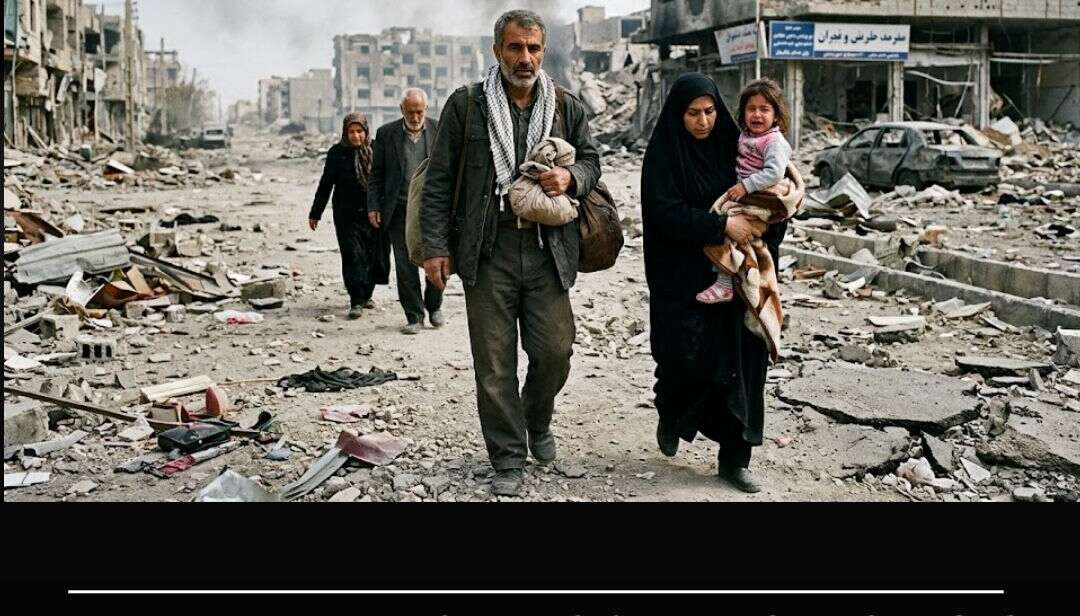
Behind the economic data is a human catastrophe. The Human Rights Activists in Iran documented 3,636 deaths in Iran from strikes as of April 7 comprising 1,701 civilians, 1,221 military personnel, and 714 unclassified individuals. Among the dead were at least 254 children.
The single most devastating civilian event occurred on the war’s first day, February 28, when a missile strike destroyed the Shajareh Tayyebeh girls’ elementary school in southern Iran, killing 156 people 120 of them schoolchildren. It is a number that has galvanised international humanitarian organisations and fuelled protest movements across the Muslim world.
On the infrastructure front, 307 health, medical, and emergency care facilities have been damaged or destroyed. Iranian retaliatory strikes on Gulf desalination plants which supply 99% of Kuwait’s and Qatar’s drinking water introduced a dimension of civilian vulnerability to water security that no post-conflict reconstruction plan had accounted for.
IMF Warns of Global Recession
The International Monetary Fund, in its starkest assessment since the 2008 financial crisis, warned in April 2026 that the world may be headed for a recession if the Iran war’s energy and supply disruptions persist. The IMF revised global growth to 3.1% for 2026, with an adverse scenario projecting a fall to 2.5% and a severe scenario bringing that figure to 2% effectively a global recession by any measure. Global inflation is projected at 4.4%, rising to 5.4% in the adverse case. In a sobering addendum, the IMF noted that even if the war were resolved immediately, the world would still face an oil shortfall for the remainder of 2026.
NATO’s Hidden Vulnerability Exposed
One of the most consequential strategic revelations of the conflict has been what it has exposed about NATO’s readiness. The US-Israel war on Iran has laid bare the alliance’s ammunition shortage, underpowered naval capacity, and gaps in air superiority revealing, according to one European defence analysis, that NATO is not prepared for a hypothetical conflict with Russia. Resources consumed in Operation Epic Fury including the missile stockpile drain that has privately alarmed Vice President JD Vance are resources unavailable for deterrence in Europe.
The Iran war was conceived as a regional operation. Its consequences have turned out to be planetar touching food, water, energy, defence, finance, and diplomacy in ways that are still unfolding. The question of how this ends has never felt more open.

Oil & Energy Markets
A look at crude price swings, OPEC supply moves, and how energy markets react to geopolitical shocks.

Geopolitics & Conflict
Breaking down how wars, ceasefires, and diplomatic deals ripple through global trade and security.
US Foreign Policy
Coverage of Trump administration negotiations, sanctions, and strategic decisions shaping world events.
Economy & Inflation
Tracking how commodity prices, gas costs, and supply chains affect everyday consumers.