Share This Article
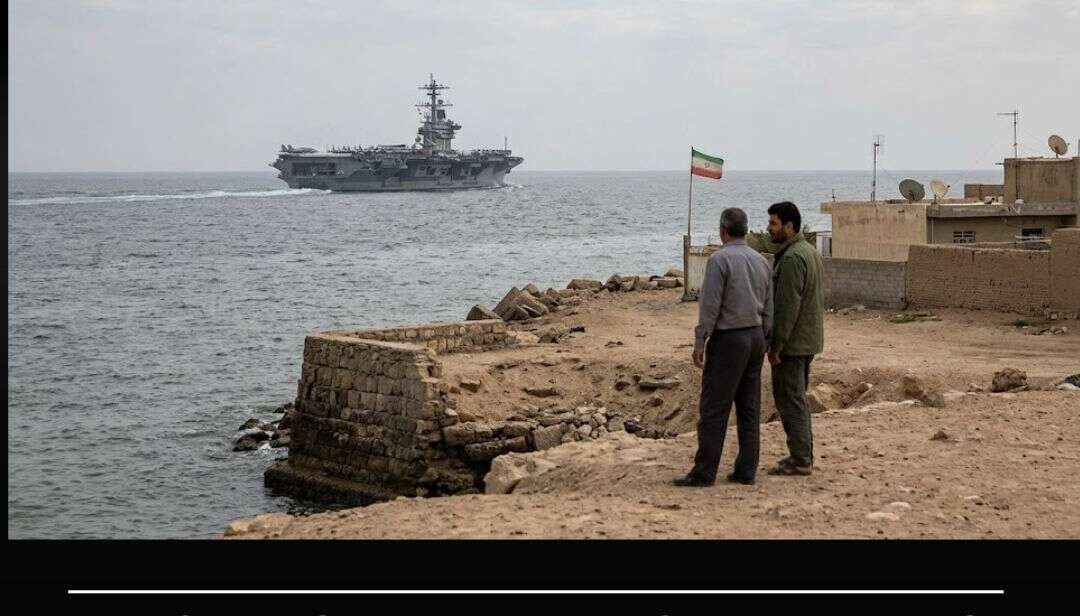
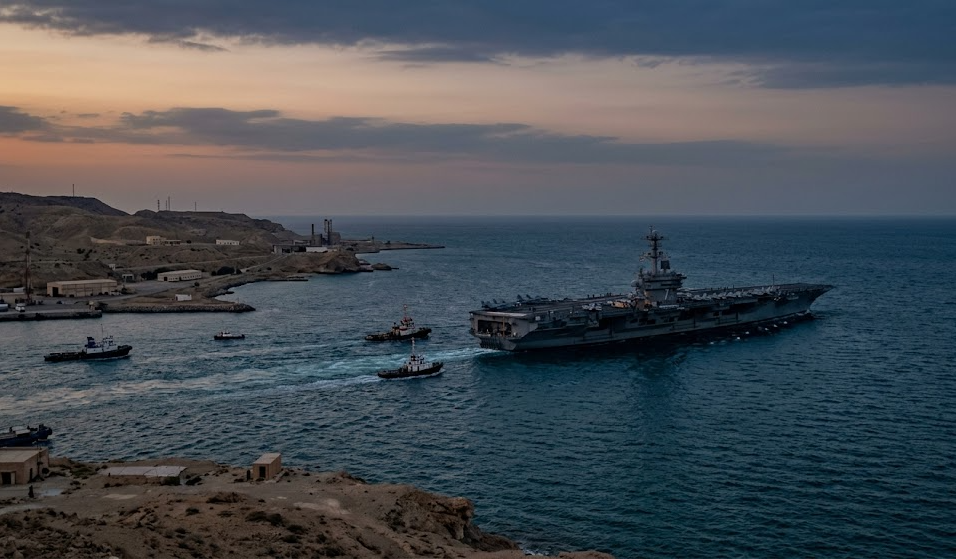
In a moment Tehran has seized on as proof of American vulnerability, the United States’ most powerful aircraft carrier the USS Gerald R. Ford is preparing to leave the Middle East combat zone, drawing immediate ridicule from Iran’s military establishment and raising fresh questions about Washington’s staying power in its ongoing war with Iran mocks.
The departure, first reported by The Washington Post on April 29, 2026, marks the end of a record-breaking ten-month deployment for the world’s largest warship. It also reduces the United States’ forward military firepower at a moment when peace negotiations remain deadlocked, the naval blockade of Iranian ports continues, and Tehran is signalling anything but surrender.
Iran Calls It What the Pentagon Won’t: A Retreat
Iranian officials wasted no time. The Islamic Revolutionary Guard Corps (IRGC) Iran’s elite military force moved swiftly to frame the Ford’s exit as a strategic humiliation for Washington, directly targeting Trump’s carefully constructed image of maximum military pressure.
Here are Some Related Blogs to Read
- NATO chief calls US strikes on Iran “absolutely necessary”
- Will gold rally as US-Iran tensions escalate
- Oil jumped but the market stayed calm
- 5 takeaways from Tuesday’s 2026 primaries
- US tariff system reset across 60 economies
- Trump tariffs Section 122 surcharge expires
- Trump had deliberately paused Hormuz operations to force Iran into a deal.
- JD Vance claims Hegseth has been misleading Trump on the Iran war.
- Iran has been digging out hidden missile stockpiles after rejecting Trump’s peace offer.
In an official statement, the IRGC declared that the USS Gerald Ford’s withdrawal exposed what it called “the hollowness of the arrogant powers’ material strength.” The statement was pointed and deliberate: “The dispatch of this vessel to the region with the uproar and extensive propaganda of American military officials and Western media, and its questionable exit at the peak of the war in the media silence of the arrogant American military officials, cannot hide the desperate and humiliating state of the American and Zionist warmongers.”
The IRGC went further still, mocking the stated reason for the carrier’s departure damage from a fire in the ship’s laundry room on March 12. “What kind of military giant is this,” the IRGC asked publicly, “that faces a crisis and is forced to leave the battlefield due to a fire occurring in its laundry room?” Iranian state media framed the departure as Tehran claiming a symbolic victory over the $13 billion warship the most expensive naval vessel ever built.
Why the Ford Is Leaving
The US military’s official position is straightforward: the USS Gerald R. Ford has been at sea for ten months a record-breaking deployment and requires repairs and maintenance. Military analysts broadly accept this explanation, noting that even the most advanced naval vessels require periodic upkeep after extended high-tempo operations.
The fire on March 12 contributed to the timeline. Damage was sustained during combat operations, and the ship’s extended presence in the Red Sea during the most intensive phase of America’s war with Iran placed extraordinary demands on its systems and crew. Stars and Stripes reported the carrier is expected to return to Newport News, Virginia, for servicing.
But the timing is hard to ignore. The Ford is departing as Iran talks stagnate, the ceasefire holds but grows increasingly fragile, and Trump’s team is internally divided with Vice President JD Vance privately questioning whether Defense Secretary Hegseth has been fully honest with the President about the war’s costs and Iran’s retained military capabilities.
Two Carriers Remain But the Gap Is Felt
The Pentagon’s public posture is that the Ford’s exit does not represent a weakening of American resolve. Two other carrier strike groups remain fully deployed in the region: the USS George H.W. Bush and the USS Abraham Lincoln, both operating in the Arabian Sea to enforce the US blockade of Iranian ports. Together, they constitute a formidable force and the US military still maintains three times the naval presence in the region than it did before Operation Epic Fury began on February 28.
But military analysts note that the departure does reduce the breadth of options available to Trump should he decide to escalate. The Ford had been operating in the Red Sea, providing coverage over a different geographic vector than the two Arabian Sea-based carriers. Its exit narrows the strike envelope at precisely the moment Trump has said he is “reviewing military options” in response to Iran’s continued defiance over the Strait of Hormuz.
US Jets, Russian Probes: A Second Front in the Air
While attention is focused on the Gulf, America’s military is simultaneously managing provocations in a completely different theatre. NORAD has scrambled fighter jets on multiple occasions in 2026 to intercept Russian aircraft operating near Alaska’s Air Defense Identification Zone.
In February, US jets intercepted Russian aircraft comprising two Tu-95 bombers, two Su-35 fighters, and an A-50 spy plane operating in the Alaskan ADIZ with F-16s, F-35s, and KC-135 tankers deployed in response. A second incident in March saw US F-35s and F-22s scrambled alongside Canadian CF-18s to intercept two Russian Tu-142 maritime patrol aircraft in both the Alaskan and Canadian ADIZs. NORAD characterised both incidents as routine, noting the Russian aircraft remained in international airspace and did not enter US or Canadian sovereign territory.
The dual pressure Iran in the south, Russia probing the north paints a picture of an American military managing simultaneous demands across hemispheres, at a time when its most storied aircraft carrier is heading home for repairs.
Iran’s Defiance Shows No Sign of Softening
Beyond the IRGC’s rhetorical salvos, Iran’s political class has been equally unyielding. Parliament Speaker Mohammad Bagher Ghalibaf stated that Trump, “by imposing a blockade and violating the ceasefire, seeks to turn the negotiating table into a table of surrender.” Iran’s Foreign Ministry spokesperson Esmail Baghaei declared: “We are determined to defend our national security and sovereignty with all might.”
Trump, for his part, has warned Iran to “get smart soon” and posted an AI-generated image of himself holding a rifle on Truth Social a posture that Iranian officials have publicly dismissed as “sheer desperation and anger.” The ceasefire holds. The blockade holds. The war, as Iran’s own army spokesman made clear days ago, is not over.
And now, the world’s largest aircraft carrier is sailing away from it.

Oil & Energy Markets
A look at crude price swings, OPEC supply moves, and how energy markets react to geopolitical shocks.

Geopolitics & Conflict
Breaking down how wars, ceasefires, and diplomatic deals ripple through global trade and security.
US Foreign Policy
Coverage of Trump administration negotiations, sanctions, and strategic decisions shaping world events.
Economy & Inflation
Tracking how commodity prices, gas costs, and supply chains affect everyday consumers.