Share This Article
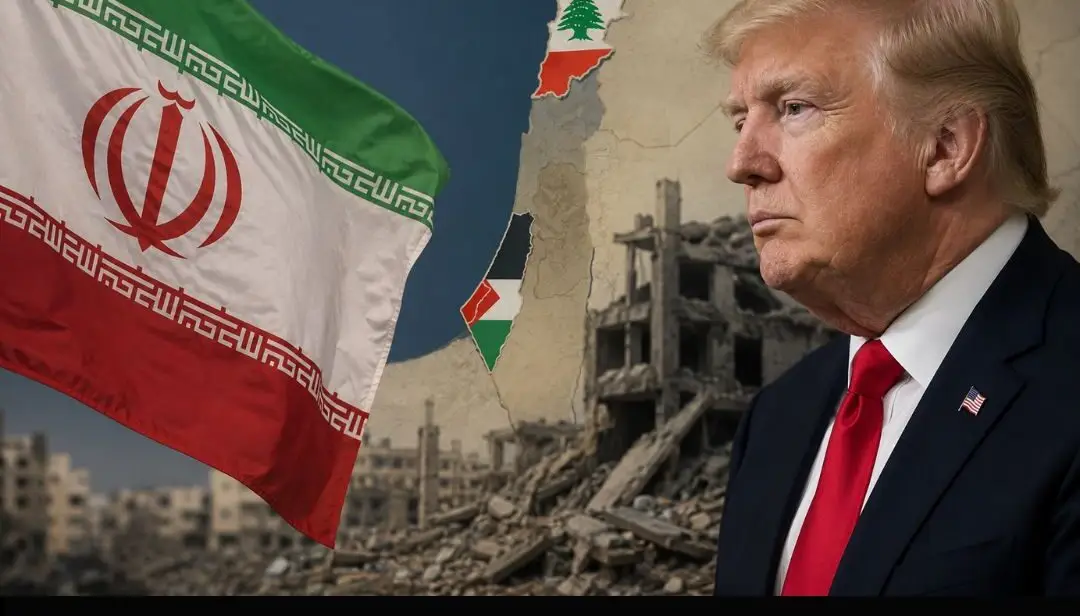
When Iran halted US-Iran talks on June 1, 2026 citing Israeli military actions as a violation of ceasefire terms it was not Gaza that triggered the walkout. It was Lebanon. That distinction is not incidental. It is the clearest signal yet of how Tehran has internally ranked its strategic priorities as it navigates the most consequential US peace deal negotiations of the decade.
Lebanon, Iranian Foreign Ministry officials have stated explicitly, is non-negotiable: “Stopping the war on all fronts, including Lebanon, will be one of the elements of the possible understanding.” Gaza, by contrast, barely features in Iran’s core demands. Understanding why requires understanding what Hezbollah means to Iran — and what Iran would lose without it.
Lebanon Is Iran’s Insurance Policy
The strategic logic is not complicated once you see it clearly. Lebanon hosts Hezbollah Iran’s most powerful, best-armed, and most operationally sophisticated proxy force. Hezbollah is not merely a militia. It is Iran’s primary military deterrent against Israeli aggression, a decades-long investment of training, weapons, funding, and political architecture that gives Tehran direct leverage on Israel’s northern border without Iranian troops ever crossing a boundary.
Hamas in Gaza is a different calculation entirely. It is geographically isolated, operationally battered after years of conflict, and maintains a looser ideological alignment with Tehran than the Shia-linked Hezbollah. Hamas’s battlefield position in 2026 with Israeli forces now controlling approximately 59–60% of Gaza territory makes it a diminishing asset in any negotiating framework. Iran cannot credibly threaten Israel through a Gaza front that is being progressively dismantled.
As The National’s analysis concluded: “Lebanon is no longer merely a peripheral theatre of regional competition. It has become one of the variables capable of influencing the outcome of US-Iran negotiations.”
Lebanon as a Bargaining Chip and Lebanon’s Own Response
The clearest articulation of this dynamic came from an unexpected source. Lebanese President Joseph Aoun, in a CNN exclusive on June 5, 2026, publicly accused Iran of deliberately using Lebanon as a bargaining chip to strengthen its negotiating position against Washington a rare moment of a regional leader directly calling out Tehran’s strategic exploitation of his own country’s suffering.
The accusation landed because it is accurate. Iran’s parliament speaker Mohammed Bagher Qalibaf, who participated in the highest-level direct US-Iran diplomatic engagement since 1979, stated plainly that any US negotiations would be “unreasonable” if the Israel-Hezbollah conflict were to continue. Iran’s five-point counter-proposal explicitly demands an end to US-Israeli attacks on Iran and pro-Iranian forces in Lebanon and Iraq Hezbollah is named by theatre, not by name, but the reference is unambiguous.
On June 4, Hezbollah itself rejected the Israel-Lebanon ceasefire deal agreed between the two governments. Hezbollah leader Naim Kassem called the agreement “absurd, humiliating and insulting” and a “surrender.” Iran’s threat to withdraw from negotiations had already successfully halted at least one Israeli planned attack on Beirut demonstrating, in real time, that Lebanon is the lever Tehran is pulling hardest.
The Deal Framework: What Iran Is Actually Asking For
The US peace deal framework that has been circling since late May 2026 includes a proposed memorandum of understanding offering a 60-day ceasefire extension, reopening of the Strait of Hormuz, sanctions relief, release of frozen Iranian funds, and a proposed $300 billion international investment fund for Iran’s postwar reconstruction, according to i24NEWS reporting on negotiation details and confirmed by Iranian MP statements to Iran International.
Iran’s counter-demands include security guarantees against future Israeli and US aggression, war reparations, and critically international recognition of Iranian sovereignty over the Strait of Hormuz. The US has rejected the sovereignty framing while insisting on unrestricted passage as a non-negotiable term.
Where Gaza fits in this framework: it largely does not. Iran’s demands center on Lebanon, Iraq, nuclear program terms, and economic sanctions not the Gaza ceasefire, which is being managed through a separate diplomatic track involving Qatar, Egypt, and US envoys. NPR’s coverage of Iran halting talks confirmed that Lebanon, not Gaza, was the stated trigger for Iran’s negotiating suspension.
The Ukraine Parallel: When Peace Deals Overlap
Iran is not the only party testing Washington’s capacity to manage simultaneous peace negotiations in 2026. The Trump administration is simultaneously pursuing a US-Russia peace deal for Ukraine, with Trump reportedly pushing for a framework finalized by June before midterm election pressures intensify. Second-round negotiations were held in Abu Dhabi, mediated by envoys Steve Witkoff and Jared Kushner, with the US proposing Ukrainian-Russian talks in Miami.
Russia, like Iran, has not budged on core territorial demands. Ukraine, like Lebanon, finds itself being shaped by great power negotiations it does not fully control. Carnegie Endowment analysts have warned that the template being set in US-Iran and US-Russia negotiations where smaller states become variables in bilateral frameworks between Washington and adversarial powers carries long-term risks for the international rules-based order that extend well beyond any individual ceasefire.
Why This All Comes Back to Hezbollah
Iran’s core calculation is existential rather than tactical. The Axis of Resistance Hezbollah, Hamas, Houthi forces in Yemen, and Iraqi Shi’ite militias has been the architecture of Iranian deterrence for four decades. It has absorbed enormous damage in 2025 and 2026. If Iran emerges from these negotiations without securing Hezbollah’s survival as a viable military force, it loses the deterrence architecture that has kept direct war with Israel at bay for years.
Gaza, in that framework, is a cause Iran publicly champions but privately ranks lower. Lebanon is the line. Which is why, as CBS News reported, Iran continues to report “no tangible progress” in talks not because negotiators aren’t talking, but because the gap on Lebanon, Hezbollah, and what a post-war regional order looks like remains wider than any draft MOU has yet bridged.
Until that gap closes, the Strait of Hormuz stays closed and Lebanon stays at the center of a US peace deal that the world is watching Iran construct on its own strategic terms.

Oil & Energy Markets
A look at crude price swings, OPEC supply moves, and how energy markets react to geopolitical shocks.

Geopolitics & Conflict
Breaking down how wars, ceasefires, and diplomatic deals ripple through global trade and security.
US Foreign Policy
Coverage of Trump administration negotiations, sanctions, and strategic decisions shaping world events.
Economy & Inflation
Tracking how commodity prices, gas costs, and supply chains affect everyday consumers.