Share This Article
A brief pause in the 2026 Iran war has collapsed. After Iranian forces launched what US Central Command called a surprise missile attack on American forces in the region, the United States hit Iran with a heavy wave of retaliatory strikes overnight. Here is a plain-language account of what happened, why the de-escalation broke down, and what to watch next. Facts in an active conflict change quickly; figures below are attributed and should be treated as provisional.
What happened
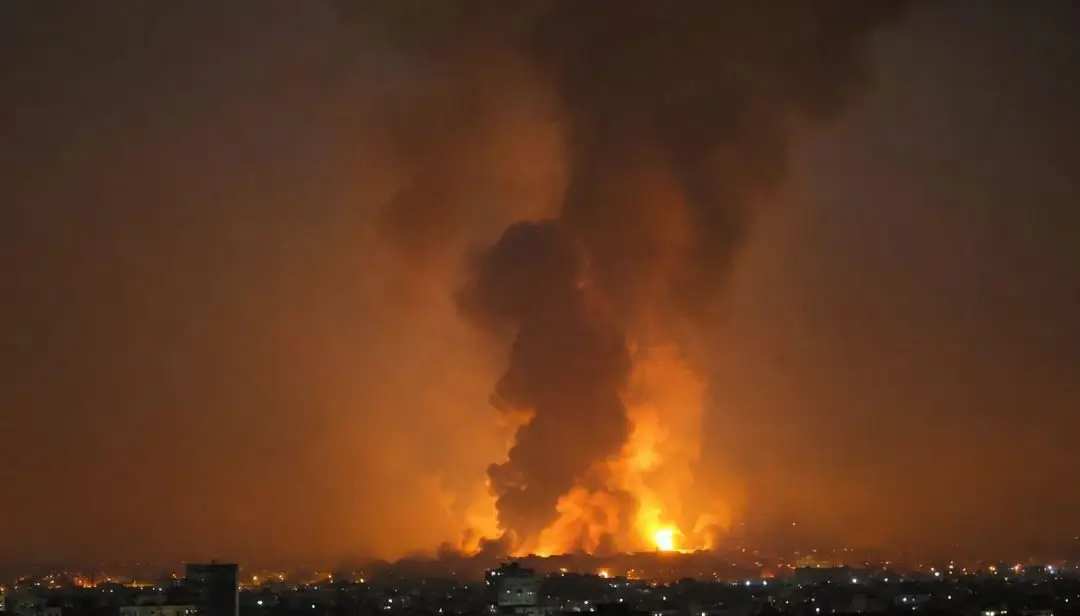
The United States carried out a major wave of strikes on Iran late on Wednesday, 29 July, in retaliation for an Iranian missile attack on American forces earlier in the week. US Central Command, which runs American military operations in the Middle East, described the two-hour operation as a powerful response and said it struck dozens of Iranian Revolutionary Guard Corps targets across the country.
The strikes punctuated a multiday pause in the fighting, the latest attempt to wind the war down after months of on-and-off combat. According to CENTCOM, the American operation hit military command centers, missile and drone facilities, coastal surveillance and air-defense sites, and maritime capabilities, with the stated aim of degrading Iran’s ability to threaten U.S. forces, commercial shipping and neighboring Gulf states.
The sequence: how the pause broke
The immediate trigger was an Iranian missile attack. The mutual halt in US Iran strikes broke down on the night of 28–29 July when Iranian forces launched multiple ballistic missiles at US troops in what CENTCOM called an attempted surprise attack. American commanders said all the missiles aimed at US personnel were intercepted.
President Donald Trump signaled a forceful reply before the strikes were carried out, telling reporters the US would hit Iran hard. The retaliatory wave followed hours later.
The sequence is contested, as it often is in this war. Iran has pointed to earlier US and allied strikes as provocations, and independent analysts note that joint US Saudi strikes on Iran-aligned militias in Iraq preceded the Iranian missile launch. Readers should treat each side’s account of who escalated first with caution; this article records the reported sequence rather than endorsing either side’s framing.
The war has widened beyond Iran
This was not an isolated exchange. In the same window, the confrontation spread across the region:
Joint US and Saudi forces struck Iran-aligned militia sites in eastern Iraq, after those groups were blamed for targeting oil facilities in and around Riyadh and Saudi Arabia’s Eastern Province. Yemen’s Houthis claimed attacks on Saudi pipeline infrastructure feeding the Red Sea export terminal at Yanbu. And throughout the war, Iran has repeatedly targeted the Gulf states that host US forces including Bahrain, home to the US Navy’s Fifth Fleet, as well as Kuwait and Jordan with missile and drone barrages.
The diplomatic backdrop
The strikes came against an unusually active diplomatic backdrop. Israeli Prime Minister Benjamin Netanyahu met President Trump at the White House for a meeting on the Iran war that the White House described as productive. The 2026 war began as a joint US and Israeli operation against Iran in late February, so coordination between the two governments remains central to how it unfolds.
Separately, President Trump pressed lawmakers to amend a Russia sanctions bill so that it would also give him authority to impose tariffs on Iran, a sign that economic pressure is being folded into the military campaign.
Why de-escalation keeps failing
This is the second time a pause in the war has collapsed. An earlier ceasefire and a June memorandum of understanding both gave way to renewed fighting, with the Strait of Hormuz the narrow shipping lane through which much of the world’s oil moves as the recurring flashpoint. Each attempt to freeze the conflict has run into the same problem: neither side fully trusts the other to hold fire, and a single incident at sea or a single missile launch is enough to restart the cycle.
That pattern is why analysts have been reluctant to call any pause a turning point. A halt in strikes is not a settlement, and until there is a durable agreement over the strait and over each side’s red lines, the risk of another collapse remains.
Why it matters beyond the region
Every escalation in this war reaches well beyond the Middle East, mainly through oil. When strikes threaten the Strait of Hormuz, crude prices rise worldwide, and that feeds through to gasoline and diesel prices for ordinary drivers. A renewed round of fighting like this one tends to push prices back up after any relief: see our explainer on why geopolitics moves oil prices, and our live oil price tracker.
What to watch next
Three things will signal where this goes. First, whether Iran responds again to the U.S. retaliation, or absorbs it and returns to the pause. Second, the Strait of Hormuz any new attack on shipping there would widen the conflict fast. Third, the diplomatic track: whether the Netanyahu–Trump coordination and the sanctions-and-tariff pressure push toward a deal or harden positions. Watch for confirmation from primary sources rather than early, unverified claims from either side.
- On first mention of the war → Israel’s Regional Conflicts Explained
- On the “how the war began” background → US–Iran Conflict Explained
- On the Strait of Hormuz → Why Geopolitics Moves Oil Prices
- On oil/gas prices → Oil Price Today tracker
Frequently Asked Questions
Did the U.S. strike Iran?
Yes. U.S. Central Command said American forces carried out a heavy wave of strikes on Iran late on 29 July 2026, describing it as a response to an Iranian missile attack on U.S. forces earlier in the week.
What triggered the U.S. strikes on Iran?
According to CENTCOM, the trigger was a surprise Iranian ballistic missile attack on American forces in the region, which broke a multiday pause in the fighting. The sequence is disputed, and Iran has pointed to earlier U.S. and allied strikes as provocations.
Was there an Iran missile attack on U.S. forces?
U.S. commanders said Iran launched multiple ballistic missiles at American troops and that the missiles aimed at U.S. personnel were intercepted. Independent confirmation of the full details was still developing at the time of writing.
Did the U.S. and Israel strike Iran together?
The 2026 war began as a joint U.S.–Israeli operation against Iran in February. This particular retaliatory wave was carried out by U.S. forces, but it followed a White House meeting between President Trump and Israeli Prime Minister Netanyahu on the war.
Was Bahrain hit in a missile attack?
Bahrain, which hosts the U.S. Navy’s Fifth Fleet, has been targeted repeatedly by Iranian missiles and drones during the 2026 war. Whether it was struck in this specific exchange should be confirmed against a current source, as some Gulf strike claims have been disputed.
Does this affect gas prices?
Likely, yes. Escalation that threatens the Strait of Hormuz tends to push crude oil and therefore gasoline and diesel prices higher. The size and timing of any move depends on how the fighting develops.
Is the war over or paused?
As of publication it had escalated again after a brief pause. Because the situation changes quickly, check the dated updates and a primary news source for the current status.
References and Sources
- U.S. Central Command (CENTCOM) — official operational statements and posts, for the description of the strikes and interceptions.
- Reuters and Associated Press — for the strike sequence and regional spread
- NPR — reporting on Iran’s strikes targeting Bahrain and Kuwait after U.S. strikes
- Al Jazeera — live coverage of the U.S.–Iran exchanges and Gulf-state strikes
- ABC News — CENTCOM casualty confirmations and regional missile reports
- The White House / official readouts — for the Netanyahu meeting and the tariff-authority request

Oil & Energy Markets
A look at crude price swings, OPEC supply moves, and how energy markets react to geopolitical shocks.

Geopolitics & Conflict
Breaking down how wars, ceasefires, and diplomatic deals ripple through global trade and security.
US Foreign Policy
Coverage of Trump administration negotiations, sanctions, and strategic decisions shaping world events.
Economy & Inflation
Tracking how commodity prices, gas costs, and supply chains affect everyday consumers.