Share This Article
The world’s most critical energy corridor remains effectively shut and the shipping industry says no ceasefire on paper will be enough to reopen it.
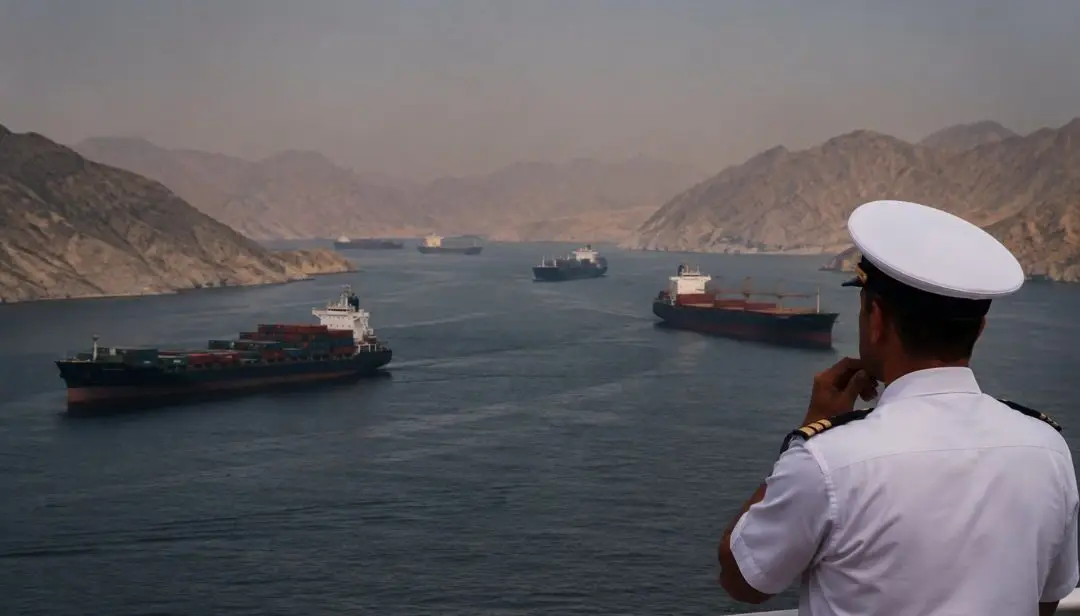
Nearly two months into the US-Iran war, the global shipping industry is sending a clear and unified message: vessels will not return to the Strait of Hormuz until passage is genuinely safe not just diplomatically declared so. Speaking at the Singapore Maritime Week conference on April 22, two of the world’s most powerful maritime executives laid out a blunt assessment of a crisis that is reshaping global trade, spiking oil prices, and exposing the fragility of the arteries that keep the world economy moving.
“No Reassurance Whatsoever”
Safe and sustainable passage through the Strait of Hormuz is what top shipping companies require before the world sees much oil or cargo leave or enter the Gulf, two top sector executives said on Wednesday. “Two weeks ago when the ceasefire, said to be temporary, came into picture, we thought there was hope. But in reality, the agreement was not translated into the safety and passage of the vessels,” said Jotaro Tamura, chief executive of Japan’s Mitsui O.S.K. Lines, one of the world’s largest shipping companies and the top owner of oil and LNG tankers.
Belgium’s CMB.Tech, a large diversified maritime company operating a fleet of more than 250 ships, echoed that uncertainty. “We cannot hedge. We just need to wait for what is going to happen in the Middle East,” CEO Alexander Saverys said on the sidelines of the Singapore conference. “We need to be confident that we can transit without having any issues. Today we have no reassurance whatsoever. We will only get the reassurance once we see that ships can pass through the straits in a safe and sustainable way.”
Both executives also pushed back on Iran’s reported plans to charge toll fees for transit. Tamura said MOL’s position was to follow international law, which is freedom of passage through the strait. Saverys said: “The Strait of Hormuz is a free passage where normally no toll should be paid.”
How the US-Iran War Closed the World’s Energy Jugular
Here are Some Related Blogs to Read
- NATO chief calls US strikes on Iran “absolutely necessary”
- Will gold rally as US-Iran tensions escalate
- Oil jumped but the market stayed calm
- 5 takeaways from Tuesday’s 2026 primaries
- US tariff system reset across 60 economies
- Trump tariffs Section 122 surcharge expires
- Trump had deliberately paused Hormuz operations to force Iran into a deal.
- JD Vance claims Hegseth has been misleading Trump on the Iran war.
- Iran has been digging out hidden missile stockpiles after rejecting Trump’s peace offer.
Shipping traffic through the Strait of Hormuz has been largely blocked by Iran since February 28, 2026, when the United States and Israel launched an air war against Iran and assassinated its supreme leader Ali Khamenei. On March 2, a senior IRGC official confirmed the strait was closed and threatened any ship that attempted to pass through it.
The consequences have been staggering. The International Energy Agency characterized the disruption as the “largest supply disruption in the history of the global oil market.” Iran’s closure of the Strait of Hormuz disrupted 20% of global oil supplies and significant liquefied natural gas volumes.
Global oil supply plummeted by 10.1 million barrels per day in March, with continued attacks on energy infrastructure in the Middle East and ongoing restrictions to tanker movements. Oil prices posted their largest-ever monthly gain in March. North Sea Dated crude was trading around $130 per barrel $60 above pre-conflict levels.
Wednesday brought fresh instability. Iran attacked at least three commercial ships in the Strait of Hormuz, just hours after President Trump extended a ceasefire with Iran while continuing a US naval blockade. The first ship suffered heavy damage to its bridge after being fired upon by an IRGC gunboat with no warning given. Iranian media reported that two vessels the MSC Francesca and the Epaminondas had been “seized.” NPR
A Ceasefire That Isn’t Holding
On Friday, Iran declared the Strait of Hormuz fully open to commercial traffic, sending crude prices tumbling more than 10%. By Saturday, hopes for a fully opened artery quickly unraveled as Tehran reclaimed control of the choke point after Trump refused to end the US naval blockade of Iranian ports.
The economic toll continues mounting. “The crisis is one of lost time and lost production,” said Rory Johnston, founder of Commodity Context, estimating supply disruptions of around 13 million barrels of crude, condensates, and natural gas liquids per day. “That cumulative effect has already breached above half a billion barrels.” Johnston warned that even an imminent deal announcement would not immediately unwind the damage.
As of April 9, Abu Dhabi National Oil Company CEO Sultan Al Jaber confirmed the strait was still not open despite the ceasefire, because Iran was restricting and conditioning traffic. He added that 230 loaded oil tankers are waiting inside the Gulf.
Beyond Oil: A Global Supply Chain Shock
The Iran-US war is not merely an energy crisis. Beyond oil, the conflict is disrupting key non-oil commodities methanol, aluminium, sulfur, and graphite impacting global manufacturing and the green energy transition. The Arabian Gulf accounts for at least 20% of all seaborne fertilizer exports, and 46% of global urea trade originates from the region.
Higher energy, fertilizer, and transport costs including freight rates, bunker fuel prices, and insurance premiums may increase food costs and intensify cost-of-living pressures, particularly for the most vulnerable, UNCTAD warned.
The Federal Reserve Bank of Dallas estimates that global real GDP growth in 2026 could fall by as much as 1.3 percentage points if the disruption persists for three quarters.
The Only Number That Matters
For now, every diplomatic development ceasefire announcements, peace talks in Islamabad, Trump’s extended deadline is being measured by a single benchmark in the shipping world: are vessels actually passing through safely?
The IEA was blunt in its April Oil Market Report: “Resuming flows through the Strait of Hormuz remains the single most important variable in easing the pressure on energy supplies, prices, and the global economy.”
The world is waiting. So are 230 tankers full of oil and the executives who own the ships that would carry them.

Oil & Energy Markets
A look at crude price swings, OPEC supply moves, and how energy markets react to geopolitical shocks.

Geopolitics & Conflict
Breaking down how wars, ceasefires, and diplomatic deals ripple through global trade and security.
US Foreign Policy
Coverage of Trump administration negotiations, sanctions, and strategic decisions shaping world events.
Economy & Inflation
Tracking how commodity prices, gas costs, and supply chains affect everyday consumers.