While the cameras of the world’s press were fixed on Islamabad — tracking Vance, watching oil prices, reading ceasefire tea leaves — Donald Trump quietly signed one of the most consequential domestic power moves of his second term. On March 31, 2026, Trump signed an executive order titled “Ensuring Citizenship Verification and Integrity in Federal
While the cameras of the world’s press were fixed on Islamabad — tracking Vance, watching oil prices, reading ceasefire tea leaves — Donald Trump quietly signed one of the most consequential domestic power moves of his second term.
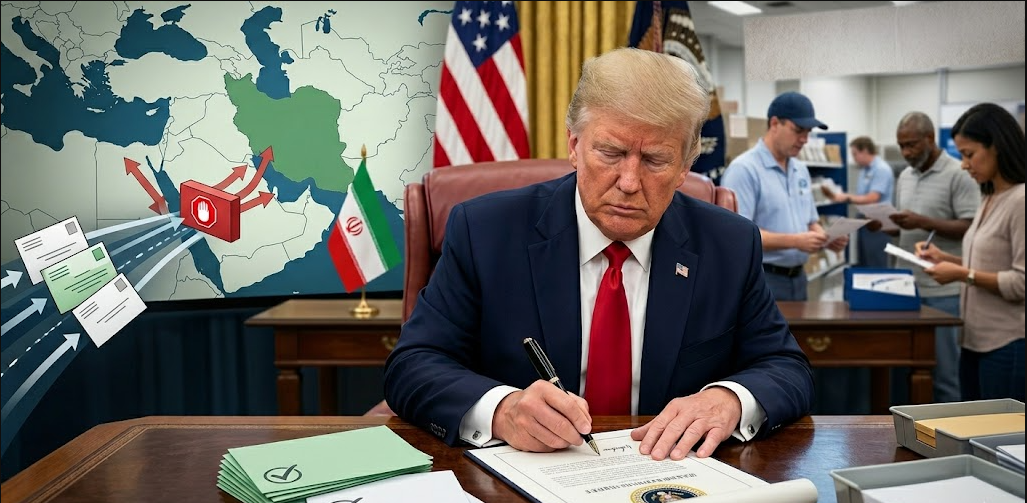
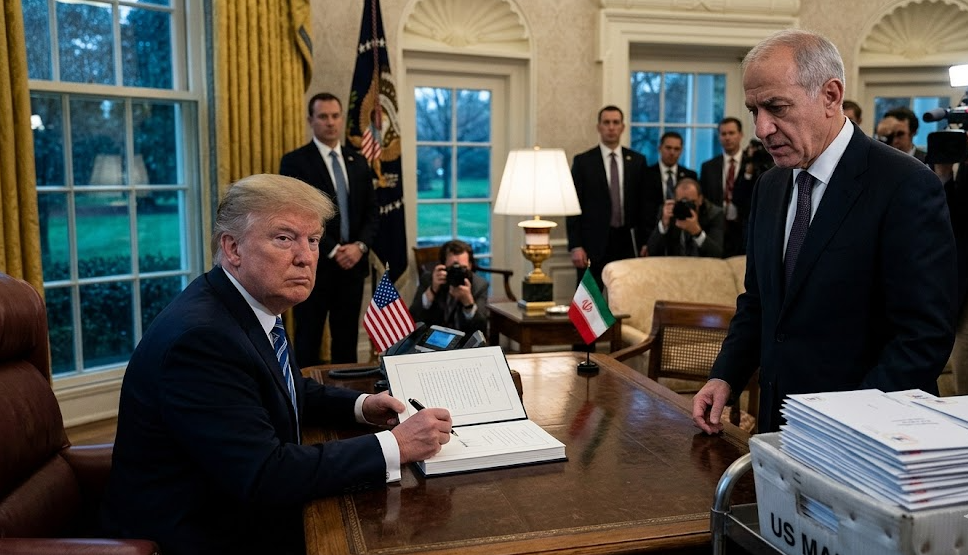
On March 31, 2026, Trump signed an executive order titled “Ensuring Citizenship Verification and Integrity in Federal Elections.” The order targets mail-in voting — the mechanism through which tens of millions of Americans cast ballots in every federal election — and sets in motion a sweeping restructuring of how absentee ballots are distributed, verified, and delivered ahead of the November 2026 midterms.
The timing was not accidental. The signing came as global attention was consumed by Iran war negotiations, oil market chaos, and the Islamabad talks. What might have generated weeks of sustained domestic opposition was instead processed as a secondary story, footnoted beneath ceasefire headlines.
What the Order Actually Does
The executive order contains three interlocking mechanisms, each one a significant intrusion into electoral territory the Constitution reserves for states and Congress — not the executive branch.
National voter list: DHS + SSA must create a federal list of all eligible U.S. voters (18+) and share it with states 60 days before elections — creating a new centralized system.
USPS control on ballots: Mail ballots will only be sent to voters on state-approved absentee lists, and all ballots must include USPS barcodes for tracking.
State reporting requirement: States must inform USPS 90 days before elections whether they will allow mail-in or absentee voting.
Taken together, the order transfers meaningful operational control over mail voting from states to the federal executive branch — a constitutional realignment that election law experts described as unprecedented in scope.
“He Lacks the Authority” – The legal verdict was swift and near-unanimous. NPR’s headline captured the expert consensus plainly: “Trump signs a new executive order on voting. Experts say he lacks authority.”
The Constitution’s Elections Clause reserves the “Times, Places and Manner” of federal elections to the states, with Congress — not the president — empowered to pass overriding federal rules. The executive branch has no enumerated role in rewriting election law. As the Brennan Center noted, “neither the Constitution nor any federal law gives the president the power to mandate widespread changes to states’ electoral systems.”
Federal courts had already said exactly this. Trump’s first election executive order, signed in 2025, was largely blocked by federal judges on precisely these grounds. That didn’t stop the second one. Democracy Docket called the new order “a sweeping attack on mail-in voting” that builds on the same constitutionally dubious framework already invalidated in court.
Within a week, at least four separate lawsuits had been filed. A coalition of 23 states — led by Pennsylvania Governor Josh Shapiro, joined by the attorneys general of California, Massachusetts, Nevada, and Washington — filed suit arguing the order “usurps state election powers” and would restrict mail-in access, threaten election officials with federal prosecution, and unconstitutionally shift control of elections from states to the White House. The Campaign Legal Center secured an early court victory halting portions of the order. Roll Call reported that courts were “likely to block” the remaining provisions.
The Midterm Calculation
The political logic is transparent. Mail-in voting is disproportionately used by Democratic voters — urban residents, the elderly, people with disabilities, and those with inflexible work schedules. In 2020 and 2022, mail ballots broke heavily Democratic. Trump has called mail voting a “scam” for years, and his base has been conditioned to view it as synonymous with fraud.
With November midterms approaching and polls consistently showing Democrats with a structural advantage — boosted by backlash over the Iran war, inflation, and the Supreme Court conflicts — Trump told Republicans directly: “You will lose if you don’t crack down on mail-in voting.”
The SAVE America Act, a sweeping election overhaul that would codify many of these changes into law, is stalled in the Senate behind the Democratic filibuster. Unable to pass legislation, Trump used the executive order as a workaround — knowing it would likely be blocked by courts, but calculating that the attempt itself served a purpose: energizing his base, pressuring Republicans, and creating a legal record to push toward an eventual Supreme Court ruling on presidential election authority.
The Deeper Pattern
The mail voting order is not an isolated move. It is the latest episode in a systematic effort to extend executive power into domains the Constitution explicitly reserves for other branches — tariffs via emergency economic powers, immigration via executive proclamation, elections via presidential directive.
In each case, the pattern is identical: sign the order, absorb the legal challenge, fight it toward the Supreme Court, and in the meantime use the policy as political leverage even if implementation is blocked. As election law expert Richard Hasen noted, even an order that never takes effect “changes the landscape of what future courts might consider acceptable.”
The Brennan Center’s tracker documented the order’s status bluntly: major provisions halted. Legal battles ongoing. November implementation “virtually impossible” even without judicial intervention.
But implementation was never entirely the point. Trump signed his most consequential domestic power move of the spring while the world watched Islamabad. The order is in court. The SAVE America Act is stalled. The midterms are seven months away.
And the clock, on multiple fronts simultaneously, is running.
Market Analysis
A quick snapshot of market trends, customer behavior, and competitor movements.