It has happened with China. With North Korea. With the Taliban. With Canada and Mexico. With tariffs. Now with Iran. Donald Trump runs the same four-step playbook every time — and every time, the world acts surprised when it works. WASHINGTON — Watch it long enough and the pattern becomes impossible to miss. Step one:
It has happened with China. With North Korea. With the Taliban. With Canada and Mexico. With tariffs. Now with Iran. Donald Trump runs the same four-step playbook every time — and every time, the world acts surprised when it works.
WASHINGTON — Watch it long enough and the pattern becomes impossible to miss.
Step one: set a hard, public, non-negotiable deadline.
Step two: issue a threat so extreme it strains credibility.
Step three: go silent — let the other side stew.
Step four: announce a deal from a position of total perceived dominance, often via social media, before anyone sees it coming.
On April 7, 2026, Donald Trump ran this exact four-step formula on the Islamic Republic of Iran — and walked away with a ceasefire, a reopened Strait of Hormuz, and a global oil market collapse that he personally triggered and personally resolved.
The 4-Step Trump Strategy That Successfully Resolved the Iran Conflict.
Step 1: The Deadline – Trump has used public deadlines as weapons his entire presidency. The Iran playbook began a full year earlier. In March 2025, he sent a personal letter to Supreme Leader Khamenei: negotiate a nuclear deal within 60 days or face consequences. When six rounds of talks in Muscat and Rome collapsed, he escalated. In February 2026, he issued a 10-day ultimatum after deploying the largest US military presence in the Middle East since the 2003 Iraq invasion — two carrier groups, hundreds of additional aircraft, CENTCOM on full alert.
When Iran did not comply, he gave the final deadline: open the Strait of Hormuz or face strikes on civilian infrastructure. The clock was set for 8:00 p.m. EDT, April 7, 2026.
Deadlines do something specific in Trump’s framework. They collapse the opponent’s decision space. Suddenly every hour of inaction is an active choice toward catastrophe. The clock is not background noise — it is the weapon.
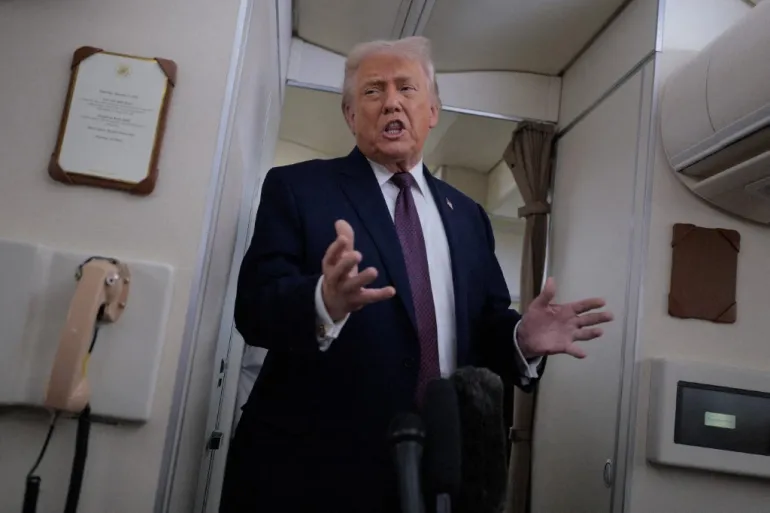
Step 2: The Threat – At 8:00 a.m. EDT on April 7 — twelve hours before his own deadline — Trump posted on Truth Social: “A whole civilization will die tonight, never to be brought back again. I don’t want that to happen, but it probably will.“
This is the signature move. The threat must be so disproportionate, so visceral, so beyond conventional diplomatic language that it cannot be dismissed as posturing. “A whole civilization.” Not military targets. Not nuclear facilities. Civilization itself. WTI crude immediately surged above $116 per barrel. Tehran’s leadership, already facing a decapitated command structure after Khamenei’s death in February, economic collapse at 43% inflation, mass protests, and 40 days of active war — now faced a president publicly threatening to erase their country from history.
The threat was not designed to be carried out. It was designed to make the alternative — a deal — feel like survival.
Step 3: The Silence – Between 8:00 a.m. and 6:30 p.m. EDT, Trump said nothing publicly. No clarifications. No walk-backs. No senior officials softening the message. Secretary of State Rubio did not appear on camera. The White House gave no briefings. For ten hours, “a whole civilization will die tonight” sat uncontested in the global information space.
This is deliberate. Trump has used strategic silence since his first term — most visibly in the 2019 China trade negotiations, where he would tweet a threat and then disappear for days, forcing Beijing to calculate worst-case scenarios without the comfort of a clarifying statement. The silence makes the threat louder, not quieter. Every hour without a walk-back is an hour the other side must assume the threat is real.
Pakistan’s PM Shehbaz Sharif and Army Chief Asim Munir used that ten-hour window to frantically shuttle between Washington and Tehran. Iran used it to accept reality.
Step 4: The Deal – At 6:30 p.m. EDT — ninety minutes before his own deadline — Trump posted the ceasefire. The Strait of Hormuz would reopen. Bombing would be suspended for two weeks. Talks would begin in Islamabad on April 10.
He called it “a total and complete victory.” He claimed Iran had “begged” for the deal — a characterization Tehran disputed but could not publicly afford to escalate. Defense Secretary Pete Hegseth called it “historic.” Trump himself framed it in purely transactional terms: “I want to make BIG MONEY in the Strait of Hormuz.”
The deal was announced on his terms, in his language, on his platform, on his timeline. Iran survived. Trump got the headline.
The Formula Has a Track Record: This is not improvisation. It is a documented, repeatable system:
China (2018–2019): Tariff threats → escalation → silence → Phase 1 trade deal signed January 2020.
North Korea (2017–2018): “Rocket Man” threats, “fire and fury” warnings → Singapore Summit, June 2018.
Taliban (2020): Military threats combined with direct talks → Doha Agreement signed, US troops withdrew.
Canada and Mexico (2025): Sweeping tariff threats → emergency bilateral negotiations → USMCA concessions extracted within weeks.
April 2025 tariff pause: “Liberation Day” tariffs announced → markets collapsed → “Great Time to Buy” post → tariff pause → Nasdaq surged 12%.
The critics call it chaotic. The diplomats call it unpredictable. The results call it effective.
What the Formula Cannot Guarantee – What the four steps produce is a deal — not necessarily a durable one. The Iran ceasefire is already cracking. Israel struck Lebanon within hours. Iran accused the US of breach by April 9. Physical oil markets never believed the ceasefire fully — Dated Brent held above $120 even as futures crashed 16%. BCA Research’s Matt Gertken warned hostilities would “ignite later this year, if not later this month.” The formal talks in Islamabad must resolve enrichment rights, sanctions removal, proxy groups, and ballistic missiles — the same issues that killed six rounds of negotiations in 2025 — in two weeks. The formula closes conflicts. It does not end them.
Market Analysis
A quick snapshot of market trends, customer behavior, and competitor movements.