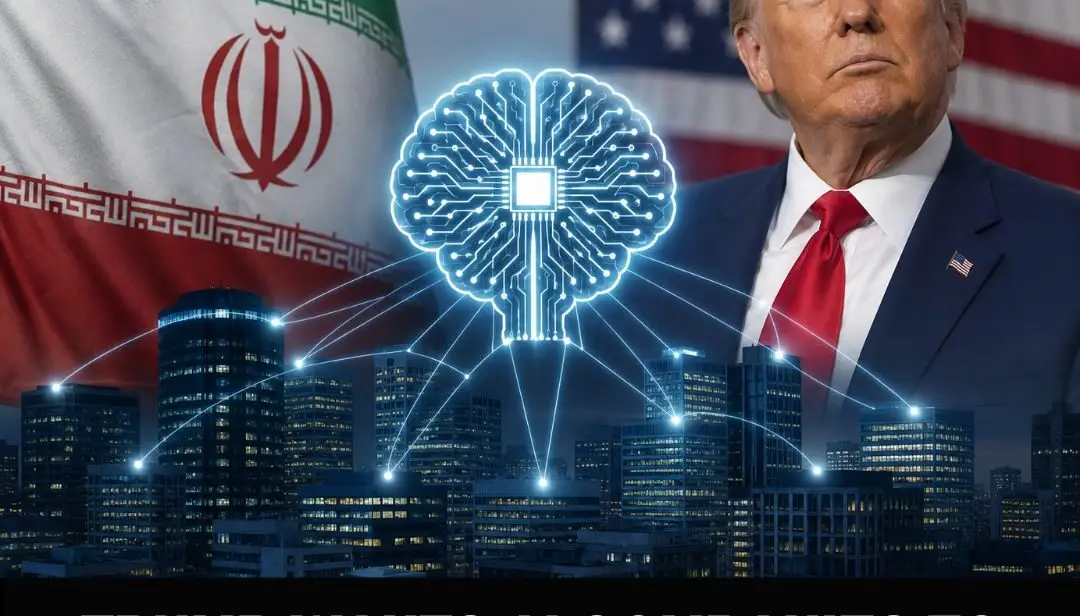
The White House is pushing a controversial new economic proposal that would require artificial intelligence companies to share profits with the American public — and the idea is splitting the Republican Party down the middle, even as Trump simultaneously floats renaming the technology altogether.
Speaking at a roundtable with tech executives last week, President Trump suggested the federal government should take equity stakes in leading AI firms — modeled partly on Washington’s 9.9% stake in chipmaker Intel secured during recent semiconductor negotiations. “These companies are making billions off American infrastructure, American talent, American data,” Trump told reporters. “We want a piece of that for the people.”
Trump’s AI Profit-Sharing Plan: What’s Actually Being Proposed
The proposal, still in its early stages, would see the U.S. government acquire equity positions in companies like OpenAI, currently valued at approximately $850 billion, and Anthropic, valued near $380 billion. OpenAI alone is targeting $30 billion in revenue for 2026, making it one of the most valuable private companies in American history.
The White House has not yet released formal legislation, but senior advisers have floated two mechanisms: a mandatory equity-stake requirement for AI firms receiving federal contracts or compute subsidies, and a voluntary profit-sharing fund modeled on Alaska’s Permanent Fund dividend model.
Adding a headline-grabbing twist, Trump also revealed he dislikes the term “Artificial Intelligence” — saying, “I don’t like anything artificial.” He has reportedly floated renaming the sector “genius” or “pure genius” in official White House communications, a suggestion that drew equal parts ridicule and curiosity from Silicon Valley.
Republicans Are Divided — and Loudly
The reaction within the GOP has been swift and fractious. Sen. Ted Cruz (R-TX), chair of the Senate Commerce Committee and a key voice on tech policy, pushed back sharply: “I don’t think the federal government should be in the business of being an equity holder in private American companies.”
Sen. Josh Hawley (R-MO) and conservative economist Stephen Moore echoed similar concerns. Moore called the idea “the reverse of privatization,” warning it could set a dangerous precedent for government interference in free markets. “If we do this for AI, what stops us from doing it for pharmaceuticals, for energy, for banking?” Moore wrote in an op-ed.
However, a growing populist wing of the party — aligned with Trump’s economic nationalism — has signaled openness. “Big Tech has gotten a free ride on American infrastructure for decades,” said one senior House Republican aide who asked not to be named. “The president is right to ask: what do Americans get in return?”
According to a Stanford HAI survey, a plurality of Americans already support some form of public benefit from AI profits, suggesting Trump may be tapping into a genuine populist current that transcends party lines.
Bernie Sanders’ Counter-Proposal and the Broader Debate
Interestingly, Sen. Bernie Sanders (I-VT) has proposed his own version: a 50% stock transaction tax on AI company shares, with proceeds funding a sovereign wealth fund for Americans. While Sanders and Trump rarely agree on anything, the convergence on “AI profits should benefit the public” signals a rare cross-aisle moment — even if their mechanisms differ dramatically.
The Iran-US War Connection to AI Infrastructure
The debate over AI profits takes on added urgency given the ongoing Iran-US War Latest developments. The Strait of Hormuz crisis earlier this year directly impacted global AI infrastructure — AWS data centers in Bahrain and Oracle cloud facilities in Dubai reported operational disruptions as regional instability spiked energy and logistics costs. Helium prices, critical for semiconductor cooling systems, surged over 18% during peak Hormuz tensions, squeezing AI chip manufacturers.
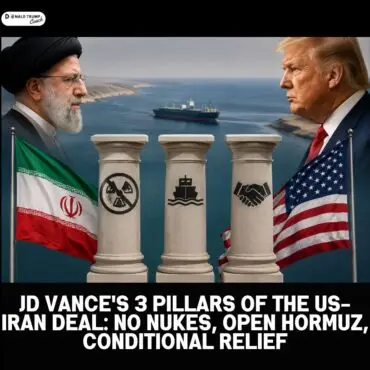
The US-Iran nuclear deal now being finalized has brought some relief, with tech stocks recovering sharply after Pakistan’s Prime Minister confirmed the war-ending agreement. But the episode exposed how deeply American AI dominance depends on Middle Eastern energy stability — and why some in Washington argue the government deserves a stake in companies that benefit from taxpayer-funded geopolitical protection.
What Happens Next
The proposal now moves toward Congressional hearings, where it is expected to face fierce lobbying opposition from the tech industry. OpenAI, Google, and Microsoft have all declined to publicly comment, but insiders say private pressure on Capitol Hill is already intense.
For Trump, the AI profit-sharing push fits a familiar economic nationalist playbook — frame corporate windfall as being extracted from the American worker, then position government intervention as the populist remedy.
Whether it becomes law or remains a negotiating chip, the debate is reshaping how Washington thinks about the AI economy’s winners and losers.