The President spent years attacking the JCPOA as the “worst deal ever made.” Now, with Vice President Vance in Islamabad and Iran at the table, the question haunting Republican hawks is whether Trump is about to sign something worse. For eight years, Donald Trump made the Obama Iran nuclear deal a centerpiece of his political
The President spent years attacking the JCPOA as the “worst deal ever made.” Now, with Vice President Vance in Islamabad and Iran at the table, the question haunting Republican hawks is whether Trump is about to sign something worse.
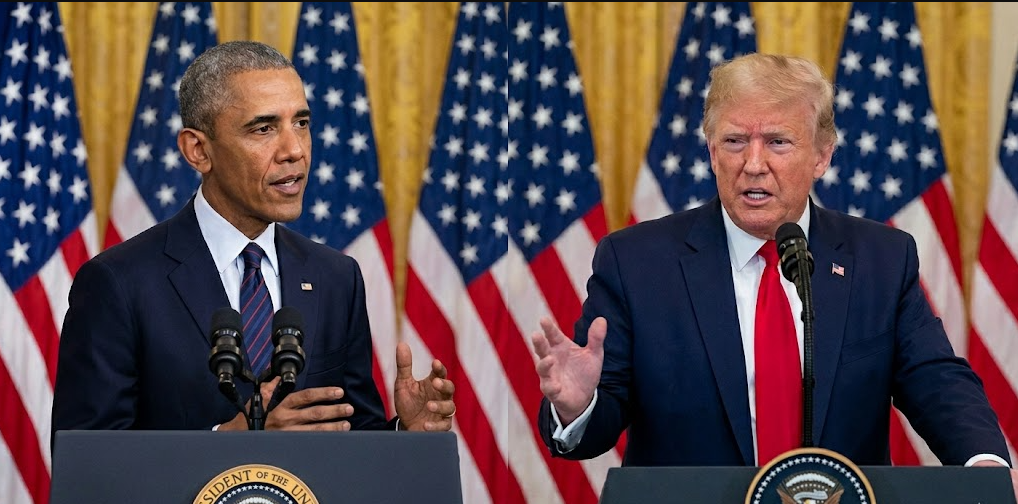
For eight years, Donald Trump made the Obama Iran nuclear deal a centerpiece of his political identity. He called the Joint Comprehensive Plan of Action “the worst deal ever negotiated.” He ripped it up in 2018. He reimposed crushing sanctions and, when diplomacy failed in his second term, authorized military strikes on nearly 900 Iranian nuclear and military sites in what the Pentagon named Operation Epic Fury.
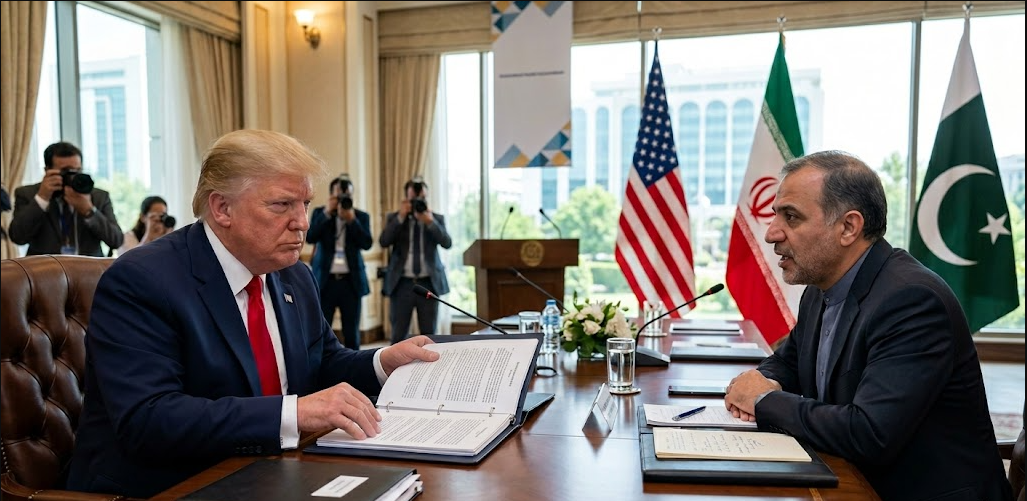
Now, with Vice President JD Vance, special envoy Steve Witkoff, and Jared Kushner sitting across from Iranian Foreign Minister Abbas Araghchi in Islamabad — under the terms of a fragile two-week ceasefire — the question has shifted from whether Trump will make a deal to whether the deal he makes will be better or worse than the one he so spectacularly abandoned.
The early signals are not entirely reassuring.
What Obama Actually Agreed To
The 2015 Joint Comprehensive Plan of Action was a detailed, multilateral framework negotiated with the U.S., UK, France, Germany, Russia, and China. Its core terms were significant: Iran’s uranium enrichment was capped at 3.67% purity — well below weapons-grade. Its centrifuge count was reduced by two-thirds. Its enriched uranium stockpile was slashed to 300 kilograms. The Arak heavy water reactor was redesigned to prevent plutonium production. And IAEA inspectors were granted unprecedented access.
Iran received sanctions relief and access to billions in frozen assets
Critics, led by Donald Trump, highlighted key flaws:
Sunset clauses let nuclear limits expire (10–15 years), risking future weapons development
No restrictions on ballistic missile program
No control over funding of regional proxy groups (Yemen to Lebanon)
Those critiques were not wrong. They were also the reason Trump’s team walked into Islamabad believing they could do better.
What Trump Is Demanding — and What Iran Is Offering
The U.S. 15-point framework on the table in Islamabad is more ambitious than the JCPOA on nearly every dimension. It calls for Iran to permanently end all uranium enrichment, surrender its existing stockpile of highly enriched uranium, accept limits on its ballistic missile program, halt support for armed groups across the region, and formally reopen the Strait of Hormuz.
White House press secretary Karoline Leavitt was unequivocal: “The president’s red lines — namely, the end of uranium enrichment in Iran — have not changed.”
Iran’s 10-point counteroffer reads like a different universe. Tehran is demanding the U.S. guarantee it will never again attack Iran, recognize Iranian sovereign control over the Strait of Hormuz, withdraw militarily from the Middle East, lift all primary and secondary sanctions simultaneously — and, critically, accept Iran’s right to domestic uranium enrichment.
That last point is the chasm. Iran wants enrichment rights. Trump has declared enrichment a red line. The two positions are, as of this writing, irreconcilable on paper.
The “Worse Deal” Scenario
CNN’s political analysis put the core risk plainly: “The fear among some experts is that Trump, eager to close a legacy-defining agreement, may end up conceding on enrichment — the one issue Obama also conceded on — while getting less in return.”
The logic runs like this: the JCPOA at least had a robust multilateral verification structure, IAEA access, and was backed by six world powers. A bilateral Trump-Iran deal, negotiated under ceasefire pressure with a two-week clock, would have fewer multilateral guarantees. If Trump ultimately accepts enrichment with “permanent” caps — rather than the Obama model’s sunset clauses — he can argue improvement. But if Iran extracts enrichment rights plus Hormuz recognition plus a U.S. nonaggression pledge and reparations, the comparison to 2015 becomes brutal.
Iran appears to understand this leverage. As Newsweek reported, Tehran is “pressuring Trump to give them a better deal than Obama” — not because they are negotiating from strength, but because they calculate that Trump’s domestic need to declare victory is a structural asset they can exploit.
Netanyahu’s Veto Threat
Looming over every session in Islamabad is Israeli Prime Minister Benjamin Netanyahu, who has been explicit: “Iran’s enriched uranium will be removed — by agreement or in resumed fighting.”
Israel’s red line is total. No enrichment. No stockpile. No path. Netanyahu’s government participated in Operation Epic Fury and retains the capability — and stated willingness — to resume strikes if a deal leaves Iranian centrifuges spinning at any level. That threat constrains what Trump can sign and still hold together the U.S.-Israel strategic relationship.
The Irony Trap
The deepest irony of the Islamabad talks is that Trump’s maximalist starting position — zero enrichment, total dismantlement — may have made a deal harder to reach than Obama’s more flexible framework, while his urgent desire for a ceasefire agreement gives Iran time to wait him out.
Obama entered negotiations with Iran already at the table and sanctions biting but not collapse-level. Trump enters having just bombed 900 sites, with Iran’s nuclear infrastructure degraded but its political resistance hardened, and with a 14-day ceasefire clock winding down.
The question experts are asking is no longer whether Trump can beat Obama’s deal. It’s whether — with the clock running, Netanyahu watching, and Iran holding the Hormuz card — he can avoid a deal that his own supporters will spend the next decade calling the worst one ever made.
Market Analysis
A quick snapshot of market trends, customer behavior, and competitor movements.