Share This Article
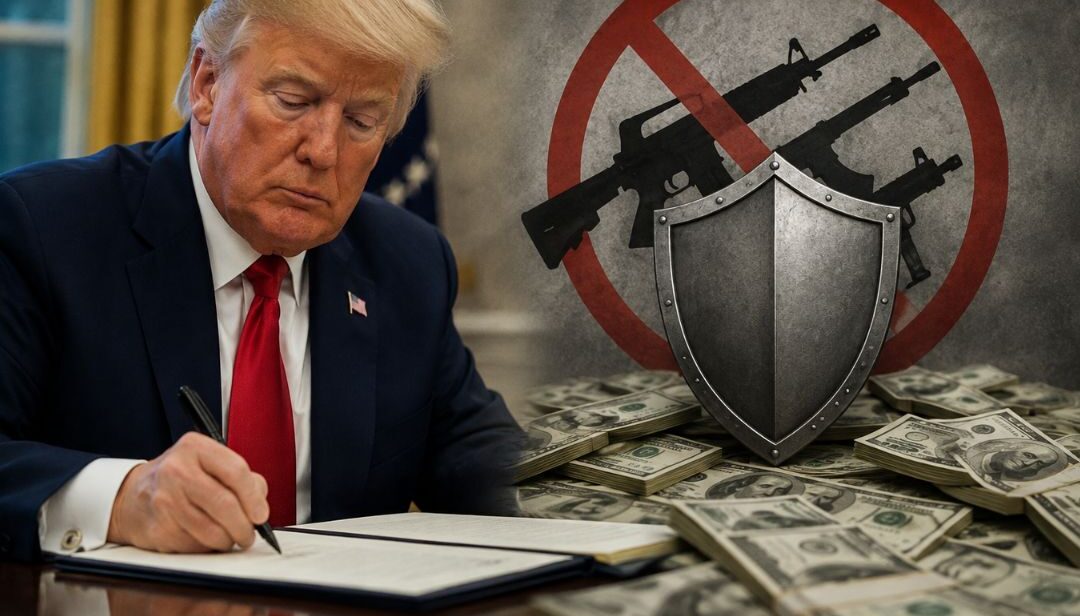
Acting Attorney General Todd Blanche has formally rescinded President Donald Trump’s controversial $1.8 billion “anti-weaponization” fund, ending weeks of Senate gridlock and clearing the last major obstacle to his confirmation as permanent attorney general. The late Sunday order dated August 2, 2026 terminated a May 18 directive that had drawn bipartisan criticism over who could potentially be compensated under it.
This is the latest example of the Trump administration rescinding a policy or order under political pressure, and it comes just ahead of a scheduled Tuesday vote in the Senate Judiciary Committee.
What Happened: Blanche Rescinds the Fund
In a post on X late Sunday, Blanche wrote that his team had spent weeks in discussions with senators and committee members to resolve their concerns. Attached to that post was a formal order stating that the Attorney General’s May 18, 2026 order establishing the Anti-Weaponization Fund “is rescinded and shall have no force or effect.”
Get the full picture on where this war is headed more Trump-era geopolitical coverage at DonaldTrump.Coach.
The Justice Department’s accompanying statement went further, noting that Blanche had repeatedly told Congress including under oath and federal courts that the fund was not moving forward. According to the order, no board members were ever appointed, no money was transferred, and no claims process was ever established. In the department’s words, the new order “establishes, beyond any doubt, that there is no Fund.”
The order also narrows a separate provision in the underlying settlement that had granted broad immunity protections tied to the agreement.
Why the Fund Existed in the First Place
The anti-weaponization fund traces back to a settlement of Trump’s lawsuit against the IRS. As part of that May settlement, the Department of Justice created a $1.8 billion pool intended to compensate individuals Trump and his allies argued had been unfairly targeted or “weaponized” against by federal agencies during previous investigations.
Critics including some Republicans quickly labeled it a slush fund, in part because of concerns that people convicted in connection with the January 6 Capitol riot could potentially be eligible for payouts. Trump himself defended the fund publicly as recently as Sunday, telling reporters aboard Air Force One that it would serve as “a reimbursement for the pain” his supporters and allies had suffered, and warning that if Blanche’s nomination failed, he would “put the idea back on the table.”
Global supply chains are already bracing for impact Goyal’s courting 50 US leaders in New York over exactly that.
Why Blanche Rescinded the Order Now
Two Republican senators John Cornyn of Texas and Thom Tillis of North Carolina had held up Blanche’s nomination for weeks, demanding written assurances that the DOJ would not move forward with the fund. A spokeswoman for Cornyn confirmed Sunday night that an agreement had been reached, paving the way for the Judiciary Committee’s Tuesday vote.
Blanche had already told lawmakers at a June hearing that the fund would not proceed, but Sunday’s order goes a step further by formally rescinding the underlying directive, not just verbally shelving it. That distinction matters for a confirmation process where senators wanted a documented, legally binding commitment rather than a verbal assurance.
What This Means for Trump’s Broader Use of Executive and Agency Orders
This episode fits a recurring pattern in the current administration: an order or directive is issued, draws political or legal pushback, and is then formally reversed. Whether it’s Trump rescinding an executive order, a cabinet official rescinding a policy directive, or an agency walking back a controversial funding decision, these reversals have become a notable feature of how the administration manages friction with Congress and the courts.
It’s worth noting that “rescinding” in this context is distinct from other uses of the term that circulate in public conversation for example, a doctor rescinding a prescription refers to a medical decision, unrelated to executive or agency-level policy reversals like this one. This article covers the political and legal rescission of a DOJ fund, not healthcare-related actions.
Timeline of Key Events
- May 18, 2026 – DOJ order establishes the $1.8 billion Anti-Weaponization Fund as part of the IRS lawsuit settlement.
- June 2026 – Blanche tells a Senate hearing the fund will not move forward amid bipartisan criticism.
- July 15, 2026 – Blanche appears before the Senate Judiciary Committee for his confirmation hearing.
- Late July-early August 2026 – Cornyn and Tillis hold up Blanche’s nomination pending written assurances.
- August 2, 2026 (Sunday) – Trump defends the fund on Air Force One; hours later, Blanche issues the formal rescission order.
- August 4, 2026 (Tuesday) – Senate Judiciary Committee scheduled to vote on Blanche’s confirmation.
The Bigger Picture: Confirmation, Oversight, and What Comes Next
With the fund formally off the table, Blanche’s path to confirmation looks significantly smoother heading into Tuesday’s committee vote. But Trump’s Sunday comments suggest the idea isn’t necessarily dead for good; he indicated he could revisit it if Blanche isn’t confirmed, which keeps the underlying policy debate alive even after this rescission.
For now, the order gives Senate Republicans the documented commitment they were seeking, and it removes a flashpoint that had complicated one of the administration’s more closely watched confirmation fights.
Traders aren’t buying the calm either, oil prices are climbing again as markets stay skeptical of US-Iran peace talks.
Allied diplomacy is moving fast on every front, Modi’s Sweden visit just delivered six new strategic outcomes for India.
FAQs – Trump Rescinds Anti-Weaponization Fund
What is the Trump anti-weaponization fund?
It was a $1.8 billion fund created through a May 2026 DOJ order, established as part of a settlement of Trump’s lawsuit against the IRS. It was intended to compensate individuals Trump’s team said had been unfairly targeted by federal agencies.
Why did Todd Blanche rescind the fund?
Blanche rescinded the fund to resolve objections from Republican Senators John Cornyn and Thom Tillis, who had blocked his attorney general nomination until they received written assurance the fund would not move forward.
Did Trump support rescinding the fund?
Not directly. Just hours before Blanche’s order, Trump publicly defended the fund and said he could “put it back on the table” if Blanche isn’t confirmed.
When is Blanche’s confirmation vote?
The Senate Judiciary Committee is scheduled to vote on Blanche’s nomination on Tuesday, August 4, 2026.
Is this the same as Trump rescinding an executive order?
This specific action was a Department of Justice order, not a presidential executive order, but it follows the same pattern of the administration formally reversing a prior directive under political or legal pressure.
Were any funds ever paid out under the anti-weaponization fund?
No. According to Blanche’s order, no fund members were appointed, no money was transferred, and no claims process was ever set up before the fund was rescinded.
References & Sources
- CNN – Blanche rescinds Trump’s ‘anti-weaponization’ fund, removing hurdle from attorney general nominee’s confirmation
- The Washington Post / AP – Blanche rescinds fund for Trump allies after GOP senators threaten to block his attorney general bid
- NPR – Todd Blanche rescinds Trump’s ‘anti-weaponization fund’ ahead of nomination hearing
- CBS News – Acting Attorney General Todd Blanche issues order rescinding “anti-weaponization fund”
- Reuters (via U.S. News) – Acting US Attorney General Blanche Rescinds ‘Anti-Weaponization’ Fund Before Confirmation Vote
- Fox News – Todd Blanche moves closer to confirmation after rescinding $1.8B fund
- KPBS / NPR affiliate – Todd Blanche rescinds Trump’s ‘anti-weaponization fund’ ahead of nomination hearing

Oil & Energy Markets
A look at crude price swings, OPEC supply moves, and how energy markets react to geopolitical shocks.

Geopolitics & Conflict
Breaking down how wars, ceasefires, and diplomatic deals ripple through global trade and security.
US Foreign Policy
Coverage of Trump administration negotiations, sanctions, and strategic decisions shaping world events.
Economy & Inflation
Tracking how commodity prices, gas costs, and supply chains affect everyday consumers.