Share This Article
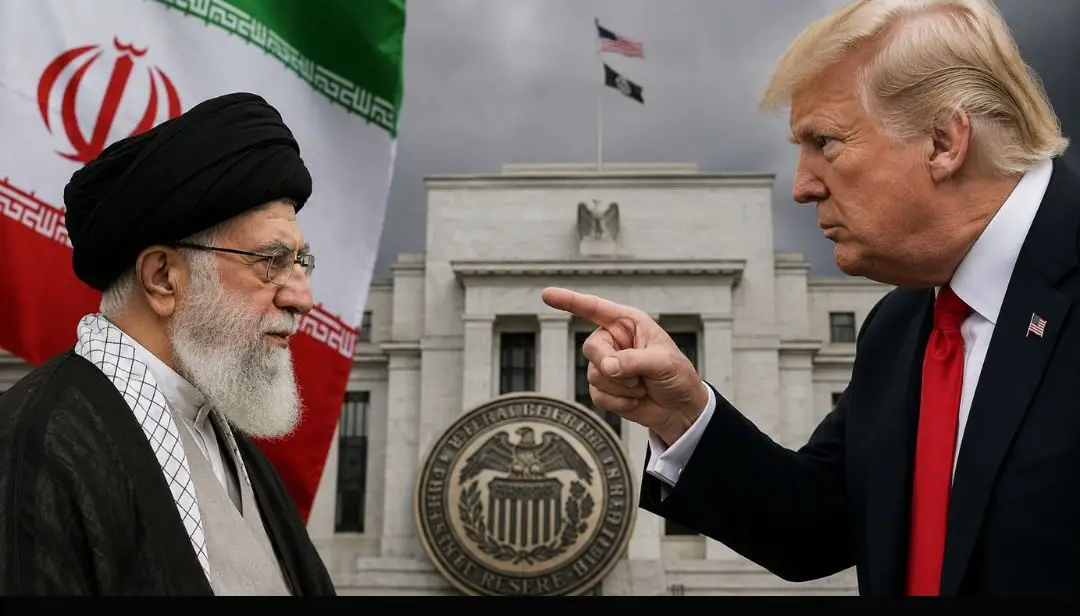
President Donald Trump escalated his pressure campaign against the Federal Reserve on June 7, 2026, telling NBC’s Meet the Press in unambiguous terms that raising interest rates would be “the wrong thing to do” and that the Fed should instead “lower interest rates” immediately. The remarks came one day before the Fed’s most closely watched pre-meeting window closes, as markets price in a 99.4% probability that the FOMC will hold rates unchanged at 3.50%–3.75% at its June 16–17 meeting.
The irony is almost complete. Trump pressures Fed’s Powell relentlessly for cuts throughout 2025 and early 2026 gets his man removed and now finds himself staring at an inflation problem his own foreign policy helped create, as the Strait of Hormuz closure drives energy costs to levels that make the rate cuts he demands look increasingly distant.
What Trump Said and When
Trump’s June 7 statement to NBC was precise in its target: “When a country is doing well, they shouldn’t be penalized by immediately raising interest rates. Raising the benchmark rate is the wrong thing to do. We should actually lower interest rates.”
The statement was triggered by a blowout May jobs report that had rattled bond markets and briefly reignited speculation about a potential rate hike a scenario Trump moved quickly to shut down before it gained traction. It was not his first intervention of the year. On Truth Social in March, he had demanded the Fed “should be dropping interest rates, IMMEDIATELY, not waiting for the next meeting.” In earlier posts he called Fed Chair Jerome Powell a “jerk” and questioned his judgement publicly and repeatedly.
The pressure campaign reached its institutional peak in April 2026, when Trump threatened to fire Powell outright if he did not step down voluntarily when his chairmanship term expired on May 15, 2026. Powell refused to resign, challenged the legality of any removal, and departed on schedule but not before warning in a public speech at the Kennedy Presidential Library that “democratic institutions take much time, effort, and patience to build but can be torn down all too quickly.” He described Fed independence as a “priceless asset” and cautioned that Trump’s “stress test” of the central bank would “wreck public trust” in its ability to make impartial decisions, per CNBC’s coverage of Powell’s final public statements.
Trump’s nominee Kevin Warsh was sworn in as the new Fed Chair following Powell’s departure and faces the same inflation reality that constrained his predecessor, regardless of his proximity to the White House.
The Inflation Problem Trump Built
The core contradiction in Trump’s demands is written in the data. April 2026 headline CPI came in at 3.95% year-over-year the highest reading since 2023 with a three-month annualized rate of 7.32%. The PCE index, the Fed’s preferred inflation measure, sits at 3.77% year-over-year, with core PCE at 3.29%. Energy costs alone surged 17.9% year-over-year in April, per Bureau of Labor Statistics CPI data.
The primary driver of that energy spike is the Strait of Hormuz closure now entering its 99th day which was triggered by the US-Iran war launched on February 28, 2026. The strait carries 20% of global oil trade and 20% of global LNG. Its effective shutdown sent Brent crude toward $120/barrel at peak, and WTI has averaged above $80 throughout the conflict, per Bloomberg’s Hormuz oil shock analysis. The Dallas Federal Reserve’s economic impact study estimated the closure added 0.6 percentage points to headline inflation in a single quarter — making the Fed’s job structurally harder with every day the strait stays shut.
Trump wants lower rates. Trump’s Iran war created the inflation that prevents lower rates. The Federal Reserve sits in the middle, institutionally obligated to respond to the data rather than the president.
Fed’s Internal Fractures
The April 29 FOMC decision to hold rates at 3.50%–3.75% was not unanimous it passed on an 8-4 vote, the first time four officials have dissented against an FOMC decision since October 1992. The four dissenters reportedly favored either a cut or a more dovish forward guidance signal. The unusually large dissent reflects genuine internal disagreement about whether the inflation surge is transitory driven by a geopolitical shock that could reverse if US-Iran talks produce a deal and the strait reopens or embedded enough to require sustained restriction.
Markets are currently pricing approximately 28% probability of a 25 basis point cut at the June meeting, against 70% probability of holding, per CME FedWatch data. Rate cut expectations have been pushed back substantially from earlier 2026 projections. One market strategist cited in recent reports noted it is “all but impossible to see a rate cut by July 2026” given the fuel price pressures.
The May CPI report, scheduled for June 10, will be the final significant data point before the FOMC meeting and its reading will either validate the hold consensus or, if inflation shows signs of peaking, give the new Fed Chair Warsh political and economic cover to begin signalling the cuts Trump has demanded for months.
Global Central Banks Face the Same Problem
The Fed is not alone in navigating this tension. The European Central Bank held its deposit rate at 2.0% at its April 30 meeting, as eurozone inflation jumped to 3% driven by the same Middle East energy shock. With 44 of 84 economists in a Reuters survey forecasting a June ECB rate increase to 2.25%, Frankfurt faces a policy choice as uncomfortable as Washington’s. The Bank of England is holding ahead of its June 18 MPC meeting, with UK CPI forecast to reach 3.3% by Q3 as ECB and BoE policy analysis confirms energy costs are reshaping central bank calendars globally.
The through-line in every major central bank’s 2026 dilemma is the same: the Strait of Hormuz. Reopen the strait, normalize energy prices, and the inflation justification for holding rates evaporates almost immediately. Keep it closed whether through failed US-Iran talks or fresh military escalation and every central bank that wants to cut faces months more of politically inconvenient data.
Trump knows this. Which is why his pressure on the Fed and his pressure on Tehran are, ultimately, the same economic policy pursued through radically different instruments.

Oil & Energy Markets
A look at crude price swings, OPEC supply moves, and how energy markets react to geopolitical shocks.

Geopolitics & Conflict
Breaking down how wars, ceasefires, and diplomatic deals ripple through global trade and security.
US Foreign Policy
Coverage of Trump administration negotiations, sanctions, and strategic decisions shaping world events.
Economy & Inflation
Tracking how commodity prices, gas costs, and supply chains affect everyday consumers.