Share This Article
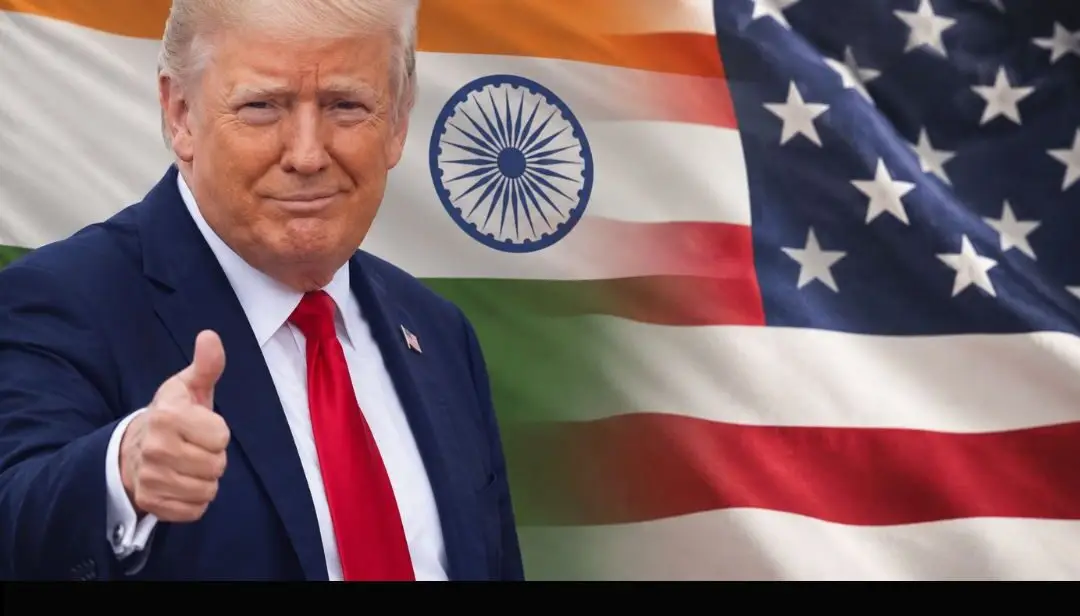
In the middle of one of the most complex foreign policy months of his second term a stalled Iran deal, a Strait of Hormuz still blockaded, an unsigned ceasefire MOU sitting on his desk Donald Trump took to Truth Social to post something simple and strategically pointed: “I love Prime Minister Modi. We’ve never been closer to India. I’m a big, big fan of Prime Minister Modi.”
The post, shared in early June during celebrations marking America’s 250th independence anniversary at Bharat Mandapam in New Delhi where US Secretary of State Marco Rubio was also in attendance went viral across Indian media within hours. It has been shared, screenshotted, and analyzed in newspapers from Mumbai to Chennai as an unambiguous signal from the White House at a moment when the US-India relationship is entering one of its most consequential stretches in decades.
The full context of the post matters. Trump was reposting a dispatch from US Ambassador to India Sergio Gor, and added his own voice to it directly: “We’ve never been closer to India and India can count on me 100 per cent and our country.” That phrase “India can count on me 100 per cent” is not diplomatic boilerplate. It is a specific reassurance directed at an audience that had reason to wonder, just weeks earlier, whether it could.
A Relationship That Has Needed Reassurance
The “Love India” post lands against a complicated recent backdrop. In April 2026, Trump reposted a statement from conservative radio host Michael Savage on Truth Social that called India “some other hellhole on the planet” inflammatory language directed at Indian immigrants that drew a formal response from India’s Foreign Ministry. Spokesman Randhir Jaiswal called the remarks “obviously uninformed, inappropriate and in poor taste,” stating they “certainly do not reflect the reality of the India-US relationship, which has long been based on mutual respect and shared interests.” India’s opposition Congress party called the comments “extremely insulting.”
Bloomberg reported that the April post triggered a notable dip in the diplomatic temperature a reminder that Trump’s Truth Social account operates as an unpredictable variable in bilateral relationships that his own administration’s diplomats are simultaneously trying to manage. The contrast between that April post and the June “Love India” statement is striking, and it illustrates the volatility that Indian policymakers have learned to navigate: the same platform, six weeks apart, calling India both a “hellhole” and a country he loves “100 per cent.”
The Trade Deal Timeline Behind the Post
The diplomatic warmth expressed on Truth Social is not happening in isolation. It is tracking a specific geopolitical and commercial agenda. In February 2026, Trump and Prime Minister Modi announced a framework for a historic US-India interim trade deal during Modi’s Washington visit. The deal reduced tariffs on Indian goods from 25 to 18 percent, removed an additional 25 percent tariff linked to Russian oil purchases, and set the stage for a broader bilateral trade agreement that both sides describe as transformational.
CNBC reported that the deal framework included India committing to purchase over $500 billion in US energy, technology, agricultural products, and coking coal over five years a commitment that, if honoured, would represent a structural realignment of India’s import economy toward American suppliers.
The June 1–4 chief negotiator talks in Delhi led by Brendan Lynch on the US side and Darpan Jain for India are working toward an interim agreement text before the July 24 deadline, after which India would face exposure to harsher Section 301 tariffs. Trump’s Truth Social post, timed to coincide with the Bharat Mandapam celebrations and Rubio’s presence in Delhi, functions as political cover for both sides’ negotiators: a public signal from the President that he wants this deal and views the bilateral relationship as a priority not a transaction to be leveraged against India’s other partnerships.
What “India Can Count on Me” Actually Means
The phrase deserves scrutiny because it is the kind of assurance that carries specific weight given recent history. India has been watching Washington’s posture on Taiwan where Trump paused a $14 billion arms sale following his Beijing summit with close attention. New Delhi’s strategic calculus depends on American commitments being durable, not subject to revision the next time a more pressing bilateral relationship requires accommodation. Trump’s “100 per cent” language, delivered publicly on Truth Social and amplified by the US Ambassador, is an attempt to address that concern directly.
It is also a signal to the Indian diaspora in the United States a politically significant and economically powerful community that had been stung by the April “hellhole” repost and whose support Trump has been cultivating since his 2020 “Howdy Modi” rally in Houston. The Tribune reported that the post was widely circulated among Indian-American communities as evidence of Trump’s genuine regard for India a community that reads these signals carefully and votes accordingly in swing states with large South Asian populations.
The Bigger Picture: India’s Strategic Moment
The “Love India” post matters beyond its immediate viral moment because it reflects something structural about where both countries stand in the global realignment accelerated by the US-Iran war and the Hormuz blockade. Supply chain diversification away from China, the need for a major democratic partner in the Indo-Pacific, and the shared interest in a stable post-Hormuz energy order have pushed Washington and New Delhi toward each other with unusual velocity in 2026.
India’s Commerce Minister Piyush Goyal met over 50 US industry leaders in New York on May 29. A US trade delegation is in Delhi for four-day talks. Rubio attended America’s 250th celebrations on Indian soil. And the President of the United States posted on Truth Social that India can count on him “100 per cent.”
In diplomacy, as in markets, the signal often matters as much as the substance. Right now, Washington is sending a very clear one.

Oil & Energy Markets
A look at crude price swings, OPEC supply moves, and how energy markets react to geopolitical shocks.

Geopolitics & Conflict
Breaking down how wars, ceasefires, and diplomatic deals ripple through global trade and security.
US Foreign Policy
Coverage of Trump administration negotiations, sanctions, and strategic decisions shaping world events.
Economy & Inflation
Tracking how commodity prices, gas costs, and supply chains affect everyday consumers.