Share This Article
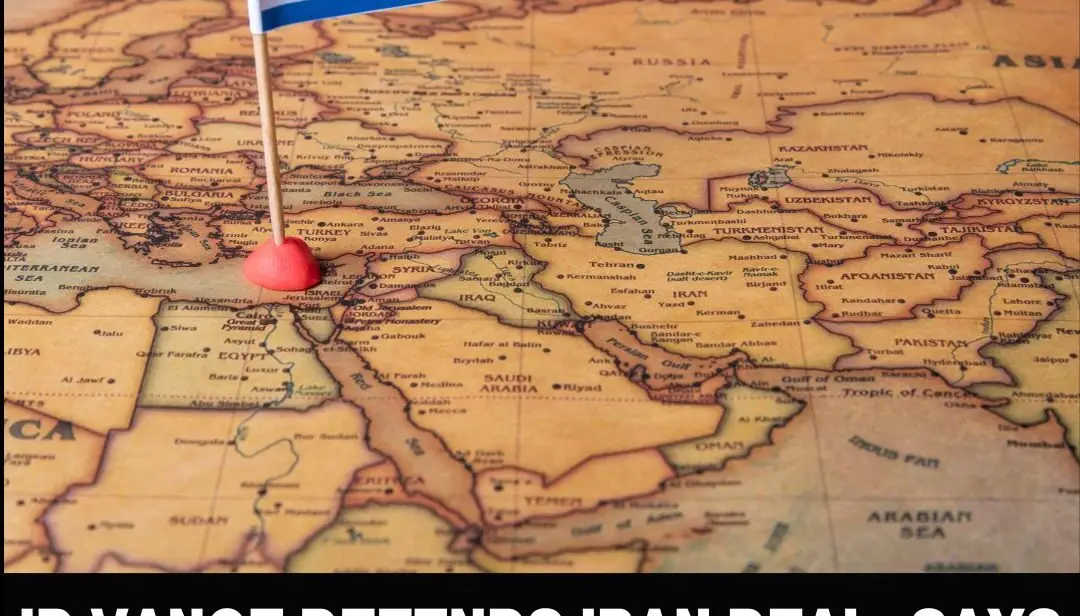
A rare public rift between Washington and Jerusalem broke into the open Thursday after US Vice President JD Vance directly rebuked members of Israeli Prime Minister Benjamin Netanyahu’s cabinet for attacking the emerging US-Iran agreement, warning that Israel risks alienating the one power still willing to stand behind it.
The remarks, delivered at a White House press briefing, marked one of the most pointed public confrontations yet between the Trump administration and Israeli hardliners since the US-Iran Memorandum of Understanding (MoU) began taking shape.
“You Can’t Kill Your Way Out of Every Problem”
Vance’s frustration was aimed squarely at far-right Israeli ministers who have spent recent weeks criticizing the Iran deal as too lenient. Without naming individuals directly in his public remarks, Vance made clear his patience was wearing thin with cabinet figures he said were treating President Trump as the obstacle rather than the architect of regional stability.
“I might not be attacking the only powerful ally that I have anywhere left in the entire world,” Vance told reporters, framing continued criticism from Netanyahu’s coalition as strategically self-defeating at a moment when the Strait of Hormuz and broader regional security still hang in the balance.
He went further, calling Trump “the only head of state in the entire world that is sympathetic to the nation of Israel” and reminding critics that roughly two-thirds of Israel’s defensive weapons systems are built and funded by American taxpayers.
“The problem for Israel is not Donald J. Trump,” Vance said. “Anybody in Israel who thinks their biggest problem is the President of the United States needs to wake up and smell the reality of the situation that the country is in.”
Sanctions Leverage at the Center of the Dispute
Much of the friction traces back to a perception among Israeli hardliners that the US-Iran Agreement hands Tehran relief without sufficient enforcement teeth. Vance rejected that framing outright in a separate interview, pointing to sanctions as Washington’s primary lever of control over Iranian compliance.
“The president of the United States or the secretary of the Treasury has to release all these sanctions,” Vance said. “Do they actually think we’re going to release sanctions on the Iranian system if they’re still funding a terrorist organization?”
The vice president’s position reflects the structure of the 60-day MoU window, which formally began this week. Under its terms, Iran does not receive sanctions relief or other benefits automatically compliance is the trigger. “If they don’t change their behavior, they don’t get the benefit of the bargain,” Vance has said, dismissing claims to the contrary as talking points “issued by people who want the conflict to continue.”
Israel’s Response and a History of Friction
Allies of Netanyahu have since redirected much of their criticism toward Vance personally, according to Israeli and US officials. This is not the first time the vice president has found himself at odds with the prime minister’s office. Earlier in the conflict, Vance reportedly criticized Netanyahu in a private call for what US officials described as overly optimistic predictions about the war’s trajectory including claims that regime change in Iran was more likely than it proved to be.
That tension reportedly escalated further when a report which multiple US and Israeli sources have since called false claimed Vance had separately confronted Netanyahu over settler violence in the West Bank. Vance’s advisers suspect the story was leaked by Israeli sources seeking to undermine him during sensitive negotiations.
Despite the friction, Vance has stated explicitly that he believes US and Israeli interests “may not always be consistent,” and that he has at times found the prime minister’s assessments to be wrong an unusually candid admission for a sitting vice president regarding America’s closest regional partner.
Why the Public Rebuke Matters Now
The timing of Vance’s comments is significant. The 60-day compliance window in the US-Iran deal is widely viewed as the mechanism that will determine whether sanctions relief, normalized shipping through the Strait of Hormuz, and broader de-escalation actually materialize or whether the fragile arrangement collapses under political pressure from hardliners on both sides.
According to reporting from Haaretz, Vance’s comments represent a calculated decision to publicly call out coalition members rather than let internal Israeli political maneuvering quietly undercut a deal the administration views as central to ending months of regional instability tied to the Iran war.
For markets and Gulf governments still recovering from the disruption to Strait of Hormuz traffic, the message from Washington is unambiguous: criticism of the Iran deal from within Israel’s own government will be met publicly, not privately and the vice president appears willing to be the one delivering that response.
Whether the rebuke calms internal Israeli dissent or deepens the rift within Netanyahu’s coalition is likely to shape how smoothly the next stage of the US-Iran Agreement unfolds.

Oil & Energy Markets
A look at crude price swings, OPEC supply moves, and how energy markets react to geopolitical shocks.

Geopolitics & Conflict
Breaking down how wars, ceasefires, and diplomatic deals ripple through global trade and security.
US Foreign Policy
Coverage of Trump administration negotiations, sanctions, and strategic decisions shaping world events.
Economy & Inflation
Tracking how commodity prices, gas costs, and supply chains affect everyday consumers.