Birthright Citizenship: What Happens to Millions of Americans If SCOTUS Rules Against Trump
Theo Jorden
Share This Article
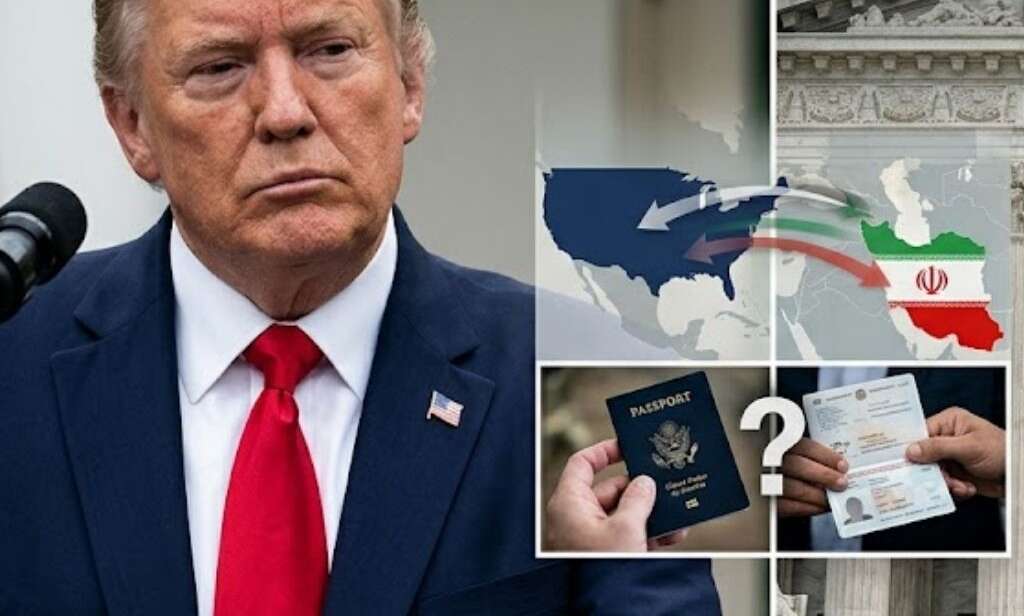
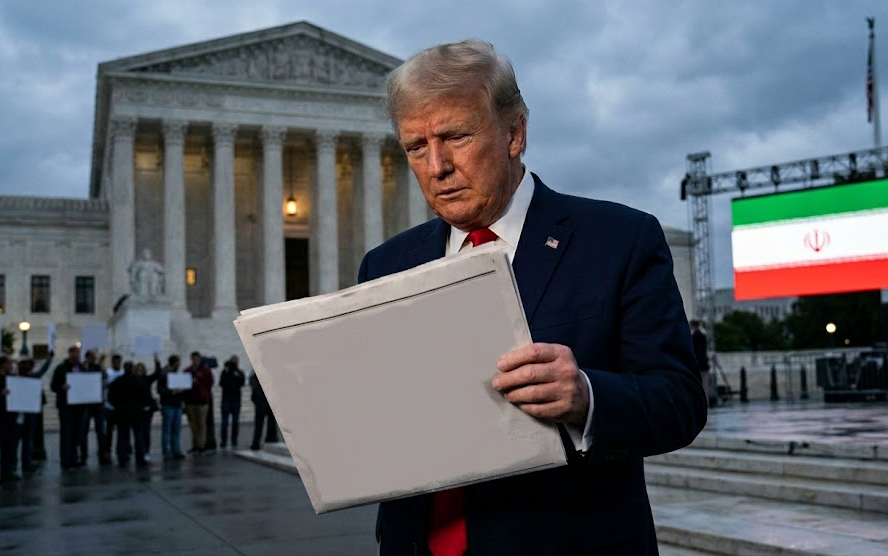
On April 1, 2026, Donald Trump sat in the front row of the Supreme Court chamber and watched his own appointed justices systematically dismantle his administration’s legal argument against birthright citizenship. He stayed for 90 minutes — the first sitting president to attend oral arguments in modern history. By the time he left, it was
On April 1, 2026, Donald Trump sat in the front row of the Supreme Court chamber and watched his own appointed justices systematically dismantle his administration’s legal argument against birthright citizenship. He stayed for 90 minutes — the first sitting president to attend oral arguments in modern history. By the time he left, it was clear the court was not going his way.
A ruling is expected by late June. Based on every signal from the bench, it will almost certainly uphold birthright citizenship — the constitutional guarantee that anyone born on American soil is an American citizen.
But before that ruling lands, it is worth asking the question that the administration’s argument forced into the open: what would actually have happened to millions of people if Trump had won?
The answer is one of the most consequential domestic policy stories of the decade — and it is not one the headlines have fully told.
The Scale of What Was at Stake
Trump’s executive order, signed January 20, 2025, targeted two categories of newborns: children born to undocumented parents, and children born to parents in the US on temporary visas — students, workers, tourists — where neither parent holds a green card or citizenship.
The Migration Policy Institute, in partnership with Penn State’s Population Research Institute, put a number on it: approximately 255,000 babies born in the United States every year would have started life without US citizenship under the order. That is roughly one in every fourteen births in the country.
Over time, the compounding effect is staggering. MPI projects that if birthright citizenship were ended, the unauthorized population would grow by 2.7 million by 2045 and 5.4 million by 2075 — a direct inversion of the executive order’s stated purpose of reducing illegal immigration. Children born without citizenship and unable to legalize their status would age into undocumented adults. The policy designed to shrink the undocumented population would, over two generations, dramatically expand it.
Born Without a Country
The most immediate and visceral consequence would fall on the children themselves — not as an abstract demographic projection, but as a lived reality beginning at birth.
Without US citizenship, these children would be unable to obtain a Social Security number, the administrative spine of American life. No SSN means no path to federal programs, no formal employment record, no tax identity. It means no US passport — effectively restricting international travel for life unless a foreign government recognizes their parents’ nationality and grants them documents.
For families fleeing persecution, that last point is not bureaucratic inconvenience. It is existential. Registering a child with the government of the country they fled can expose the entire family to danger. For those children, the alternative is statelessness — no citizenship anywhere, recognized by no government, carrying no legal identity in the country of their birth.
Justice Sonia Sotomayor raised this directly during oral arguments: these newborns could face deportation even while their parents remain lawfully in the United States. The logical endpoint of the administration’s position — that children of temporary visa holders are not “subject to the jurisdiction” of the United States — is that the government could remove a child born in an American hospital to parents who committed no violation of immigration law.
The Healthcare and Education Cascade
The consequences extend far beyond legal status. Medicaid currently pays for 40% of all births in the United States. Newborns automatically qualify for Medicaid coverage in their first year of life — a system that ensures continuity of care from delivery room to pediatric follow-up. Remove citizenship at birth, and that automatic enrollment collapses. Hospitals would be required to verify every parent’s immigration status before processing a newborn’s benefits — a bureaucratic threshold that NPR described as threatening “chaos in proving newborns’ status.”
Access to CHIP, SNAP, and WIC — the nutritional and healthcare safety net for low-income children — would be severed for every child denied citizenship. For children with disabilities, school districts would remain legally obligated to provide services under the Individuals with Disabilities Education Act, but would lose the Medicaid reimbursements that fund those services, creating massive cost shifts onto local budgets already strained by inflation.
The 1982 Supreme Court ruling in Plyler v. Doe guarantees every child — regardless of immigration status — the right to a free K-12 education. That right would survive a birthright citizenship ruling. But the children affected would enter kindergarten without documentation, unable to access federal lunch programs, healthcare, or any path toward legal employment after graduation. They would be educated in American schools toward an American adulthood with no legal American identity.
What the Court Actually Heard – The administration’s legal theory rested on a reinterpretation of the 14th Amendment’s phrase “subject to the jurisdiction thereof” — arguing that children of undocumented immigrants and temporary visa holders are not fully subject to US jurisdiction, and therefore not entitled to citizenship at birth.
Justice Amy Coney Barrett — a Trump appointee — methodically dismantled it. She forced Solicitor General John Sauer to acknowledge that the 14th Amendment’s primary purpose was to grant citizenship to formerly enslaved people, many of whom were brought to the United States illegally. If jurisdiction means what the government says it means, children of those enslaved people would not have qualified for citizenship either — a conclusion Sauer could not escape and that Barrett described as irreconcilable with the amendment’s text and history.
Chief Justice Roberts added his own four-word verdict on the administration’s “new world” argument: “It’s the same Constitution.”
Slate’s legal analyst wrote bluntly that Barrett’s exchange with Sauer was “the moment that locked in the government’s loss.”
What Comes Next If Trump Loses
A ruling against Trump’s executive order closes one door but leaves two others ajar — both narrow.
If the court strikes down the order on statutory grounds rather than constitutional ones, Congress could theoretically pass new immigration legislation redefining birthright citizenship eligibility. That path requires a majority vote — brutal in a divided Congress, but not constitutionally impossible.
If the court rules on 14th Amendment grounds — that the Constitution itself guarantees birthright citizenship and no executive action can alter it — the only remaining option is a constitutional amendment: two-thirds of both chambers of Congress and ratification by three-fourths of states. No legal scholar currently gives that a realistic probability.
Trump, predictably, has not accepted the trajectory. After the arguments, he took to Truth Social at 1 a.m. to demand the justices “study the Mark Levin Show” on what he called the birthright citizenship “HOAX.” He called the US “STUPID” for maintaining the policy. His campaign to delegitimize the court that will rule against him is already underway.
For 255,000 babies born this year alone — and every year after — the ruling is not an abstraction. It is the legal foundation of their lives. And in late June, nine justices will decide whether that foundation holds.
Oil & Energy Markets
A look at crude price swings, OPEC supply moves, and how energy markets react to geopolitical shocks.