
US Politics
Trump Says New Iran Strikes Are “Unlikely.” Is the War Finally Ending?
WASHINGTON, Nov. 10, 2026 – President Donald Trump says renewed U.S. strikes on Iran are now “quite unlikely,” and that the war is “effectively over” militarily. He made the remarks Monday after a White House meeting with Qatar’s Prime Minister. It is the clearest signal yet that Washington wants the eight-month conflict to wind down.…
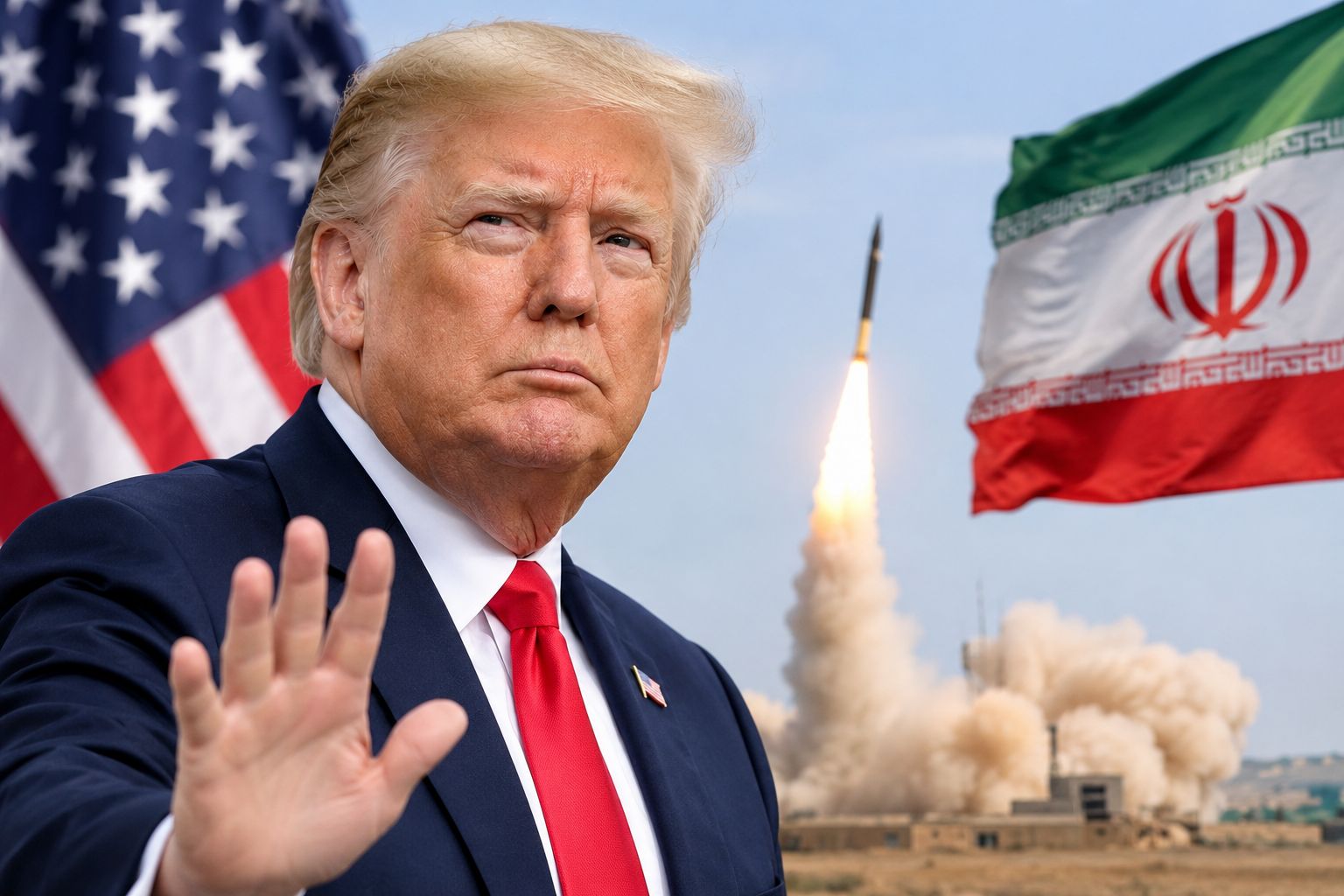
WASHINGTON, Nov. 10, 2026 – President Donald Trump says renewed U.S. strikes on Iran are now “quite unlikely,” and that the war is “effectively over” militarily. He made the remarks Monday after a White House meeting with Qatar’s Prime Minister. It is the clearest signal yet that Washington wants the eight-month conflict to wind down. The shift comes days after Democrats won control of Congress, as we covered in our breakdown of who controls Congress after the midterms.
But the U.S. naval blockade of Iran is staying in place. Tehran is also denying that any new talks are planned. So is the Iran war over? Not yet. Here is what changed and what could still restart the fighting.
Track the Numbers Behind the Iran War
The blockade and the strait show up in prices first. Follow both live:
Live Oil Price Tracker →
Brent and WTI in real time, the clearest read on whether the standoff is easing or escalating.
Live Trump Tariff Tracker →
Every tariff move as it lands, since trade pressure and the war are moving the same markets.
What Did Trump Say About Iran Today?
Speaking at the White House on Monday, Nov. 9, Trump said the conflict with Iran, “militarily, is effectively over,” and that the U.S. is “just keeping it the status quo.”
He called further strikes “quite unlikely” and pointed to “positive momentum toward an end to this conflict.” He also kept the military option open: if strikes are needed, U.S. forces are “locked and loaded, and ready to go.” He added, “we don’t think there’s going to be any reason to use it.”
Trump repeated one red line. Iran must not get a nuclear weapon, and he called that point “non-negotiable!”
What Happened in Trump’s Meeting With Qatar?
Trump hosted Qatari Prime Minister and Foreign Minister Sheikh Mohammed bin Abdulrahman Al Thani, with Vice President JD Vance also taking part. It was Trump’s first meeting with a foreign leader since the midterm elections.
Qatar has been a central go-between in this war. Al Thani visited Tehran the week before the meeting. Afterward, Trump called it an “excellent conversation” on Truth Social. Al Thani wrote on X that he was “grateful for the positive discussions on reaching a deal and bringing peace to the region.”
Trump said Gulf partners, including Qatar, Saudi Arabia, the UAE, Bahrain and Kuwait, preferred keeping the current pressure in place over a return to bombing.
Reports also say a possible Vance meeting with Iranian security chief Mohsen Rezaei could take place in Qatar next week. That claim was attributed second-hand to Turkey’s intelligence chief, and Iran has publicly denied any planned meeting.
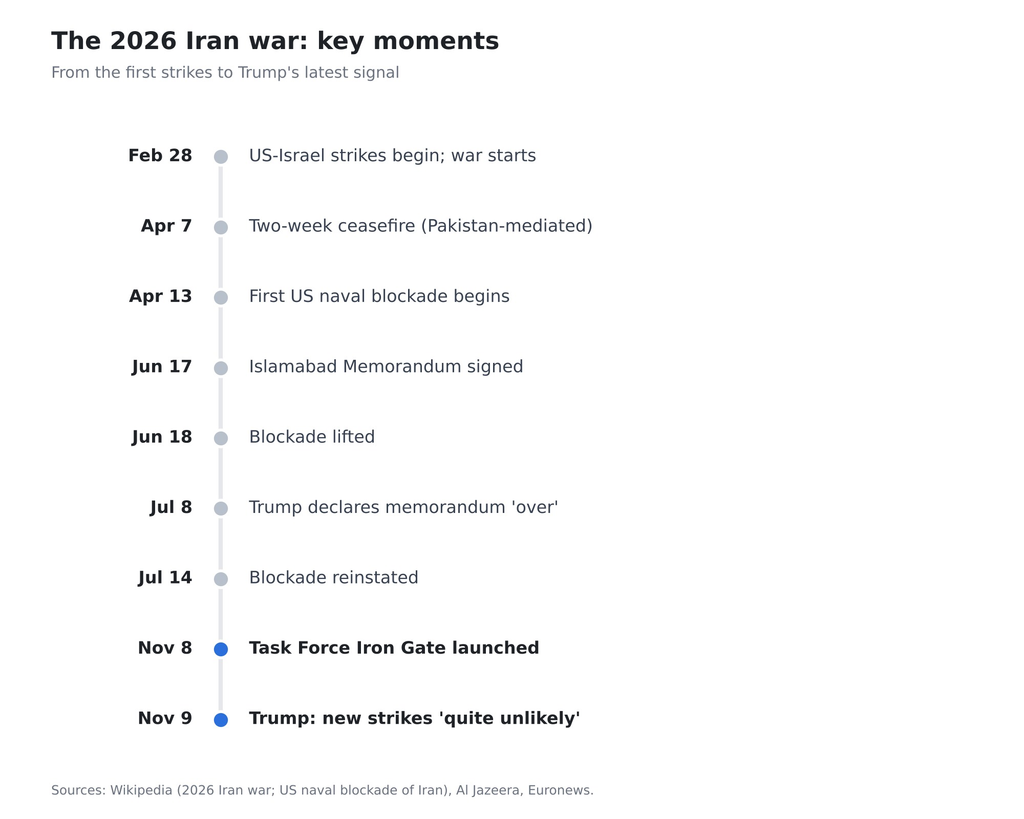
The 2026 Iran war: key moments, from the Feb. 28 strikes to Trump’s Nov. 9 remarks
Is the US Blockade on Iran Still in Place?
Yes. The blockade is the main reason this is not a peace deal yet.
The U.S. first blockaded Iranian ports on April 13. It lifted the blockade on June 18 after the Islamabad Memorandum was signed, then brought it back on July 14 when the agreement fell apart. According to U.S. Central Command (CENTCOM), forces have redirected 147 commercial vessels since July. Five ships that refused to comply were disabled.
On Nov. 8, CENTCOM went further and launched Task Force Iron Gate. It targets weapons, sanctioned goods and illicit revenue moving across Iran’s land borders and the Caspian Sea. Adm. Brad Cooper said the new force will reinforce “our ironclad blockade against Iran at sea.” Trump has called the effort “the largest naval blockade in history.”
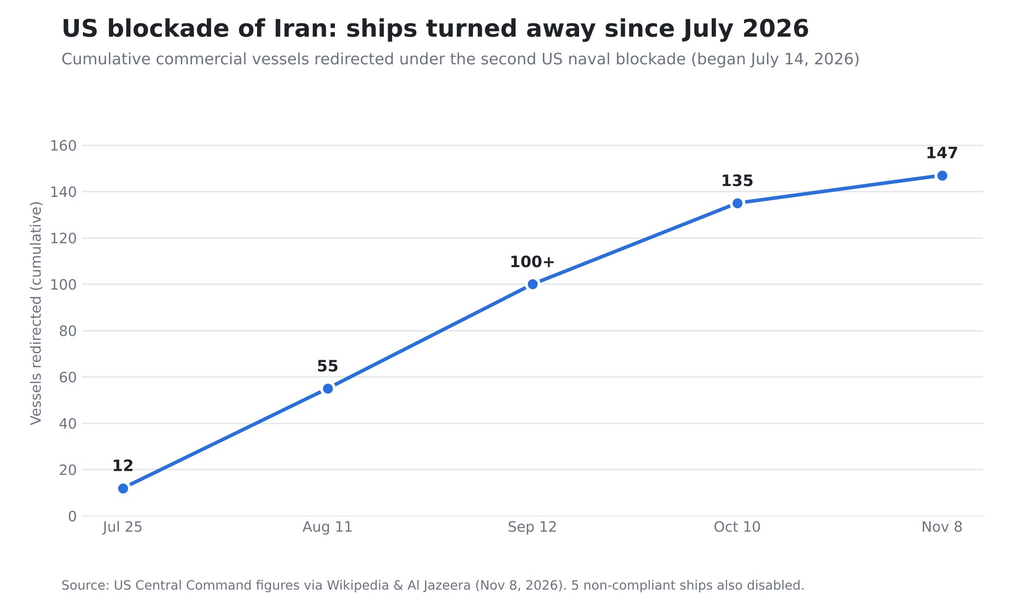
In mid-October, CENTCOM said the blockade had stopped about $25 billion in Iranian crude exports.
Is There a Peace Deal With Iran?
No. There is no signed deal, and the two sides still describe the situation very differently.
According to reports, Iran’s latest proposal would have the U.S. end its port blockade, ease some sanctions and stop strikes. In return, Tehran would lift its own blockade of the Strait of Hormuz, and talks on its nuclear program would come later. Secretary of State Marco Rubio has said the talks show no real progress.
Iranian officials are pushing back hard. Rezaei told Washington to “stop manufacturing fake news about imaginary talks” and to accept Iran’s “seven conditions.” Iranian state media says Tehran will not negotiate until the U.S. takes concrete steps first.
There is also history to keep in mind. A deal was announced in June and signed on June 17, but Trump declared it “over” on July 8 after Iranian attacks on commercial ships.
Strait of Hormuz Latest: Why Oil Markets Care
Roughly a fifth of the world’s oil normally moves through the Strait of Hormuz, so American drivers feel this war at the pump.
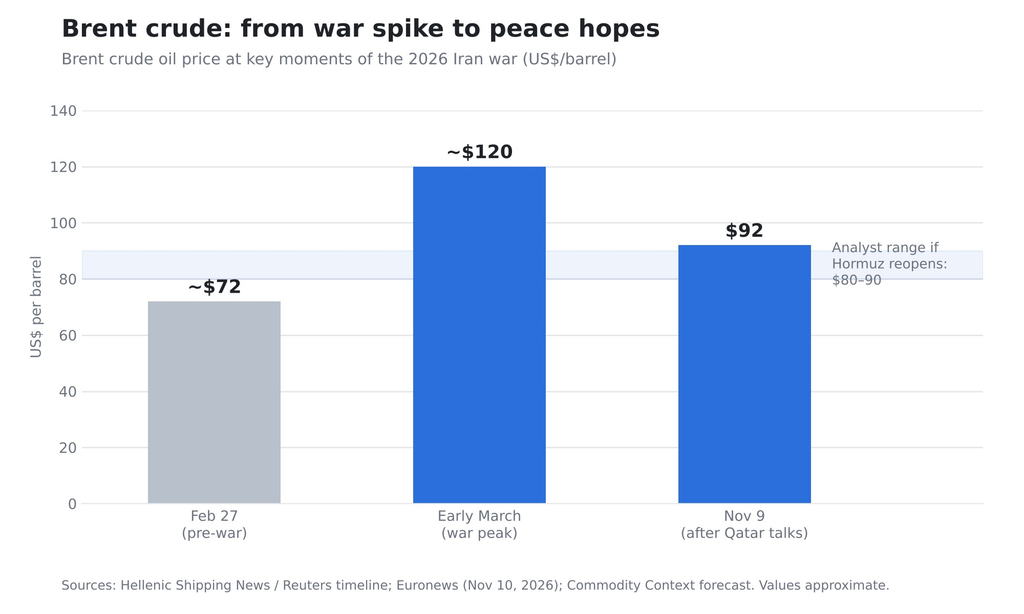
Brent crude was about $72 a barrel before the war. It climbed toward $120 in early March, then dropped to $92 on Monday as traders bet that the fighting could end. One analyst estimates that a full reopening of the strait could push Brent into the 80 to 90 range. That relief helped drive the rebound we covered in our report on the stock market after the Democratic sweep. You can watch the move live on our oil price tracker.
The strait is still dangerous, though. Iran’s Revolutionary Guard said two oil tankers hit sea mines near Hormuz over the weekend. Iran also reported explosions on Qeshm Island, and Trump confirmed U.S. strikes there on Nov. 7, which he called “minor.”
Lower oil also matters for inflation. The Fed has been tightening to fight war-driven price pressure, as we explained in the Fed’s last decision before the midterms.
Is the US Going to Strike Iran Again?
Washington’s stated position is that it probably won’t, but it hasn’t ruled anything out. Several things could restart the fighting:
- Attacks on shipping in Hormuz. This is what ended the June deal.
- Any sign of nuclear weapons work, which Trump calls a non-negotiable line.
- Israel’s actions. Iran’s chief negotiator says Israel is pushing the U.S. deeper into the conflict.
- A breakdown in Qatar’s mediation, if Iran keeps refusing talks.
When Will the Iran War End?
Nobody can give a firm date. Major U.S. offensive operations appear to have stopped, and Gulf states are backing pressure over bombing. Oil markets are also pricing in calmer days. A real end, though, would need a signed agreement that settles the two blockades and the nuclear issue. So far Tehran is refusing to sit down.
For now, the best way to describe the Iran war is a tense standoff that has paused but has not been resolved.
References & Sources
- Euronews — Trump says Iran war ‘effectively over’ as Tehran denies planned talks (Nov. 10, 2026)
- The Media Line — President Trump Says Renewed Iran Strikes Unlikely After Qatar Talks, Vows To Maintain Naval Blockade (Nov. 10, 2026)
- Al Jazeera — US launches task force to disrupt Iran’s land-based supply routes (Nov. 8, 2026)
- The New Arab — Trump claims war ‘effectively over’, Iran presses conditions
- Ynetnews — Trump says Iran strikes unlikely, cites ‘positive momentum’
- Arab News — Trump says Iran war is militarily effectively over after Qatar PM talks
- Wikipedia — 2026 United States naval blockade of Iran
- Wikipedia — 2026 Iran war
- Hellenic Shipping News — A timeline of how the Iran war shook oil prices
- The Hill — Trump calls Strait of Hormuz naval blockade ‘history’s greatest’