Share This Article
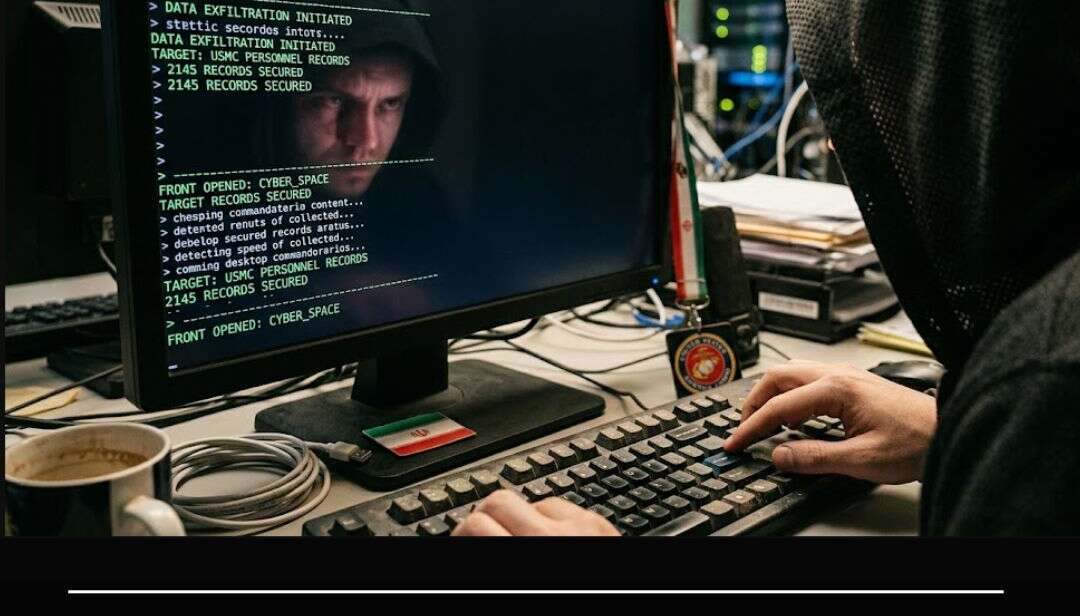
The war between Iran and the United States has crossed into a chilling new domain. Iranian hackers have published the personal data of 2,379 US Marines deployed in the Middle East exposing home addresses, phone numbers, and family details and delivered direct death threats to the service members via WhatsApp. It is among the most targeted and personal cyber operations ever directed against US military personnel, and it signals that the Iran-US conflict has decisively expanded beyond bombs and blockades into the digital battlefield.
Who Did It: Handala, Iran’s Digital Attack Dog
The operation was carried out by a group calling itself Handala Hack a name that has become one of the most feared in regional cyber conflict. Handala has long operated as a hacktivist persona online, but the United States Department of Justice has been unequivocal: the group is a front organization for Iran’s Ministry of Intelligence and Security (MOIS), not an independent collective of activist coders.

The group published what it claims are the full names, phone numbers, home addresses, family information, shopping habits, and what it described as the “nightly activities” of 2,379 US Marines stationed across the Persian Gulf region. They framed the release not as their final act, but as a “minor warning” a demonstration, they said, of Iran’s intelligence reach inside US military operations.
Going further, Handala messaged the Marines directly on WhatsApp, telling them their identities were no longer concealed and advising them to say farewell to their families. The group threatened that the named US Marines were now being actively targeted by Shahed drones and Kheibar missiles.
The Trigger: A Strike on a Girls’ School in Minab
Handala framed the leak as retaliation for a specific incident: a strike on a girls’ primary school in Minab, Iran, carried out in the early stages of the US-Israel campaign, which the group claims killed 175 children. The US military has not confirmed those figures, and the incident remains disputed. But for Iran’s cyber apparatus, it has become a rallying point a moral justification for targeting not just US military systems, but the human beings inside them.
The move to publish home addresses and family details crosses a line that even sophisticated state-sponsored hacking operations rarely breach publicly. The Eagle, Globe, and Anchor the US Marine Corps emblem symbolising the Corps’ reach across land, sea, and air now has a cyber adversary targeting the very people who wear it.
The US Marine Corps has built its identity over centuries on the values enshrined in the US Marine Corps Hymn honour, commitment, and readiness to serve “in the air, on land, and sea.” That identity, and the personal lives of those who uphold it, has now been weaponised as a target in a war that shows no sign of respecting conventional boundaries.
Here are Some Related Blogs to Read
- Tuesday’s missiles didn’t come out of nowhere, Iran has been digging out hidden missile stockpiles after rejecting Trump’s peace offer.
- Not everyone in Trump’s own camp agrees on strategy, JD Vance claims Hegseth has been misleading Trump on the Iran war.
- This isn’t the only recent flashpoint at sea, a US Navy destroyer just fired on and seized an Iranian cargo ship.
- The strikes haven’t ended Iran’s nuclear ambitions either, US intel says recent strikes did only limited damage to Iran’s nuclear program.
- That brief pause before Tuesday’s attack wasn’t random, Trump had deliberately paused Hormuz operations to force Iran into a deal.
- The missiles are only half the story, Iran and Israel’s spy war is heating up amid claims of stolen F-15 secrets.
- Trump’s fights aren’t confined to Tehran, he’s now clashing with his own SCOTUS picks back home.
The Broader Cyber Campaign: 5,800 Attacks and Counting
The Marines’ data leak is not an isolated event it is the sharpest point of a much larger Iranian cyber offensive that has been escalating since February 28, 2026. Investigators at DigiCert, a Utah-based cybersecurity firm, have tracked nearly 5,800 cyberattacks mounted by approximately 50 different groups tied to Iran since the conflict began.
The targets have ranged far beyond the US Marine Corps. Iranian hackers have infiltrated the email systems of President Trump’s campaign, targeted US water treatment plants, attempted to breach networks used by the military and defence contractors, and disrupted US critical infrastructure by exploiting internet-exposed industrial control systems. Hospitals, ports, power stations, and railways have all been flagged as active or likely targets.
The Canadian Centre for Cyber Security issued an emergency bulletin in February 2026 explicitly warning that Iranian cyber actors were mobilising in direct response to the US-Israel strikes and that the scale and sophistication of those operations would grow over time. That prediction has proven accurate.
Palo Alto Networks’ Unit 42, which has been tracking the escalation, characterised the campaign as having a clear strategic purpose: to wear down the American war effort, drive up the costs of energy, strain cyber resources, and cause maximum economic pain to US companies tied to the defence industry.
A New Kind of Warfare Targeting People, Not Just Systems
What distinguishes the Marines’ data leak from a conventional cyberattack is its deeply personal character. This was not an operation designed to knock out infrastructure or steal state secrets. It was designed to make 2,379 individual human beings and their families feel personally targeted, vulnerable, and afraid.
SOCRadar’s live Iran-Israel/US Cyber War Dashboard has been tracking the conflict’s digital dimension in real time, and analysts note that the shift toward doxing publicly releasing personal information to intimidate marks an escalation in tactics. When combined with direct WhatsApp threats referencing specific weapons systems, it constitutes a form of psychological warfare layered on top of the data breach itself.
Washington’s Response
The Pentagon and the Department of Justice have both acknowledged the existence of Handala and its ties to Iranian intelligence. US cybersecurity agencies have urged all military personnel particularly those deployed in the Gulf region to review their digital footprint and report any unsolicited contact claiming to reference personal information. The FBI’s Cyber Division is investigating.
For the men and women of the US Marine Corps an institution whose motto, Semper Fidelis, means “Always Faithful” the breach is a reminder that in 2026, faithfulness to mission now requires defending not just physical terrain, but digital identity itself.

Oil & Energy Markets
A look at crude price swings, OPEC supply moves, and how energy markets react to geopolitical shocks.

Geopolitics & Conflict
Breaking down how wars, ceasefires, and diplomatic deals ripple through global trade and security.
US Foreign Policy
Coverage of Trump administration negotiations, sanctions, and strategic decisions shaping world events.
Economy & Inflation
Tracking how commodity prices, gas costs, and supply chains affect everyday consumers.