New Delhi / Mumbai — When the Prime Minister of the world’s fifth-largest economy publicly urges citizens to exercise caution in purchasing two of the most economically and culturally significant commodities in Indian life — petrol and gold — financial markets do not shrug. They listen, recalibrate, and in many cases, move. Prime Minister Narendra
New Delhi / Mumbai — When the Prime Minister of the world’s fifth-largest economy publicly urges citizens to exercise caution in purchasing two of the most economically and culturally significant commodities in Indian life — petrol and gold — financial markets do not shrug. They listen, recalibrate, and in many cases, move. Prime Minister Narendra Modi’s unusually direct public advisory warning Indians to think carefully before making petrol and gold purchases has landed in a market environment already stretched thin by geopolitical tension, currency pressure, and post-conflict economic uncertainty — and traders across Dalal Street are asking the same urgent question this morning: is today the day the market tumbles?
What Modi Actually Said — and Why It Matters
Modi’s remarks, delivered with the measured but unmistakable gravity he reserves for statements he intends the public to absorb seriously, framed the caution around two intersecting pressures. On petrol, the Prime Minister’s advisory comes against the backdrop of global oil price volatility driven by the ongoing US-Iran war tensions in the Persian Gulf — tensions that directly threaten the Strait of Hormuz, through which a substantial share of India’s crude oil imports transit. On gold, the caution reflects both the rupee’s recent softening against the dollar and the surge in gold prices globally as investors flee to safe-haven assets amid geopolitical uncertainty.
The practical implication of Modi’s statement, read carefully, is this: the government is signalling that petrol prices may not be administratively suppressed indefinitely, and that gold’s current price levels reflect speculative and crisis-driven premiums that ordinary Indian consumers should not treat as a stable investment baseline.
For a country where gold purchases are deeply embedded in cultural practice — from weddings to festival seasons to household savings strategies — and where petrol prices directly determine the cost of daily economic life for hundreds of millions of people, those are not small signals. They are significant ones.
How Markets Are Reading the Advisory
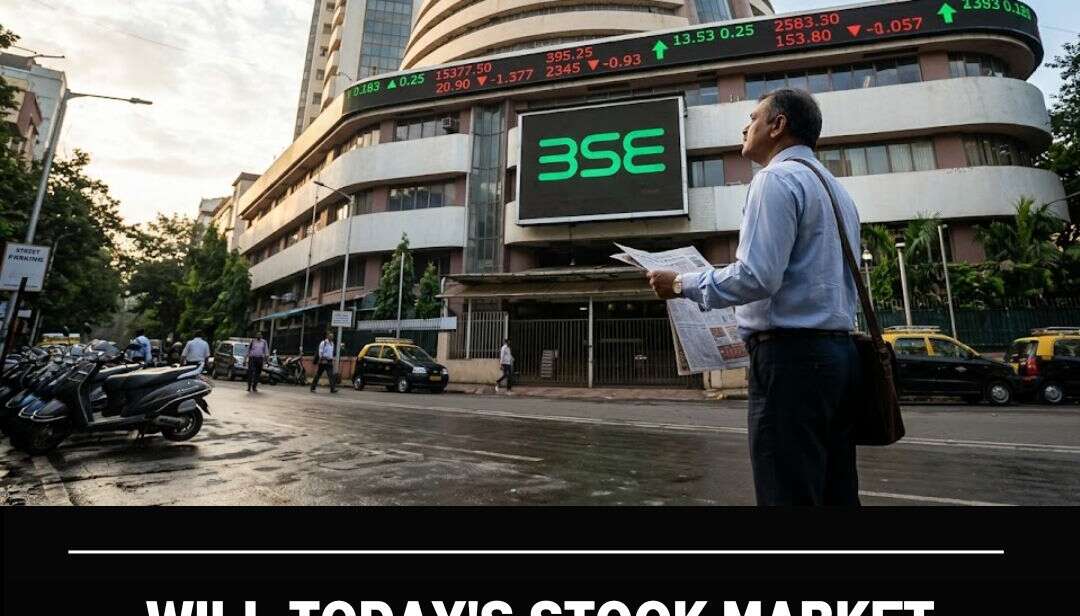
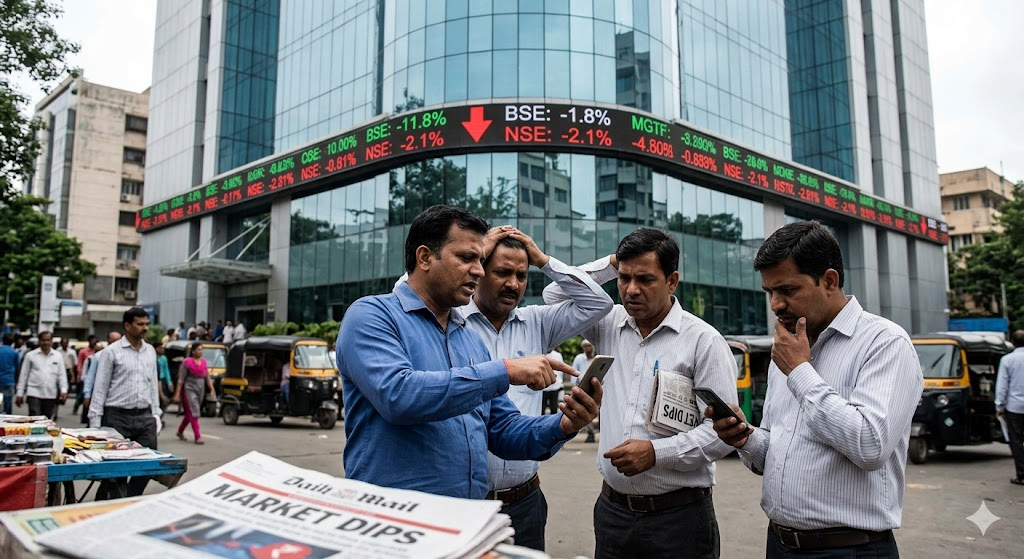
The Bombay Stock Exchange’s Sensex and the National Stock Exchange’s Nifty 50 opened the session with visible nervousness following Modi’s remarks, with both indices posting early losses before stabilising in choppy, low-conviction trading.
The sectors feeling the sharpest immediate pressure are predictable. Oil marketing companies — Indian Oil Corporation, Bharat Petroleum, and Hindustan Petroleum — slid on the dual concern that global crude costs are rising while domestic retail price increases, politically sensitive and administratively managed, remain constrained. The margin squeeze on these state-backed enterprises is a known and recurring pressure point, but Modi’s petrol advisory has reactivated it with fresh urgency.
Jewellery and gold retail stocks — Titan Company, Kalyan Jewellers, Senco Gold — faced selling pressure as investors processed the possibility that a Modi-level advisory could dampen near-term consumer gold purchasing sentiment, particularly ahead of a wedding and festival season that had been expected to sustain strong demand volumes.
Banking stocks with significant gold loan portfolios also saw cautious movement, as any softening in gold’s domestic price trajectory carries direct implications for loan-to-value ratios and collateral security across the sector.
The Petrol Price Pressure Point
India imports approximately 85% of its crude oil requirements, making it acutely sensitive to global oil price movements in ways that larger domestic producers are not. The US-Iran war’s threat to Strait of Hormuz shipping lanes has already added a geopolitical risk premium to global oil benchmarks that Indian refiners are absorbing at the import stage.
The government has, through a combination of excise duty management and administrative pricing decisions, insulated domestic retail petrol prices from the full force of global crude spikes — but that insulation has fiscal limits. Every rupee of crude price increase that is not passed through to consumers at the pump is a rupee that either narrows oil marketing company margins or widens the government’s subsidy burden.
Modi’s caution about petrol purchasing is, in this context, a carefully constructed preparatory signal: the government may be approaching the limit of its ability to shield consumers from global price reality, and it is beginning to manage public expectations accordingly.
For equity investors, that signal translates directly into uncertainty about the timing and magnitude of a potential retail fuel price increase — and about the inflationary knock-on effects such an increase would generate across the broader economy.
Gold: Safe Haven or Speculative Peak?
Gold’s role in the current market conversation is equally layered. Globally, gold prices have surged as institutional investors and central banks have rotated into the metal amid geopolitical uncertainty, dollar volatility, and concern about the US-Iran war’s potential to disrupt energy supply chains and trigger broader economic instability.
In India, that global surge has been amplified by the rupee’s softening, which makes dollar-denominated gold more expensive in domestic currency terms even when global prices stabilise. Indian gold prices have reached levels that, while historically consistent with crisis-period premiums, represent a significant departure from the price points at which ordinary Indian households have traditionally structured their gold purchasing decisions.
Modi’s caution is, read in this light, a responsible advisory against ordinary consumers purchasing gold at speculative peak prices driven by geopolitical factors that may normalise — leaving purchasers holding assets acquired at inflated crisis premiums that erode as global tensions ease.
For the market, however, the advisory introduces a demand uncertainty variable into a sector that had been expecting strong volume support from Indian consumer gold appetite through the upcoming seasonal purchasing window.
Should Investors Panic Today?
The honest answer, market veterans suggest, is no — but complacency carries its own risks in the current environment.
India’s macroeconomic fundamentals remain comparatively resilient. Foreign institutional investor flows, while sensitive to global risk appetite, have not shown the kind of sustained outflow pattern that precedes serious market corrections. The Reserve Bank of India’s monetary policy posture retains room to provide liquidity support if conditions deteriorate sharply. And India’s domestic consumption story — the structural demand driver that has underpinned equity valuations through multiple cycles of external pressure — has not been fundamentally altered by Modi’s advisory.
What has changed is the signal environment. A Prime Minister who publicly cautions his citizens about two of the economy’s most sensitive commodities simultaneously is a Prime Minister who sees pressure building that has not yet fully registered in public pricing. Markets are designed to process that kind of forward signal — and today, they are doing exactly that.
Whether the processing ends in a tumble or a correction and recovery depends, as it almost always does, on what the next forty-eight hours of global geopolitical news delivers.
Modi has issued his caution. The market is issuing its own.
Market Analysis
A quick snapshot of market trends, customer behavior, and competitor movements.