Share This Article
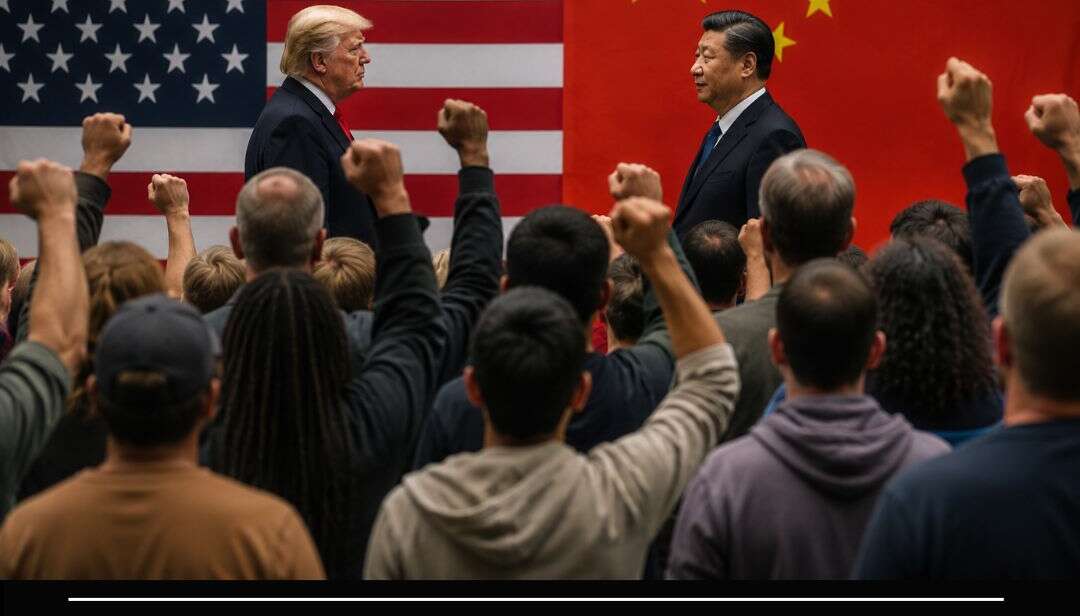
Donald Trump walked into the most important bilateral summit of his presidency carrying something no diplomatic briefing can fix: a domestic political crisis so severe that his own voters have become the invisible third party at the Trump’s Xi Summit Beijing negotiating table.
As Trump sat down with President Xi Jinping on May 14, the geopolitical stakes were enormous Iran, Taiwan, trade, rare earths, semiconductors, the fate of the Strait of Hormuz. But hovering over every exchange, every concession, every line drawn and crossed, was a number that Xi’s advisers understand as well as Trump’s: $4.50 per gallon the average price of gasoline across the United States and the political inferno it has ignited back home.
The Lowest the Needle Has Gone
The US Iran war has done something no previous crisis in Trump’s political career managed: it has broken his connection to his own base on the issue he owned most completely affordability.
Consumer sentiment collapsed in early May to a preliminary reading of 48.2 the lowest score in records stretching back to 1952, when Harry Truman was in the White House. Americans, the survey found, are not just worried about prices. They have fundamentally lost confidence in the near-term economic outlook, driven by the Israel-Iran war’s relentless pressure on energy costs and supply chains.
Gas prices have risen by $1.52 per gallon nearly 50% since the war began on February 28. Inflation hit 3.8% annually in April, outpacing wage growth of 3.6% and eroding real purchasing power for the first time since 2023. Groceries are up. Energy bills are up. And 75% of Americans say the war has directly hurt their household finances a figure that includes 79% of Republican voters.
Trump’s approval rating stands at 34-36%, the lowest of his second term. On the economy, the number that defined his 2024 victory, only 26% of Americans now approve of his performance. On inflation specifically, just 22% give him positive marks.
Voters as Leverage and as Liability
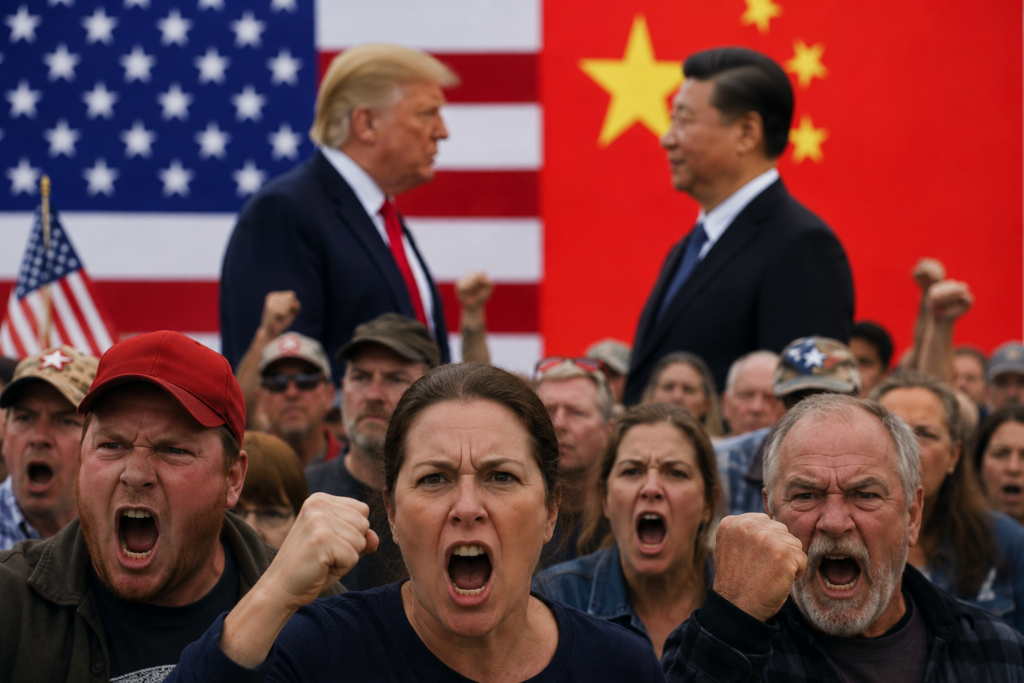
CNN Business framed it directly: America’s angry voters are the X factor in Trump’s high-stakes meeting with Xi. The analysis captures a dynamic that would seem counterintuitive that domestic disapproval could actually serve as diplomatic leverage but which is very real.
Trump’s urgent need for a deal, driven by voter fury over gas prices and the looming midterm elections, means Xi walks into the summit knowing precisely how much pressure Washington is under. Beijing does not need to manufacture urgency. The urgency is baked into every poll, every gas station receipt, and every Republican senator quietly distancing themselves from the war’s costs.
Here are Some Related Blogs to Read
- NATO chief calls US strikes on Iran “absolutely necessary”
- Will gold rally as US-Iran tensions escalate
- Oil jumped but the market stayed calm
- 5 takeaways from Tuesday’s 2026 primaries
- US tariff system reset across 60 economies
- Trump tariffs Section 122 surcharge expires
- Trump had deliberately paused Hormuz operations to force Iran into a deal
- JD Vance claims Hegseth has been misleading Trump on the Iran war
- Iran has been digging out hidden missile stockpiles after rejecting Trump’s peace offer
- US Navy destroyer just fired on and seized an Iranian cargo ship
- Iran and Israel’s spy war is heating up amid claims of stolen F-15 secrets
- he’s now clashing with his own SCOTUS picks back home
Three Republican senators broke ranks this month to support a Democratic-led effort to invoke the War Powers Act to curb Trump’s military authority over the Iran conflict the first significant congressional defection of his second term. Even Senate Majority Leader John Thune expressed scepticism about Trump’s proposed gas tax holiday, which would suspend the 18.4 cents-per-gallon federal levy a measure economists called cosmetically insufficient given a $1.52-per-gallon surge and one that implicitly acknowledged the depth of voter anger.
Senator Tim Kaine called the conflict bluntly “a stupid war that’s costing us $1.50 a gallon.” The political space for the White House is closing.
What Xi Can Offer and What It Will Cost
China holds the key that Trump needs to bring home a political win. As Iran’s largest oil customer buying more than 80% of Tehran’s exported crude Beijing has leverage over Iran that no other country can match. If Xi applies that pressure and Iran moves toward the 14-point memorandum of understanding currently under review in Tehran, Trump returns from Beijing with a peace deal, oil prices fall, gas prices follow, and the political calculus heading into November shifts dramatically.
But Beijing will not do this for free. As Al Jazeera reported, “Trump-Xi summit: China’s help in Iran may require US concessions.” Those concessions are well understood: movement on Taiwan’s status, a reduction in US arms sales to Taipei, relaxed technology export restrictions, and the removal of Chinese firms from the US sanctions list.
The US stock market currently trading at record highs above 7,400 on the S&P 500 has priced in exactly this scenario: a deal gets done, oil falls from $104 toward $75, the Federal Reserve resumes rate cuts, and equities surge further. The Israel-Iran war premium baked into energy markets since February evaporates overnight.
But for that to happen, Trump must make concessions to Xi that his Indo-Pacific allies in Tokyo, Seoul, and Taipei will view with deep alarm and that he has spent his entire political career promising never to make.
The November Clock
Trump has six months before midterms. Democrats lead by 52-42% on the generic congressional ballot a gap that historically signals a wave. The affordability argument that swept Trump to the White House in 2024 has reversed entirely. The political weapon he forged against Biden “Can you afford this? Do you feel the pain at the pump?” is now pointed directly at his own administration.
Xi knows all of this. The summit tables in Beijing are set. The diplomatic language will be formal and carefully calibrated. But underneath every exchange runs the same current: America’s outraged voters are watching, their patience is exhausted, their finances are strained and Trump needs a win before they go to the polls.
In geopolitics, desperation rarely produces good deals. In Beijing this week, it may be the only card Trump has left to play.

Oil & Energy Markets
A look at crude price swings, OPEC supply moves, and how energy markets react to geopolitical shocks.

Geopolitics & Conflict
Breaking down how wars, ceasefires, and diplomatic deals ripple through global trade and security.
US Foreign Policy
Coverage of Trump administration negotiations, sanctions, and strategic decisions shaping world events.
Economy & Inflation
Tracking how commodity prices, gas costs, and supply chains affect everyday consumers.