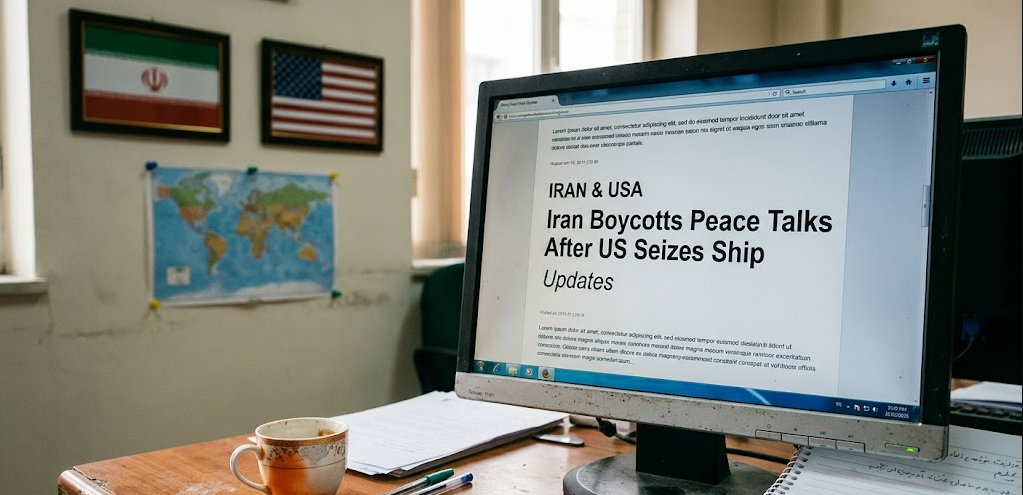
BREAKING: Iran has withdrawn its delegation from the Islamabad ceasefire talks following the US Navy’s seizure of an Iranian-linked oil tanker in the Persian Gulf. Tehran is calling it a “hostile act.” Washington calls it “lawful sanctions enforcement.” The ceasefire expires in 48 hours. LIVE FEED — APRIL 20, 2026 11:47 a.m. EDT — OIL
BREAKING: Iran has withdrawn its delegation from the Islamabad ceasefire talks following the US Navy’s seizure of an Iranian-linked oil tanker in the Persian Gulf. Tehran is calling it a “hostile act.” Washington calls it “lawful sanctions enforcement.” The ceasefire expires in 48 hours.
LIVE FEED — APRIL 20, 2026
11:47 a.m. EDT — OIL SURGES ON TALKS COLLAPSE NEWS
WTI crude jumped $8.20 per barrel — now trading at $103.40 — its highest level since the ceasefire was announced April 7. Brent crude crossed $106. Goldman Sachs issued an emergency client note: “We are now pricing ceasefire breakdown as the base case. $130 within 72 hours if April 21 passes without extension.” The Dow fell 620 points in morning trading. Every major Asian index closed lower overnight.
The market is not waiting for diplomats. It is already pricing what comes next.
11:12 a.m. EDT — IRAN OFFICIALLY PULLS DELEGATION FROM ISLAMABAD
Iran’s Foreign Ministry issued a formal statement confirming its negotiating team has been recalled from Islamabad “pending a full accounting of the unlawful seizure of the MV Sorena and the release of its crew.”
FM Abbas Araghchi’s statement, delivered to Iranian state media:
“The United States cannot simultaneously claim to negotiate in good faith and conduct acts of maritime aggression against the Islamic Republic. The seizure of the MV Sorena is not a sanctions matter. It is a declaration of hostile intent. Iran will not return to the table until this act is reversed and its crew freed.”
The Islamabad talks are now effectively suspended — with 48 hours remaining on the April 21 ceasefire deadline.
10:38 a.m. EDT — WHAT HAPPENED: THE MV SORENA SEIZURE
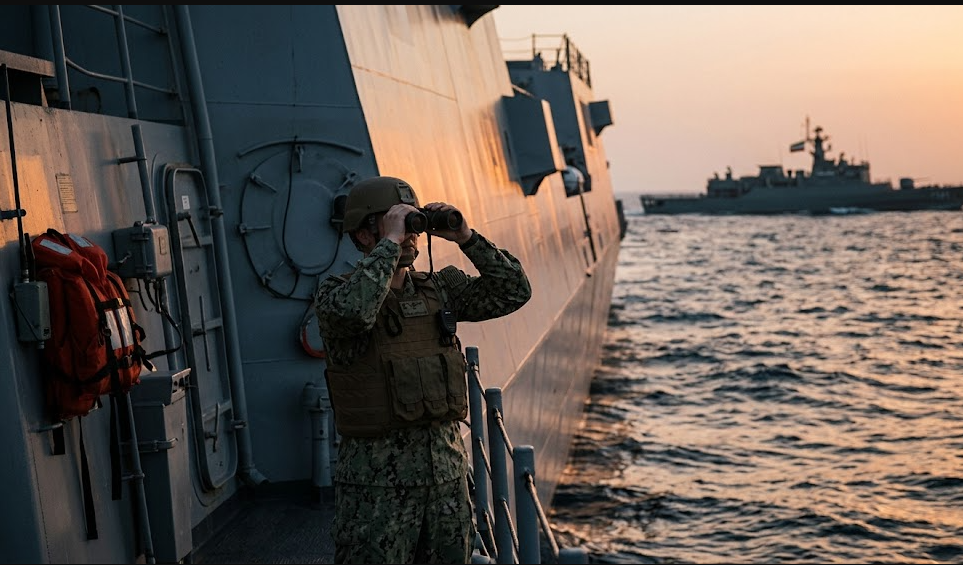
At approximately 3:20 a.m. local time Thursday, the USS Gravely — an Arleigh Burke-class guided-missile destroyer operating as part of the 15-ship US naval blockade formation — intercepted the MV Sorena, a Panama-registered, Iranian-operated crude oil tanker, in the northern Persian Gulf approximately 34 nautical miles from the Iranian coastline.
US CENTCOM issued a statement confirming the seizure, describing it as “a lawful enforcement action under existing US sanctions authorities targeting Iranian oil revenues that fund the IRGC’s destabilizing regional activities.” The vessel was carrying approximately 2 million barrels of crude oil — valued at roughly $200 million at current market prices — destined, CENTCOM alleged, for a Chinese refinery operating through a front company on the Treasury Department’s SDN list.
The MV Sorena’s crew of 24 — 18 Iranian nationals, 4 Pakistani nationals, and 2 Filipino nationals — are currently aboard the vessel, which is being escorted to a US naval facility in Bahrain.
Iran’s IRGC Navy Commander issued an immediate statement: “This theft of Iranian sovereign property and detention of Iranian citizens is an act of war. The response will be proportional, decisive, and will arrive at a time and place of our choosing.”
10:05 a.m. EDT — PAKISTAN SCRAMBLES TO SAVE THE PROCESS
Pakistani PM Shehbaz Sharif — who brokered the original April 7 ceasefire in those final desperate hours — is making emergency calls to both Washington and Tehran, according to sources cited by Reuters. Pakistan’s Foreign Ministry issued a statement calling for “maximum restraint from all parties” and urging Iran to “allow diplomatic channels to address the vessel matter before drawing conclusions that could foreclose the peace process.”
Army Chief Asim Munir, whose direct call with Trump 12 days ago produced the ceasefire, has reportedly spoken with VP Vance. The substance of that conversation has not been disclosed. Pakistan is the only party with credibility on both sides of this crisis. Whether that credibility is sufficient to pull the talks back from the edge is the central question of the next 48 hours.
09:41 a.m. EDT — VANCE DELEGATION STATEMENT
VP JD Vance’s office released a brief statement from Islamabad:
“The United States remains committed to the ceasefire framework and the negotiating process. The enforcement action against the MV Sorena was conducted under longstanding legal authorities entirely separate from the ceasefire agreement. We call on Iran to distinguish between lawful sanctions enforcement and ceasefire violations, and to return to the table.”
The statement does not offer to release the vessel. It does not acknowledge Iran’s characterization of the seizure. It asks Iran to accept a legal distinction Tehran has explicitly and publicly rejected.
Secretary of State Rubio, in Washington, was blunter when asked by reporters: “Sanctions enforcement doesn’t stop because there’s a ceasefire. Iran knew that. This is a choice they’re making.”
09:15 a.m. EDT — HEGSETH: “NOT BACKING DOWN”
Defense Secretary Pete Hegseth, speaking at a Pentagon briefing, confirmed the seizure and defended it in terms that left no ambiguity about the administration’s posture:
“The MV Sorena was carrying Iranian oil in direct violation of active US sanctions. The USS Gravely acted lawfully, professionally, and in full accordance with standing orders. We are not backing down from sanctions enforcement because Iran has chosen to use it as a pretext to walk away from talks they were already stalling.”
Hegseth also dismissed Iran’s “proportional response” threat: “Iran’s IRGC should think very carefully before testing the 15 warships currently in the Persian Gulf.”
08:47 a.m. EDT — WHAT THE CEASEFIRE TEXT ACTUALLY SAYS
The April 7 ceasefire — announced via Truth Social in 126 words — required Iran to agree to the “COMPLETE, IMMEDIATE, and SAFE OPENING of the Strait of Hormuz.” It said nothing about pausing US sanctions enforcement. It said nothing about suspending the naval blockade. It said nothing about the legal status of Iranian oil shipments during the ceasefire period.
That silence is now the crisis.
The US position: sanctions enforcement is legally separate from the ceasefire agreement and was never suspended. The ceasefire governs military hostilities, not economic law enforcement.
Iran’s position: a naval vessel boarding and seizing an Iranian ship 34 miles off the Iranian coast — during an active ceasefire, in waters Iran considers within its sphere of maritime authority — is a military act regardless of the legal label attached to it.
Both positions are internally coherent. Neither resolves the confrontation. And the ceasefire text, written in 126 words in the heat of a diplomatic emergency, provides no mechanism for adjudicating the dispute.
This is what happens when a ceasefire is announced before it is negotiated.
08:20 a.m. EDT — IRAN HALTS HORMUZ SHIPPING — AGAIN
IRGC naval units have halted commercial vessel transit through the northern Hormuz corridor for the third time since the April 7 ceasefire — this time indefinitely, pending resolution of the MV Sorena incident, according to maritime tracking services cited by Bloomberg and Lloyd’s List Intelligence.
An estimated 340 vessels are currently queued or repositioning in the Gulf of Oman awaiting Hormuz transit clearance. Shipping insurance premiums for Gulf routes have spiked 180% since Thursday morning’s seizure news. At least three major tanker operators — including a Greek firm and two South Korean carriers — have declared force majeure on scheduled cargo deliveries.
The physical oil market, which was already pricing continued disruption, is now pricing active re-closure. Dated Brent spot is back above $108.
07:55 a.m. EDT — THE BACKGROUND: WHY THIS MOMENT WAS PREDICTABLE
Every expert who watched the April 7 ceasefire announcement flagged the same structural vulnerability: the agreement was built on ambiguity rather than resolution.
The ceasefire paused the bombing. It did not address:
The $2 million per-tanker transit fee Iran’s parliament approved on March 22
The ongoing US naval blockade of Iranian ports
The status of US sanctions enforcement during the ceasefire window
Israeli operations in Lebanon — excluded entirely from ceasefire terms
Iran’s 460-kilogram stockpile of 60%-enriched uranium
The MV Sorena seizure is not an accident. It is the predictable consequence of a ceasefire architecture that deferred every hard question to talks that never resolved them. Tim Waterer of KCM Trade said it precisely on April 8: “The ceasefire was announced as if the hard part was over. The hard part hadn’t started.”
BCA Research’s Matt Gertken had warned the day after the ceasefire that hostilities could “ignite later this month.” He was right about the timing. He may yet be right about the ignition.
07:30 a.m. EDT — WHAT HAPPENS IF APRIL 21 PASSES WITHOUT AGREEMENT
Three scenarios remain in play as the 48-hour clock runs:
Scenario A — Emergency release and resumption: The US releases the MV Sorena crew on humanitarian grounds — not the vessel or cargo — creating enough face-saving space for Iran to return to Islamabad. Pakistan mediates an emergency session. A 30-day ceasefire extension is agreed. The crisis is deferred.
Scenario B — Frozen impasse: Neither side moves. April 21 arrives. Both sides declare the other in breach. The ceasefire expires in legal ambiguity — neither formally resumed war nor active peace. The blockade remains. Hormuz remains partially closed. Oil stabilizes at $110–$120. The world operates in a permanent semi-crisis.
Scenario C — Escalation: Iran’s “proportional response” arrives — a strike on a US naval asset, a Gulf state facility, or Israeli infrastructure. The US responds under the blockade posture. The ceasefire is formally over. The Phase 2 war begins with 15 American warships already in position and oil markets printing $140+ before the first exchange is confirmed.
07:15 a.m. EDT — SUMMARY
The ceasefire built on one Truth Social post and one phone call from Pakistan is now being dismantled by one ship seizure and one walked-out delegation. The gap between what was announced on April 7 and what was actually agreed has produced exactly the crisis that gap made inevitable.
48 hours. One seized tanker. Two suspended delegations. Fifteen warships. And every oil futures desk on earth is watching the same Persian Gulf.
We will update this live feed as events develop.
Market Analysis
A quick snapshot of market trends, customer behavior, and competitor movements.