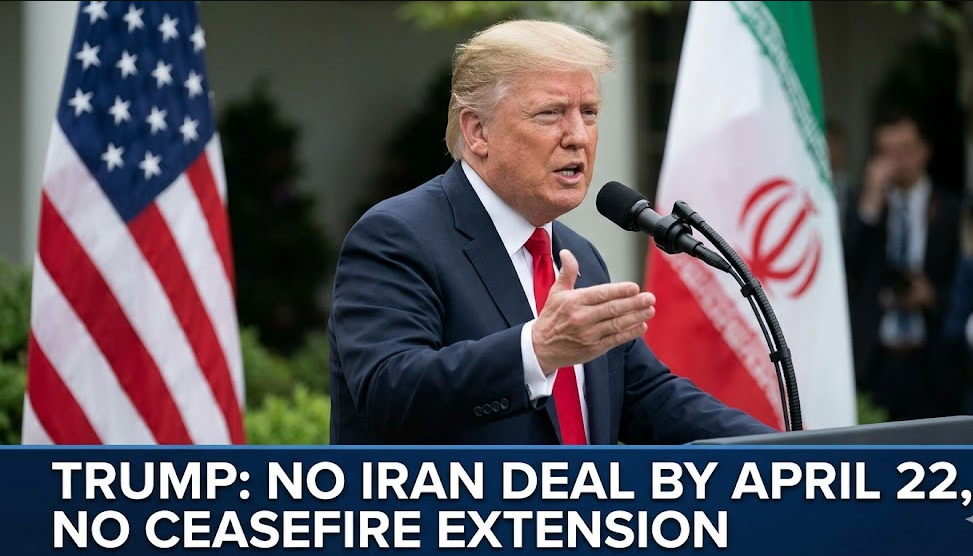
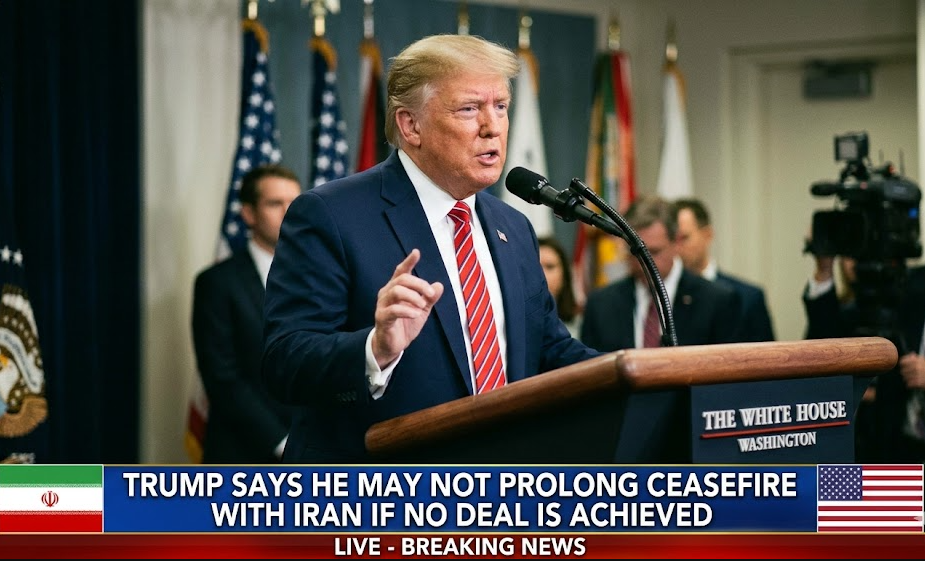
With the clock ticking toward a Wednesday deadline and a naval blockade still choking Iranian ports, President Donald Trump issued his starkest warning yet: if no deal is in hand when the ceasefire expires, the bombs may start falling again. “Maybe I won’t extend it,” Trump told reporters on Friday when asked what happens if
With the clock ticking toward a Wednesday deadline and a naval blockade still choking Iranian ports, President Donald Trump issued his starkest warning yet: if no deal is in hand when the ceasefire expires, the bombs may start falling again.
“Maybe I won’t extend it,” Trump told reporters on Friday when asked what happens if talks produce nothing before April 22. “So you’ll have a blockade — and unfortunately we’ll have to start dropping bombs again.”
The comment landed like a flare over an already volatile diplomatic landscape. The two-week ceasefire between the United States and Iran, which began April 8 following the collapse of the Islamabad talks, is now less than 96 hours from expiration. A senior U.S. official confirmed to CNBC that Washington has “not formally agreed” to any extension — even as Trump continued oscillating between threats and optimism within the same news cycle.
“Very Close” — But Not There Yet
Just hours after his warning, Trump struck a dramatically different tone in a phone interview with AFP from Las Vegas.
“We’re very close. Looks like it’s going to be very good for everybody,” he said, adding that a deal was imminent. When pressed on why he could not yet declare victory, he offered a line that captured the ambiguity of the entire negotiation: “I don’t do that. I get it in writing.”
On Truth Social, he posted that Iran had promised to reopen the Strait of Hormuz and that progress on dismantling its nuclear program was “moving fast.” CNBC reported he told Fox News that the war was “very close to over” — a phrase he has now used three times in as many days without a deal materializing.
The White House said prospects were “looking really good.” No extension has been signed. The blockade remains active. The ceasefire clock is running.
What’s Actually Blocking a Deal
Beneath Trump’s public optimism, negotiators are still deadlocked on the issues that broke the Islamabad talks apart.
The core nuclear dispute: the U.S. wants Iran to commit to a 20-year suspension of uranium enrichment and the removal of its existing stockpile of highly enriched uranium from Iranian soil. Iran has countered with a five-year pause — a gap that, as Al Jazeera noted, reflects a fundamental disagreement not just about timelines but about whether Iran retains any sovereign right to a civilian nuclear program at all.
Iranian Supreme Leader Ayatollah Khamenei has been unambiguous: enrichment is non-negotiable. A U.S. official told Time that Tehran did not agree to any of Washington’s “red lines” at Islamabad — not the enrichment ban, not the dismantling of major facilities, and not the removal of the stockpile.
The Strait of Hormuz added another layer of friction. Iran has floated the idea of charging transit fees to vessels passing through the strait — a proposal the U.S. flatly rejected. The strait handles roughly 20% of global oil traffic, and any toll mechanism would effectively institutionalize Iranian leverage over world energy markets.
Bloomberg summarized the gridlock plainly: Hormuz tolls, uranium enrichment, and the Lebanon question are the three structural hurdles between the current ceasefire and a lasting peace.
Mediators Racing Against the Clock
Three nations — Pakistan, Egypt, and Turkey — have spent the past week attempting to bridge the gaps before Wednesday. Axios reported that plans for a second direct meeting between U.S. and Iranian negotiators are already underway, with Geneva and Islamabad both under consideration as potential venues.
Whether those talks materialize before the deadline — and whether either side arrives with enough flexibility to move — remains the central uncertainty. The Islamabad round ran 21 hours before collapsing. A second round under a tighter clock carries even higher stakes.
The Washington Post noted that since the naval blockade was imposed on April 12, few ships have passed through the Strait of Hormuz, with energy markets watching every diplomatic signal for signs of resolution. Oil prices have remained elevated throughout the standoff.
The Cost of Walking Away
Analysts warn that allowing the ceasefire to lapse without a deal would be catastrophic in both military and economic terms. Operation Epic Fury, the joint U.S.-Israeli strike campaign that began the current conflict, already reshaped the region’s balance of power — but a resumption of full-scale strikes against a country under active naval blockade would carry consequences far beyond what the initial campaign produced.
For Trump, the political calculation is equally complex. The same base that cheered his willingness to use military force is now watching oil prices, 401(k) values, and gas pump numbers. A deal — even an imperfect one — ends both.
“I think it’s going to happen,” Trump said aboard Air Force One. The ceasefire expires in four days.
Market Analysis
A quick snapshot of market trends, customer behavior, and competitor movements.