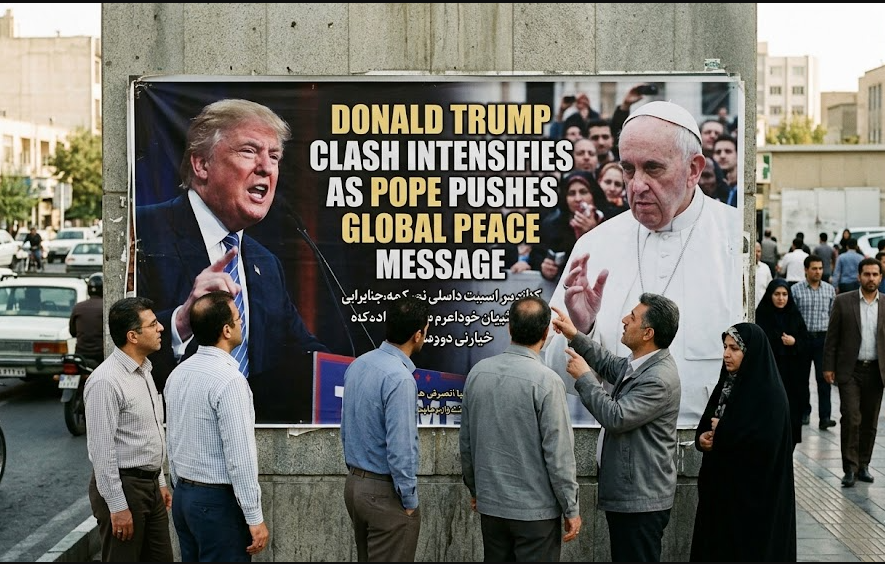
As Pope Leo XIV tours Africa calling for dialogue and an end to the Iran war, Trump keeps attacking — losing even his closest European ally in the process. The setting was deliberately chosen. On Wednesday, Pope Leo XIV stood inside a mosque in Algiers — the first papal visit to Algeria in history —
As Pope Leo XIV tours Africa calling for dialogue and an end to the Iran war, Trump keeps attacking — losing even his closest European ally in the process.
The setting was deliberately chosen. On Wednesday, Pope Leo XIV stood inside a mosque in Algiers — the first papal visit to Algeria in history — and invoked Saint Augustine to make his central argument: that peoples of different beliefs, different worship, different ways of living can nonetheless “live together in peace.”
It was a message aimed at the world. It was also, unmistakably, a message aimed at Washington.
Within hours, President Trump was back on Truth Social.
A Feud That Will Not Stop
The Trump-Leo confrontation, which erupted last weekend over the Iran war, has not cooled. It has escalated — daily, publicly, and in ways that are beginning to alarm political and religious figures across the ideological spectrum.
Trump’s initial broadside called the first American pope “WEAK on Crime” and “terrible for Foreign Policy,” accused him of “catering to the Radical Left,” and included a now-deleted AI-generated image of Trump himself depicted as Jesus Christ. As the week progressed, the attacks became more pointed. Trump posted that he “didn’t want a Pope who thinks it’s OK for Iran to have a Nuclear Weapon,” and later urged Leo to “get his act together, use Common Sense, and focus on being a Great Pope, not a Politician.”
On Tuesday, Trump told reporters aboard Air Force One that he was simply “not a fan” of the pope — a phrase so casual in its dismissal of the leader of 1.4 billion Catholics that it landed harder than any formal critique.
By Wednesday, Trump had issued yet another Truth Social broadside, telling his followers: “Will someone please tell Pope Leo that Iran has killed at least 42,000 innocent, completely unarmed, protesters in the last two months.”
Leo’s response, delivered from the papal flight to Cameroon, was measured and immovable: “The world needs to hear today” a message of peace, dialogue, and “multilateral relationships among states to look for just solutions.” He did not mention Trump by name. He did not need to.
What the Pope Actually Said — and Why It Enraged Trump
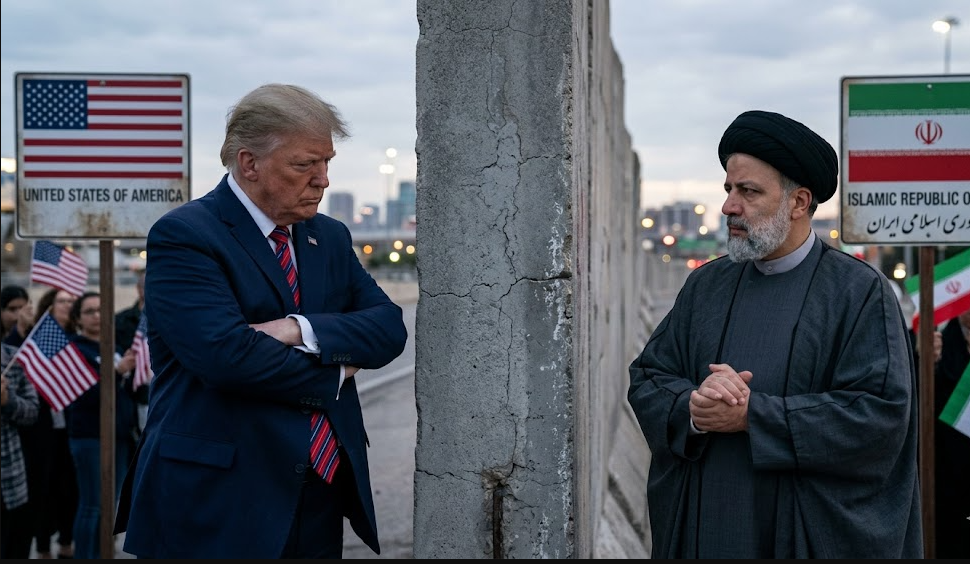
The feud’s origin traces to Leo’s public response to Trump’s threats during the Iran war’s most intense phase. When Trump threatened to destroy Iranian civilization if Tehran did not comply with his demands, Leo issued a direct rebuke from the Vatican: the threat was “truly unacceptable.” He warned in a Sunday address that a “delusion of omnipotence” was fueling the conflict, and wrote that “God does not bless any conflict.”
For Trump, whose political brand is built on projecting strength through force and whose base views the Iran war as righteous, those phrases were not abstract theology. They were a challenge to the legitimacy of his war — delivered by the most morally authoritative voice on earth, and one who happened to be American.
NPR’s historical analysis put the stakes plainly: while popes and American presidents have been at cross purposes before, it is exceedingly rare for a sitting pontiff to directly criticize a US president by name — and Trump’s sustained, personal counter-attack is “equally uncommon, if not more so.”
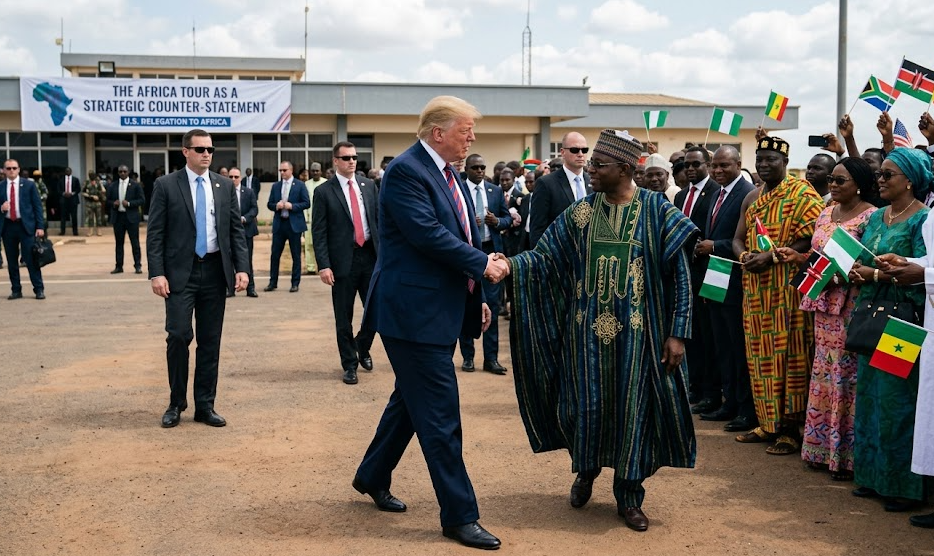
The Africa Tour as a Strategic Counter-Statement
Leo’s 11-day tour of four African nations — Algeria, Cameroon, Angola, and Equatorial Guinea — is not, on its surface, a response to Trump. But its timing and framing make it function as one. Africa represents the Catholic Church’s fastest-growing demographic base and a continent that is watching the Iran war’s energy shock devastate already fragile economies. When Leo preaches peace from Algiers and Yaoundé, he is speaking to a global audience that is overwhelmingly opposed to the conflict’s continuation.
The US Conference of Catholic Bishops’ news service acknowledged that White House criticisms “clouded the initial days” of the trip — a diplomatic formulation that understates the degree to which Trump’s attacks have become the story around Leo’s journey. The pontiff has navigated it by refusing to engage Trump’s specific charges and instead amplifying his central message with each successive stop.
The Meloni Rupture – The most politically significant consequence of Trump’s papal attacks is not the backlash from expected critics. It is the public rupture with Italian Prime Minister Giorgia Meloni — Trump’s closest European ally and the leader who has most consistently aligned her government with White House priorities.
Meloni stated this week that she finds Trump’s comments about the Pope “unacceptable.” Her formulation was careful but unambiguous: “The Pope is the head of the Catholic Church and it is right and normal that he calls for peace and condemns every form of war.”
The damage to the Trump-Meloni relationship — carefully cultivated over more than a year as the centerpiece of Trump’s European strategy — has sent ripples through Brussels and Rome. Euronews described it as a shift “from close relations to a transatlantic crisis.” Italy is a NATO member, a G7 economy, and the country that hosts the Vatican. For Meloni to break publicly with Trump over the Pope signals that attacking Leo XIV carries costs that Trump’s political team may have underestimated.
The Catholic Vote Problem
Axios and multiple pollsters have flagged the electoral arithmetic that makes this feud genuinely dangerous for Trump domestically. Catholics represent America’s largest swing religious voting bloc. Trump won them by 10 to 20 points in 2024. His approval among white Catholics had already fallen from 59 percent in February 2025 to 52 percent by January 2026 — before this week’s confrontation with an American pope on an African peace tour.
Salon reported that Catholic leaders are warning of a “serious juncture” in the relationship between American Catholics and the Republican Party. The Conversation’s analysis described Leo’s response to Trump’s attacks as revealing “a man of God, not politics” — a framing that implicitly positions every Trump broadside as the political act and every papal response as the moral one.
The Pope is on a plane to Cameroon. Trump is on Truth Social. The world is watching both.
Market Analysis
A quick snapshot of market trends, customer behavior, and competitor movements.