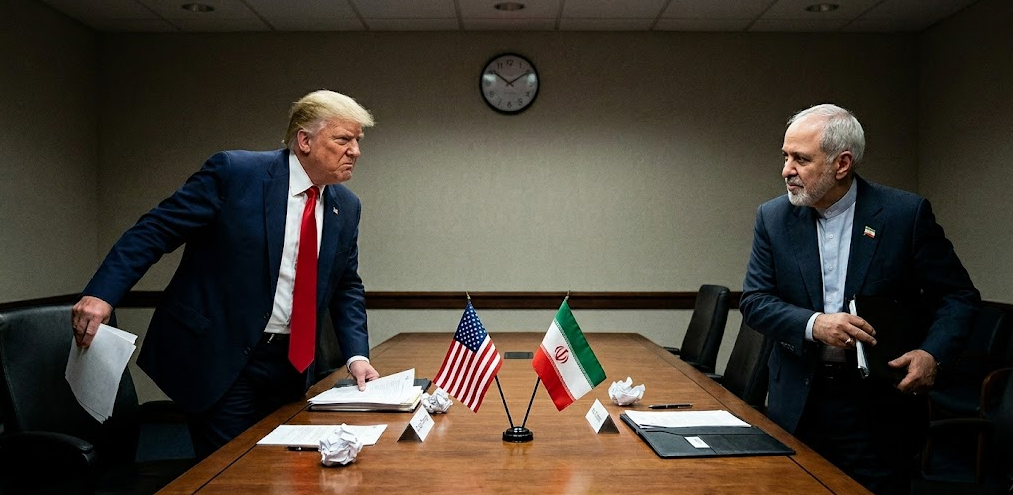
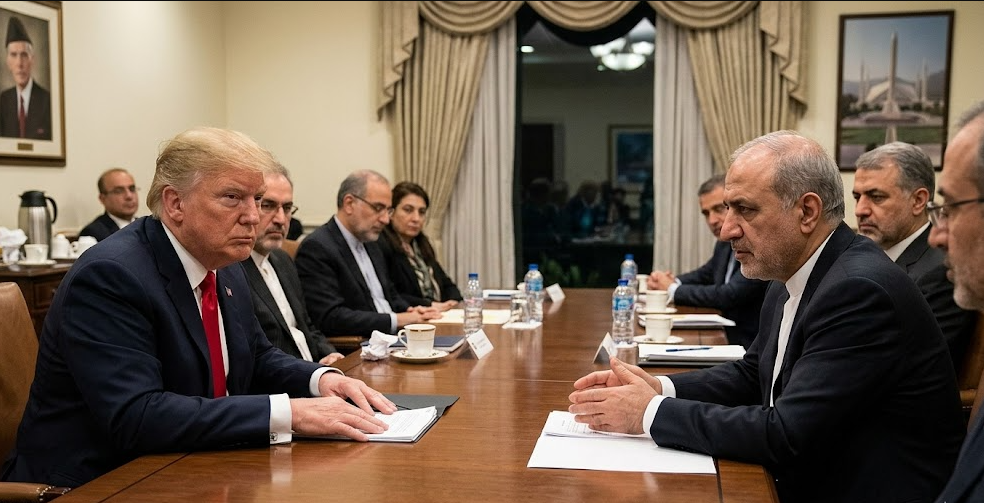
They arrived in Islamabad carrying the weight of a six-week war, a fragile ceasefire, and the highest diplomatic stakes either country had faced in a generation. Twenty-one hours later, the American delegation boarded Air Force Two without a deal. Within 24 hours, the USS Abraham Lincoln was in position off the Iranian coast. This is
They arrived in Islamabad carrying the weight of a six-week war, a fragile ceasefire, and the highest diplomatic stakes either country had faced in a generation. Twenty-one hours later, the American delegation boarded Air Force Two without a deal. Within 24 hours, the USS Abraham Lincoln was in position off the Iranian coast.
This is how the most consequential diplomatic failure of 2026 unfolded, hour by hour.
The Table Nobody Thought Would Happen
The Islamabad talks were historic by any measure. They were the first direct, face-to-face negotiations between American and Iranian officials in more than a decade — and the highest-level meeting between the two governments since the founding of the Islamic Republic in 1979. That they happened at all was the result of weeks of back-channel work by Pakistani Prime Minister Shehbaz Sharif and Army Chief Field Marshal Asim Munir, who pressed both sides to accept Islamabad as neutral ground.
The U.S. delegation was heavy with political weight: Vice President JD Vance leading, flanked by special envoy Steve Witkoff and Jared Kushner. Iran sent Foreign Minister Abbas Araghchi and Parliament Speaker Mohammad Bagher Ghalibaf — signaling that Tehran was treating the talks as a parliamentary-level commitment, not merely a diplomatic formality.
Talks began Saturday. They ran through the night.
What Each Side Put on the Table
The American position was structured around five non-negotiables. According to a U.S. official who briefed TIME Magazine, Iran had to: permanently end all uranium enrichment; dismantle its major enrichment facilities; remove its stockpile of nearly one thousand pounds of highly enriched uranium from Iranian territory; cease all funding to allied militant groups across the region; and reopen the Strait of Hormuz to all naval traffic without collecting tolls.
Iran came with its own framework. Tehran demanded a binding U.S. nonaggression guarantee — written, not verbal — recognition of Iran’s sovereign right to enrich uranium domestically, the release of $6 billion in frozen assets, an end to Israeli strikes against Hezbollah as part of any permanent agreement, and the formal right to levy passage tolls on Hormuz shipping.
The gap between those two sets of demands was not a negotiating gap. It was a chasm.
The Hours That Mattered
Through the first twelve hours, diplomats on both sides described the talks as substantive. Pakistan’s mediators shuttled between rooms. Witkoff and Araghchi held extended bilateral sessions. There were moments, multiple Iranian officials later said, when a preliminary framework — a memorandum of understanding the Iranians were calling the “Islamabad MOU” — appeared within reach.
Iran’s Foreign Minister Araghchi described what he said happened next in blunt terms: “When just inches away from the Islamabad MOU, we encountered maximalism, shifting goalposts, and blockade.” His account was that the American team hardened its position in the final hours rather than closing the distance.
The American team’s account differed. Enrichment was the wall. No amount of creative language around timelines, inspections, or phased implementation could bridge the core impasse: Tehran insisted on the right to enrich. Washington insisted on total termination.
Vance Walks to the Microphone
At a press conference in Islamabad before boarding Air Force Two, Vice President Vance delivered the verdict in measured, deliberate language:
“The simple fact is that we need to see an affirmative commitment that they will not seek a nuclear weapon, and they will not seek the tools that would enable them to quickly achieve a nuclear weapon.”
He said the U.S. had made “a lot of progress” — a phrase that landed awkwardly given the outcome — and added: “Iran has chosen not to accept our terms.”
Then he left.
Iran’s Parliament Speaker Ghalibaf offered a mirror image from the other side of the table: the United States, he said, “failed to gain the trust” of the Iranian delegation. Iranian state media framed it as American overreach: “After 21 hours of talks and diplomatic efforts, the excessive demands by America prevented any agreement.”
Both sides blamed each other. Neither was entirely wrong.
What Pakistan Is Now Doing
Notably, both Trump and Iranian officials publicly praised Pakistan’s Prime Minister Sharif and Field Marshal Munir for their mediation — a deliberate signal that Islamabad’s role as a channel is not finished. Pakistan quickly announced it would continue pressing for a second round of talks, and CNN reported that the U.S. has not ruled out a return to direct negotiations even as the blockade takes hold.
“The ball is in Iran’s court,” Vance said on the way out. Islamabad is keeping the court open, just in case.
The ceasefire expires April 21. The blockade is now active. And the Islamabad MOU — the deal that was reportedly inches away — remains unsigned on a table in Pakistan.
Market Analysis
A quick snapshot of market trends, customer behavior, and competitor movements.