On February 27, 2026 — the day before US and Israeli forces launched Operation Epic Fury — a barrel of Brent crude oil cost $73. Six weeks later, it was trading above $115. In between those two numbers lies every gas station receipt, every grocery bill, every airline ticket, and every shipping surcharge that Americans
On February 27, 2026 — the day before US and Israeli forces launched Operation Epic Fury — a barrel of Brent crude oil cost $73. Six weeks later, it was trading above $115. In between those two numbers lies every gas station receipt, every grocery bill, every airline ticket, and every shipping surcharge that Americans have been absorbing since the most disruptive energy crisis since the 1970s erupted in the Persian Gulf.
The data is now in. The March 2026 Consumer Price Index, released April 10, delivered the clearest confirmation yet of what millions of families had already felt in their wallets: the Iran war is not just a foreign policy story. It is a kitchen-table story — and it is getting worse.
The CPI Number That Stopped the Room
The March CPI report came in at 3.3% annual inflation — the highest reading in nearly two years, and a figure that wiped out 18 months of the Federal Reserve’s painstaking progress toward its 2% target. Month-over-month, prices jumped 0.9% — triple the 0.3% pace recorded in February, before the war began.
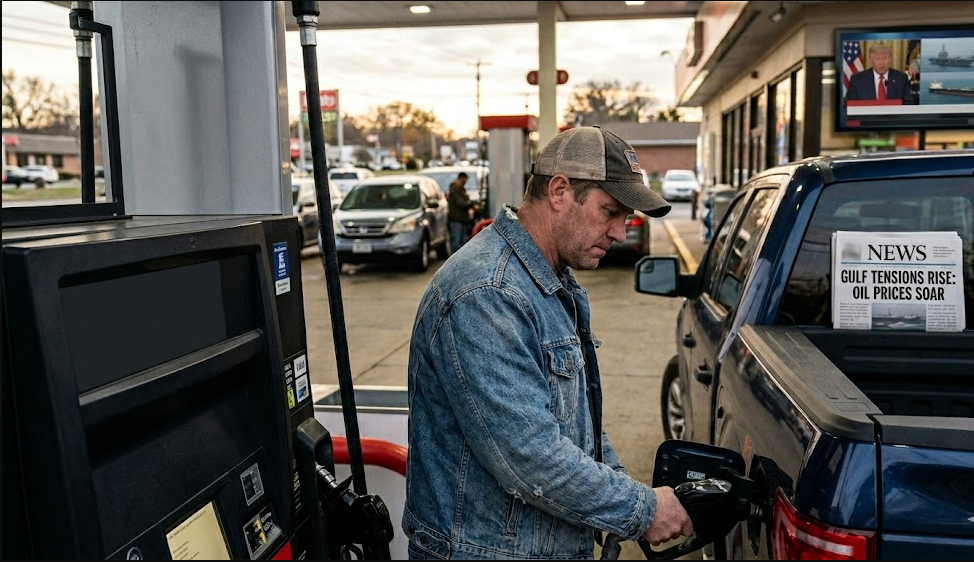
The headline driver was unmistakable. Gasoline prices surged 21.2% in a single month — the largest monthly increase recorded since 1967. The national average for a gallon of regular unleaded hit $4.153, up 39% from $2.98 the day before the strikes began. Diesel prices climbed past $5.67 per gallon — an increase of more than $2 per gallon year-over-year. Energy costs as a whole rose 10.9% in March alone.
CNN’s headline captured the moment’s severity: “US Inflation Tripled Last Month on Record Spike in Gas Prices.”
The Invisible Tax on Everything You Buy
The gas pump is visible. What happens downstream from it is not — but it is equally relentless.
Airlines: Jet fuel costs surged, pushing fares up and leading some carriers to add or bring back baggage fees. Summer travel is being repriced quickly.
Trucking and shipping: Higher diesel prices increased freight costs. UPS, FedEx, Amazon sellers, and the USPS all passed some of those costs on through surcharges.
Groceries: Higher transport costs are starting to show up in food prices, especially for items moved long distances. Economists say the full impact still takes weeks to appear.
Plastics and packaging: Higher oil costs affect plastic packaging and food supply chains, adding more inflation pressure across consumer goods.
The Fed’s Impossible Position
Jerome Powell and the Federal Reserve spent 2024 and 2025 engineering a soft landing — gradually bringing inflation down toward 2% while preserving employment. That work is now under acute stress.
The Fed held rates steady at its March meeting, but the internal debate, revealed in the minutes, was striking: some officials raised the possibility of rate increases — not cuts — if energy inflation persisted. The projected rate cut path for 2026, once penciled in at two or three cuts, has been slashed to one or zero, depending on which bank’s forecast you read. CME FedWatch moved to price in no cuts at all for 2026.
Chicago Fed President Austan Goolsbee said plainly that the Iran war “risks fueling inflation in a way that would make rate cuts very difficult.” The Fed faces its most acute stagflation dilemma since the 1970s: a supply-side energy shock that raises prices while simultaneously threatening to slow growth — a combination that no interest rate can neatly fix.
What Americans Are Feeling
The University of Michigan’s April consumer sentiment survey produced a reading that stopped economists mid-sentence: 47.6 — the lowest level recorded in the survey’s history going back to 1952. Lower than during the 2008 financial crisis. Lower than during the pandemic. Lower than during the 2022 inflation surge.
Survey director Joanne Hsu noted: “Open-ended comments show that many consumers blame the Iran conflict for unfavorable changes to the economy. Demographic groups across age, income, and political party all posted setbacks in sentiment.”
For low-income households — those earning under $30,000 annually — the mathematics are brutal. Families in this bracket already spend 7.1% of their income on gasoline. The war has added an estimated $223 per household annually in fuel costs alone, before any secondary inflation in food, shipping, or utilities is counted.
CNBC framed it simply: the Iran war has become “an invisible tax on every American consumer.”
When Does It End?
The April 7 ceasefire provided a brief reprieve. WTI crude crashed 16.4% in a single session on the announcement. But Brent spot prices, even after that dramatic drop, settled at $124 per barrel — still 70% above pre-war levels. With over 400 tankers still anchored outside a Strait of Hormuz that remained functionally closed, and Islamabad peace talks producing no definitive agreement on Hormuz governance, analysts warned the supply disruption was far from over.
TIME asked the direct question: “When could prices come down for gas, air travel, and strawberries?” The answer, from virtually every economist quoted: not until the Strait is fully and durably open — and not immediately even then, as the supply chain lag means even a ceasefire takes weeks to reach the gas pump.
In the $115 barrel world, the Iran war is not an abstraction in the news feed. It is the number on the pump. It is the fare on the airline app. It is the surcharge in the checkout cart. And until Islamabad produces something more durable than a fragile two-week truce, it is the price Americans will keep paying — whether they are following the geopolitics or not.
Market Analysis
A quick snapshot of market trends, customer behavior, and competitor movements.