Share This Article
It is 21 miles wide at its narrowest point. A sliver of water between Oman and Iran. Yet when Iran closed the Strait of Hormuz on March 2, 2026, that 21-mile chokepoint did something no military strike, no sanctions regime, and no geopolitical crisis in modern history had ever fully achieved: it simultaneously fractured global energy supply, ignited inflation across four continents, sent oil prices to the edge of $150 a barrel, and pushed the world economy to the brink of a stag flationary recession.
The International Energy Agency called it the largest supply disruption in the history of the global oil market. Economists compared it to the 1973 Arab oil embargo then said it was worse.
Here is how it happened, and what it cost.
Day Zero: The Strait Goes Dark
On February 28, 2026, US and Israeli forces launched joint strikes on Iran, killing Supreme Leader Ali Khamenei and decimating Iran’s senior military command. Tehran’s response was immediate and surgical: it closed the Strait of Hormuz to all commercial shipping.
The numbers behind that closure are staggering. Before the war, roughly 130 vessels transited the strait every single day, carrying approximately 20% of the world’s seaborne crude oil, 20% of global LNG supplies, 14% of refined petroleum products, and one-third of the world’s fertilizer trade. By March, daily transits had collapsed to just six a 95% shutdown of the world’s most critical energy corridor.
Within 72 hours of the closure, oil markets went into shock.
The Price Spiral: From $73 to $144 in Six Weeks
On February 27 the day before the strikes Brent crude settled at $73 per barrel. A week after the closure, it crossed $100. By March 12, it had surpassed $120. On April 6, just hours before Trump’s 8 p.m. ceasefire deadline, Brent spot prices hit a wartime peak of $144.42 per barrel the highest level since the benchmark was created, and within striking distance of the $150 mark analysts had previously called apocalyptic.
Goldman Sachs revised its recession probability three times upward, ultimately raising it to 30% noting that oil sustained above $140 for two months was sufficient to push the eurozone, Japan, and the United Kingdom into economic contraction. The firm cut its full-year US GDP forecast to 2.1% and described second-half growth projections as near “stall speed.”
US gasoline prices, which averaged $2.80 per gallon before the war, hit $4.00 per gallon by March 3 a 30% surge in five weeks. The OECD revised its US inflation forecast to 4.2% for 2026, a full 1.2 percentage points above pre-war projections.
The Hidden Shocks Nobody Talked About – Beyond crude oil, the Hormuz closure triggered cascading failures across supply chains the general public had never thought to connect to a Gulf waterway.
- LNG: Qatar’s state-owned QatarEnergy the world’s largest LNG producer declared force majeure on all exports after its Ras Laffan and Mesaieed facilities were struck. European gas storage, already at just 30% capacity following a brutal 2025–2026 winter, went into emergency mode. Dutch TTF gas benchmark prices nearly doubled to over €60 per MWh by mid-March. The European Central Bank, which had planned to cut rates in Q1, abruptly halted, raised its inflation forecasts, and slashed GDP projections. Germany and the Netherlands were flagged by the Ifo Institute as high-risk recession candidates.
- Fertilizer: The Gulf produces nearly half of the world’s urea and 30% of its ammonia. One-third of global fertilizer trade transits Hormuz. By late March, urea prices had risen 50% from pre-war levels. India whose monsoon farming season begins in June faced critical fertilizer shortages. The Carnegie Endowment warned of an emerging global food security crisis building beneath the oil headlines.
- Shipping Insurance: Maritime war-risk premiums exploded from 0.125% to 5% of hull value for some vessels a 40-fold increase. Leading insurers including Norway’s Gard, Britain’s NorthStandard, and the American Club cancelled war-risk cover entirely. The benchmark freight rate for Very Large Crude Carriers (VLCCs) hit an all-time high of $423,736 per day a 94% jump in a single session. A single Hormuz transit for a supertanker now cost $5 million in insurance alone.
- Not everyone in Washington is on board with this posture the Senate just passed a resolution aimed at stopping Trump from attacking Iran.
Middle Eastern food prices spiked between 40% and 120%. Gulf states and Iraq collectively lost an estimated $1.1 billion per day in oil revenue while the strait stayed shut.
The Cost in Cold Numbers – UNCTAD modeled three economic scenarios across the closure period. Even in the most conservative case, global losses reached $590 billion. In the prolonged scenario had the strait remained closed through Q3 the cumulative damage climbed to $3.5 trillion, or 3.15% of world GDP. The Atlantic Council described the disruption as benefitting precisely two players: Beijing and Moscow, both of which moved aggressively to snap up discounted Iranian and alternative energy supplies as Western markets reeled.
Asia bore the deepest structural exposure. In 2024, 84% of the strait’s crude was destined for Asian markets, with China receiving a full third of its oil through Hormuz. Taiwan, heavily dependent on LNG for electricity generation, was rated the single most vulnerable economy. South Korea and Japan were not far behind.
After the Ceasefire: Relief With Asterisks
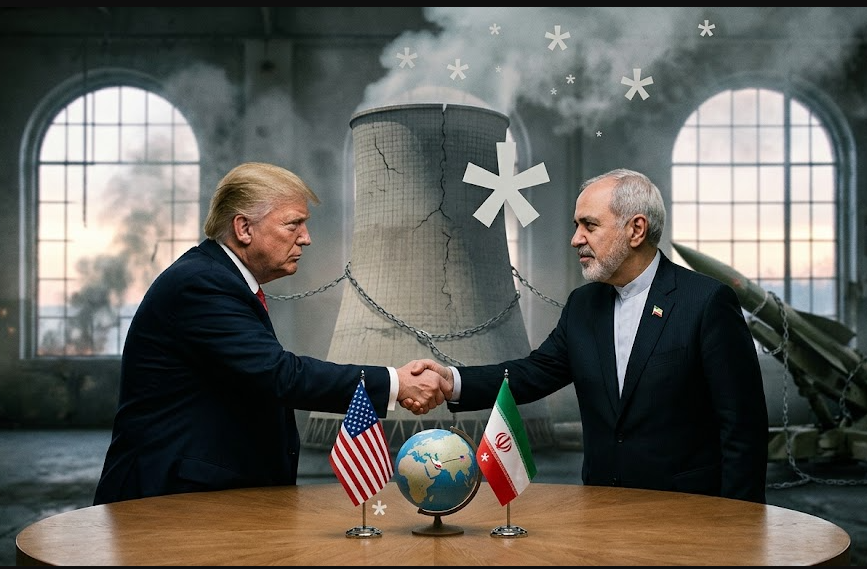
When Trump announced the ceasefire on April 7, markets snapped back with historic force WTI crude fell 16.4% in a single session, its largest drop since 2020. Global equities surged. The Dow posted its best day in a year.
But the relief was incomplete. Brent spot prices, even after the 16% crash, still sat at $124 per barre nearly 70% above pre-war levels. More than 400 tankers remained anchored outside the strait the morning after the ceasefire, with shipping companies waiting for operational guarantees before risking passage. CNBC reported that the “dated Brent” spot market the real-world price for physical oil cargoes remained stubbornly elevated, signaling that traders weren’t yet convinced the crisis was over.
Iran still holds the ultimate card. The strait runs through its territorial waters. A 21-mile strip of water between two coastlines is, in the end, all that separates the global economy from the next shock and this crisis proved, more conclusively than any academic model ever could, just how fragile the architecture of global energy security truly is.

Oil & Energy Markets
A look at crude price swings, OPEC supply moves, and how energy markets react to geopolitical shocks.

Geopolitics & Conflict
Breaking down how wars, ceasefires, and diplomatic deals ripple through global trade and security.
US Foreign Policy
Coverage of Trump administration negotiations, sanctions, and strategic decisions shaping world events.
Economy & Inflation
Tracking how commodity prices, gas costs, and supply chains affect everyday consumers.