He calls them ultimatums. He posts them in capital letters. Markets move. Foreign governments scramble. And then — the deadline passes. Extended. Repackaged. Or quietly forgotten. This is not a bug in Trump’s strategy. Critics say it may be the strategy itself. WASHINGTON — Donald Trump speaks in deadlines the way other presidents speak in
He calls them ultimatums. He posts them in capital letters. Markets move. Foreign governments scramble. And then — the deadline passes. Extended. Repackaged. Or quietly forgotten. This is not a bug in Trump’s strategy. Critics say it may be the strategy itself.
WASHINGTON — Donald Trump speaks in deadlines the way other presidents speak in policy papers.
Hard dates. Public threats. Capital letters on Truth Social. The message is always the same: comply by this date, or face consequences unlike anything the world has ever seen. The world braces. Diplomats scramble. Markets reprice. And then — with striking regularity — the deadline arrives and the promised consequence either softens, shifts, or simply disappears into a new announcement that resets the clock entirely.
Here are three of the most consequential deadlines Trump set — and never fully kept.
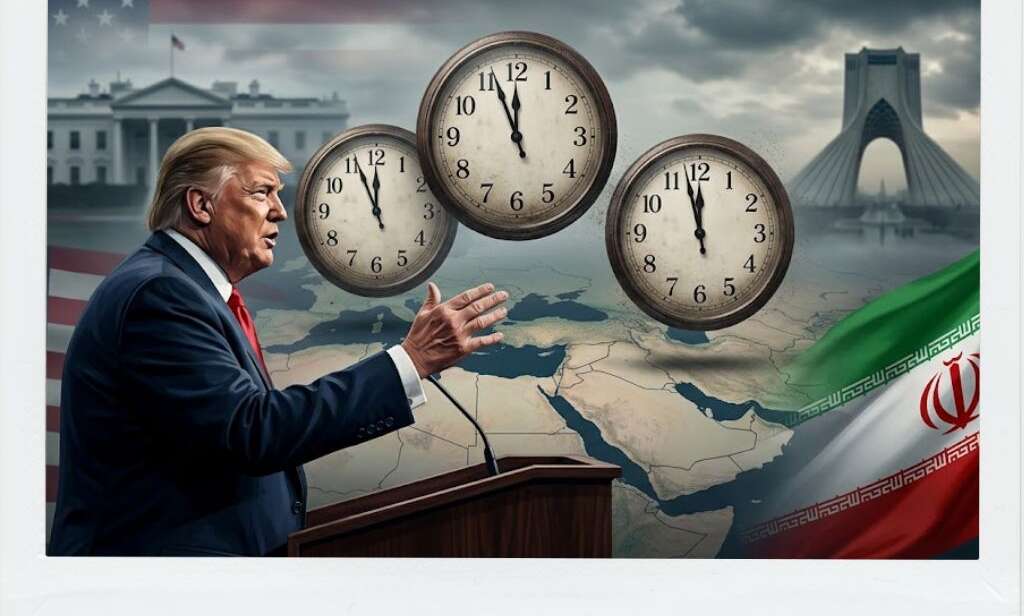
Deadline 1: Iran — “A Whole Civilization Will Die Tonight”
What he promised: On April 7, 2026, Trump posted the most extreme public deadline of his presidency. “A whole civilization will die tonight, never to be brought back again,” he wrote on Truth Social. He set an 8:00 p.m. EDT hard stop — open the Strait of Hormuz or face devastating strikes on Iranian civilian infrastructure. This was not the first Iran deadline. In March 2025, he gave Tehran 60 days to negotiate a nuclear deal. When talks collapsed across six rounds in Muscat and Rome, he issued a 10-day ultimatum in February 2026. When that passed, military action began — but Iran still had not fully complied.
What actually happened: Ninety minutes before the 8:00 p.m. deadline — not after it — Trump announced a two-week ceasefire. No civilization-ending strikes occurred. Iran did not formally surrender. It agreed to negotiate, which it had been doing in various forms for over a year. Within 24 hours, the ceasefire was already cracking. Iran accused the US of breach. Israel launched 100 airstrikes on Lebanon. The IRGC halted Hormuz shipping again. Physical oil markets — which price reality, not announcements — never fell below $120 per barrel, signalling professional traders never believed full compliance had been achieved.
The deadline became a two-week extension. The extension became a negotiation. The negotiation remains unresolved.
Deadline 2: TikTok — The Ban That Became a Rolling Extension
What he promised: Trump first threatened to ban TikTok in 2020, citing national security concerns over its Chinese parent company ByteDance. Returning to office in January 2025, he inherited a congressional law mandating ByteDance divest TikTok by January 19, 2025 — or face a ban. Trump declared he would absolutely enforce it. Then, one day before taking office, he announced a 90-day extension, effectively pausing the very deadline he had championed. When that 90-day window closed in April 2025, no sale had been completed, no ban had been enforced, and Trump granted a second 90-day extension. As of April 2026, TikTok operates in the United States. Byte Dance has not divested. The ban has never materialized.
What actually happened: Every deadline was extended. Each extension was framed as a negotiating tool to extract better deal terms. Critics noted that each passing deadline without consequence made the next deadline less credible. TikTok’s continued US operation is now measured in years past the original removal date. Politico described it as “deadline theater” — the appearance of enforcement without the execution.
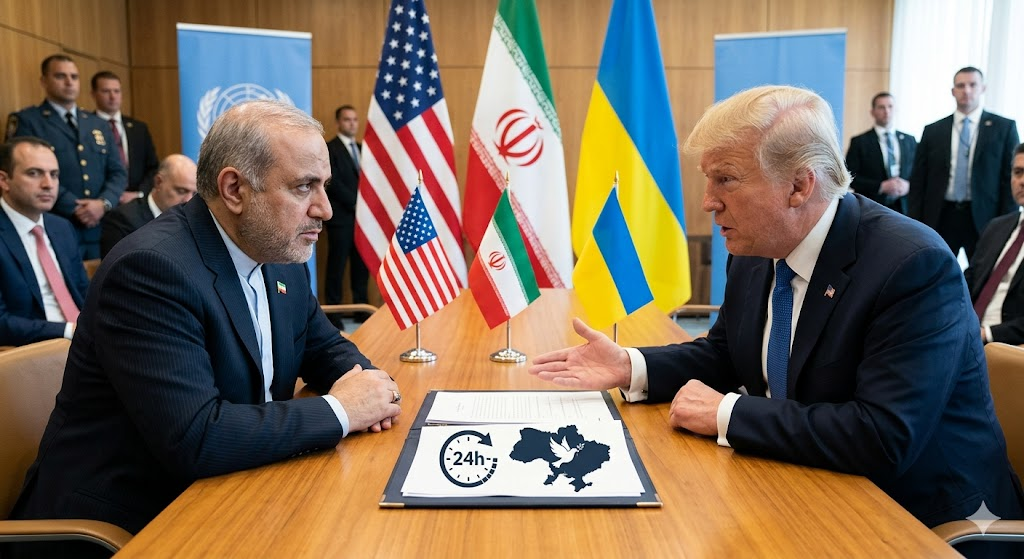
Deadline 3: Ukraine — The 24-Hour Peace Promise
What he promised: Throughout the 2024 presidential campaign, Trump repeatedly promised to end the Russia-Ukraine war “in 24 hours” — before he even took office, through personal diplomacy with Putin. After inauguration in January 2025, the 24-hour promise quietly became a longer-term goal, which became a framework proposal, which became a series of shuttle diplomacy efforts that had not produced a formal ceasefire as of April 2026 — more than 15 months into his second term.
What actually happened: Special Envoy Steve Witkoff conducted multiple trips to Moscow. Trump hosted Zelensky at the White House in tense, widely-publicized meetings. A minerals deal framework was proposed. Ukraine was pressured to accept territorial concessions. Russia refused to stop advancing on front lines. The “24-hour” deadline became what NBC News and Politico both described as the most prominent broken campaign promise of Trump’s second term. The war continues.
Why the Pattern Matters
The defenders of Trump’s deadline strategy argue the approach works — that each deadline extracts concessions even when not fully enforced. The Iran ceasefire, however fragile, would not exist without the April 7 pressure. The tariff pause in April 2025 followed months of deadline-driven trade pressure. The argument is that the threat is the tool, not the follow-through.
But critics raise a structural concern: every missed deadline reduces the credibility of the next one. Former National Security Advisor H.R. McMaster warned in early 2026 that adversaries have “learned to wait Trump out — to absorb the threat and calculate whether the cost of the deadline is real.” Analysts at Eurasia Group wrote in March 2026 that Trump’s deadline credibility had “measurably eroded” since 2025, requiring increasingly extreme language — like “a whole civilization will die” — to produce the same pressure that a simple trade ultimatum once delivered in his first term.
The Question the Markets Are Starting to Ask – On April 8, global markets surged on the Iran ceasefire. By April 9, oil was climbing again. The physical commodity market — slower, harder to manipulate, priced by people who move actual barrels — never fully believed the deadline was real. Dated Brent held above $120 throughout the futures crash.
Three major deadlines. Three extensions, repackages, or quiet reversals. The formula produces announcements — dramatic, market-moving, headline-generating announcements. Whether those announcements produce lasting outcomes is a different question entirely.
The next deadline expires April 23. Mark your calendar — and watch what happens at 7:59 p.m.
Market Analysis
A quick snapshot of market trends, customer behavior, and competitor movements.