Share This Article
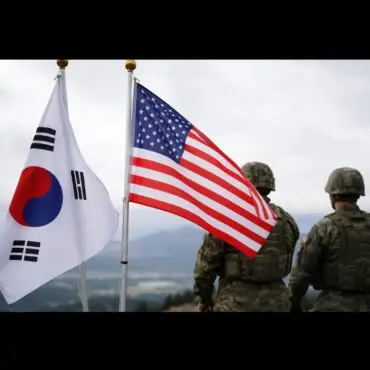
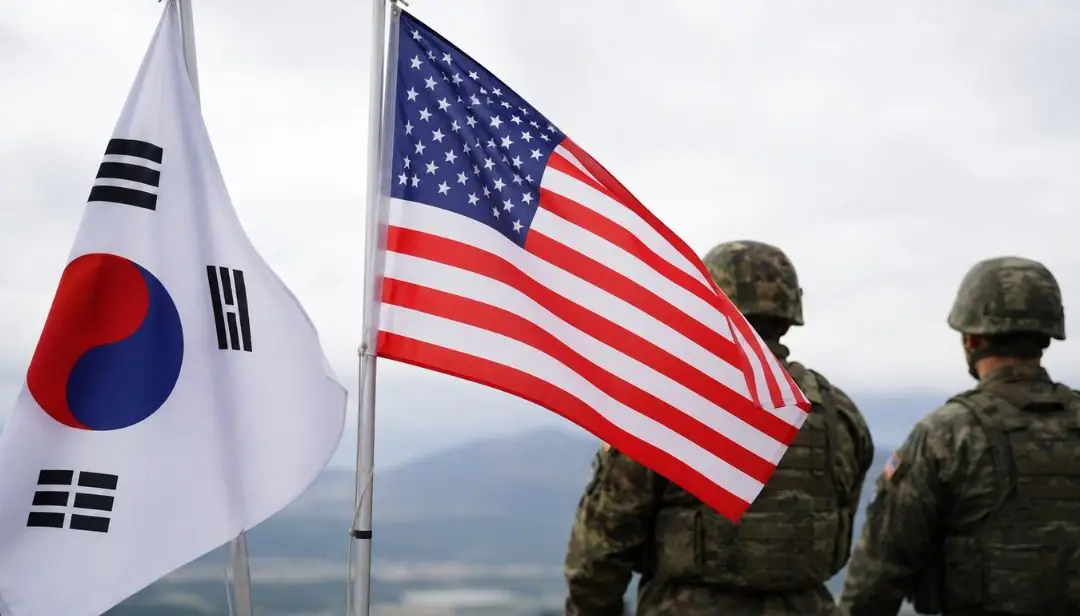
President Donald Trump announced this week that the United States will substantially reduce joint South Korea Military Exercises, a move that marks one of the most significant shifts in the decades-old US-South Korea alliance in years. The decision, posted by Trump on Truth Social, has triggered swift reaction from allies, analysts, and North Korea watchers alike.
Here’s a full breakdown of what Trump said, why he’s making this call, and what it could mean for the Korean Peninsula.
What Trump Announced
On Sunday, Trump said he had directed Defense Secretary Pete Hegseth to “substantially reduce” the joint military exercises between the US and South Korea. The announcement came just as the annual Ulchi Freedom Shield exercises, an 11-day drill involving roughly 18,000 South Korean troops, were set to begin.
In his post, Trump wrote that he was “not happy” the US had “long ago” committed to these joint drills, arguing the exercises are costly and send a “totally inappropriate and hostile” signal to North Korea.
Why Trump Is Scaling Back the US-South Korea Military Exercise
Trump cited two main reasons for the decision:
- His relationship with Kim Jong Un – Trump repeatedly pointed to what he called a “very good relationship” with the North Korean leader, describing Kim as “unthreatening and respectful” throughout his presidency.
- South Korea’s stance on Iran – Trump revealed he had asked South Korea to join US efforts around the denuclearization of Iran, and that Seoul declined. He called this “somewhat unrelated” but tied it directly to his decision on the military drills.
The timing is notable: Trump’s post came just as North Korea test-fired ballistic missiles last week, widely seen as a protest against the planned drills. Pyongyang’s foreign ministry had also called the exercises “a rehearsal for an aggressive war” and a threat to its security.
South Korea’s Response
Despite Trump’s announcement, South Korea’s Ministry of National Defense confirmed the Ulchi Freedom Shield exercises would proceed “as previously notified and scheduled.” South Korea’s Joint Chiefs of Staff also told reporters the drills began Monday as planned, leaving it unclear whether any immediate scale-down has actually taken effect on the ground.
This creates a notable gap between Trump’s public directive and the reality unfolding at US Forces Korea and allied command posts, one that analysts will be watching closely in the coming days.
Here are Some Related Blogs to Read
- NATO chief calls US strikes on Iran “absolutely necessary”
- Will gold rally as US-Iran tensions escalate
- Oil jumped but the market stayed calm
- 5 takeaways from Tuesday’s 2026 primaries
- US tariff system reset across 60 economies
- Trump tariffs Section 122 surcharge expires
- Trump had deliberately paused Hormuz operations to force Iran into a deal
- JD Vance claims Hegseth has been misleading Trump on the Iran war
- Iran has been digging out hidden missile stockpiles after rejecting Trump’s peace offer
- US Navy destroyer just fired on and seized an Iranian cargo ship
- Iran and Israel’s spy war is heating up amid claims of stolen F-15 secrets
- he’s now clashing with his own SCOTUS picks back home
Why the US-South Korea Military Exercises Matter
The US and South Korea military exercise relationship dates back over 70 years, anchored by a mutual defense treaty designed to protect South Korea against North Korean aggression. South Korea hosts Camp Humphreys, the largest overseas US military installation, home to tens of thousands of American service members and their families.
This year’s Ulchi Freedom Shield drills were specifically designed to help the alliance adapt to North Korea’s evolving capabilities, including training against drone warfare, GPS disruption, and cyberattacks reflecting how modern the threat environment on the peninsula has become.
Any reduction in America-South Korea military exercises raises questions about:
- Deterrence posture against a North Korea that now possesses nuclear warheads and intercontinental ballistic missiles
- Alliance readiness amid a North Korean military that has gained real-world combat experience through its involvement in Russia’s war in Ukraine
- Regional signaling to China, Japan, and other Indo-Pacific partners watching how committed Washington remains to its Asian alliances
What Happens Next
With Ulchi Freedom Shield already underway, the immediate impact of Trump’s order remains uncertain. The Pentagon has not detailed exactly which components of the exercises will be cut, scaled down, or postponed. South Korea’s embassy in Washington and US Forces Korea did not immediately respond to requests for comment following the announcement.
What’s clear is that this marks a significant moment in Trump’s second-term approach to alliance management prioritizing personal diplomacy with Kim Jong Un and transactional expectations of allies over the traditional deterrence-first posture that has defined the US-South Korea relationship for generations.
FAQs
Why is Trump reducing military exercises with South Korea?
Trump says he’s scaling back the Trump South Korea military exercises because of his positive relationship with North Korea’s Kim Jong Un and because South Korea declined to help the US on efforts to denuclearize Iran. He also cited the cost of the drills.
What are the South Korea military exercises Trump is referring to?
He’s referring to Ulchi Freedom Shield, the annual large-scale South Korea military exercises involving roughly 18,000 South Korean troops and thousands of US service members, designed to strengthen joint defense readiness against North Korea.
Is South Korea still going ahead with the exercises?
Yes. As of the latest reports, South Korea’s Ministry of National Defense confirmed the US and South Korean military exercise would proceed as originally scheduled, despite Trump’s announcement.
How has North Korea reacted to the joint drills?
North Korea has long criticized the exercises as a “rehearsal for an aggressive war.” Pyongyang test-fired ballistic missiles in the days before Trump’s announcement, widely viewed as a protest against the drills.
What could reduced Trump military exercises in South Korea mean for regional security?
Analysts say scaling back the exercises could affect deterrence against North Korea’s nuclear and missile programs, alliance readiness, and how US commitment is perceived by other Indo-Pacific partners like Japan and Taiwan.
What are the South Korea military exercises called?
The exercise is Ulchi Freedom Shield, an annual US and South Korea military exercise scheduled this year for 17 to 27 August. It involves about 18,000 South Korean troops plus US forces and United Nations Command personnel.
Are the US and South Korea military exercise drills cancelled?
No. Trump ordered them “substantially reduced,” not cancelled, saying it was too late to call them off. South Korea’s defense ministry said the drills were proceeding as planned, and the exact scope of any reduction was still being worked out.
What did North Korea say about the Trump military exercises South Korea decision?
Before the announcement, North Korea condemned the drills as a rehearsal for an aggressive war and threatened countermeasures. It has continued weapons testing in 2026, including a ballistic missile launch on 12 August.
Does this affect the US–South Korea alliance?
It puts a visible strain on it. The exercises are seen as a core mechanism for maintaining combined readiness on the Korean Peninsula, so scaling them back raises questions among allies about US commitment, especially while the US is focused on Iran.
References & Sources
- Washington Post – Trump reduces military exercises with South Korea, citing good ties with Kim Jong Un
- CNN – Trump says US will reduce joint military exercises with key ally South Korea
- NBC News – Trump orders military to ‘substantially reduce’ joint exercises with South Korea
- Al Jazeera – Trump says US to ‘substantially reduce’ military drills with South Korea
- The Hill – Trump directs Hegseth to reduce U.S. joint exercises in South Korea
- PBS News (AP) – Trump orders Pentagon to scale back joint exercises with South Korea

Oil & Energy Markets
A look at crude price swings, OPEC supply moves, and how energy markets react to geopolitical shocks.

Geopolitics & Conflict
Breaking down how wars, ceasefires, and diplomatic deals ripple through global trade and security.
US Foreign Policy
Coverage of Trump administration negotiations, sanctions, and strategic decisions shaping world events.
Economy & Inflation
Tracking how commodity prices, gas costs, and supply chains affect everyday consumers.