Share This Article
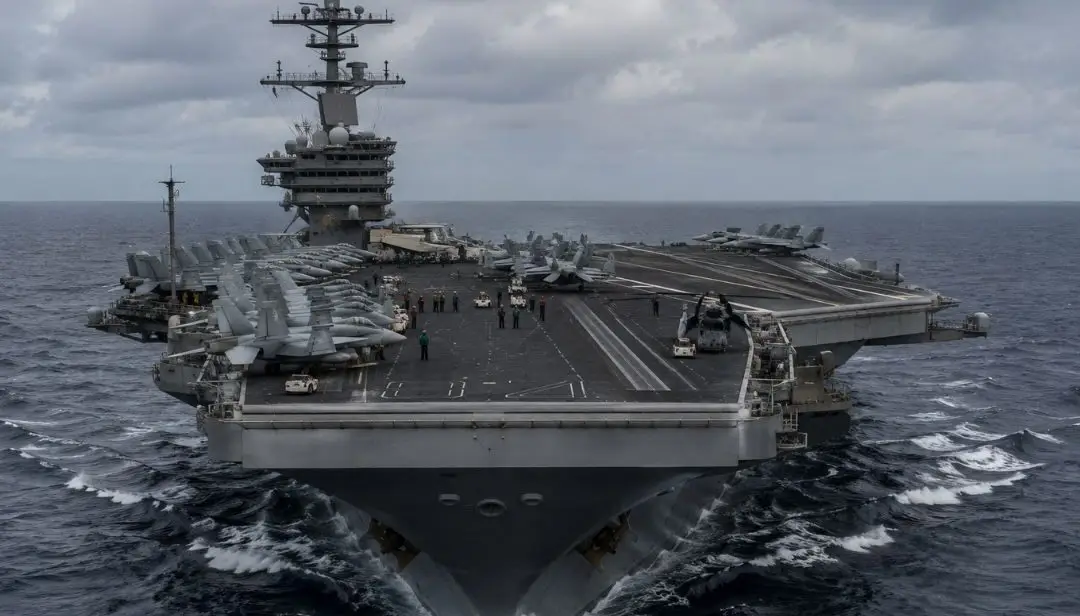
The USS Abraham Lincoln has been at sea for the better part of nine months, far past its planned homecoming, as the Navy keeps its carrier groups deployed longer to cover a widening set of missions. The latest USS Abraham Lincoln news is not about a battle, it is about the toll a record-length deployment is taking on the sailors aboard, and the questions lawmakers are now asking about how it was allowed to run this long.
Why the USS Abraham Lincoln Deployment Keeps Making Headlines
The Lincoln left San Diego on November 21 and, nearly nine months later, is still underway. Most of the crew last set foot on land during a single port call in Guam back on December 11. Since then, the carrier has spent extended stretches supporting blockade operations in the Persian Gulf tied to the broader USS Abraham Lincoln Iran mission set, including flight operations described by the Navy as part of “Operation Epic Fury” against Iranian targets earlier this year.
That kind of extended combat tempo, without regular port calls, is exactly what’s fueling the current wave of USS Abraham Lincoln news coverage. The carrier may soon surpass a record set only months earlier by the USS Gerald R. Ford, which completed a 326-day deployment that included operations against both Iran and Venezuela the longest carrier deployment since the Vietnam War era.
Here are Some Related Blogs to Read
- NATO chief calls US strikes on Iran “absolutely necessary”
- Will gold rally as US-Iran tensions escalate
- Oil jumped but the market stayed calm
- 5 takeaways from Tuesday’s 2026 primaries
- US tariff system reset across 60 economies
- Trump tariffs Section 122 surcharge expires
- Trump had deliberately paused Hormuz operations to force Iran into a deal
- JD Vance claims Hegseth has been misleading Trump on the Iran war
- Iran has been digging out hidden missile stockpiles after rejecting Trump’s peace offer
- US Navy destroyer just fired on and seized an Iranian cargo ship
- Iran and Israel’s spy war is heating up amid claims of stolen F-15 secrets
- he’s now clashing with his own SCOTUS picks back home
A Navy-Wide Pattern, Not a One-Ship Problem
Naval analysts tracking deployment data point to a clear trend: US aircraft carrier strike groups are increasingly being kept at sea well beyond the Navy’s own recommended seven-month deployment cap. Abraham Lincoln is simply the latest, and possibly most extreme, example.
Officials have acknowledged reviewing retention problems tied to this pattern, particularly among Navy Strike Fighter Squadron aviators. To hold onto experienced flight officers and naval aviators, the Navy has started offering annual bonuses worth tens of thousands of dollars as a direct financial response to a readiness problem playing out in real time aboard ships like the Lincoln.
It’s not just carriers absorbing the strain. Guided-missile destroyers have faced similarly demanding, back-to-back rotations. The navy destroyer USS Gravely deployment history is a good example of this broader tempo problem: the Gravely has cycled through Red Sea combat operations against Houthi forces, Northern Command border-security tasking, and Southern Command missions in relatively rapid succession over the past two years, with limited downtime between deployments. Whether it’s a supercarrier in the Gulf or a destroyer running counter-trafficking patrols, the same underlying issue shows up ships and crews being asked to do more, more often, with less recovery time in between.
The Human Cost: Families, Mental Health, and Living Conditions
Behind the strategic headlines is a much more personal story. Family members of Lincoln sailors have described care packages arriving months late, or never arriving at all, because of the ship’s limited port calls. One mother, who asked CNN to withhold her last name to protect her son’s identity, said she understands the demands of operating in a combat zone but wants more reliable delivery of mail and packages for deployed sailors.
Living conditions aboard the carrier have also drawn scrutiny. Family members have shared images of overflowing, sewage-affected restroom areas, an issue that reportedly also surfaced on the Gerald R. Ford during its own record deployment, suggesting aging infrastructure is struggling to keep pace with extended time at sea.
A US official has stated that the Navy does not believe there is a link between deployment length and thoughts of self-harm among sailors, and that man-overboard incidents are not unique to the Lincoln’s deployment. Even so, ship leadership across the fleet has leaned into visible morale efforts. Aboard the destroyer USS Frank E. Petersen Jr., the commanding officer has described the combat environment as a genuinely stressful situation for crew, and has implemented group therapy sessions, venting circles, ice cream socials, and meme boards as informal outlets for sailors under sustained pressure.
What Comes Next for the Abraham Lincoln
Relief is technically on the way. The Japan-based carrier USS George Washington is en route to take over blockade duties in the Persian Gulf, which should free the Lincoln to begin its transit back toward California, the long-awaited USS Abraham Lincoln Pacific homeward leg that families have been anticipating for months. But even on the way home, the abraham Lincoln carrier could still end up breaking the Ford’s deployment-length record before it reaches San Diego, given how much time has already elapsed since it left port in November.
For now, the Lincoln remains a case study in how far the Navy is willing to stretch its most visible assets and how much strain that puts on the sailors and families who keep those ships running.
FAQs
Where is the USS Abraham Lincoln now?
As of mid-August 2026, the USS Abraham Lincoln is deployed in the Middle East, supporting US naval operations around the Strait of Hormuz. It has been at sea for close to nine months since leaving San Diego in November 2025.
Why has aircraft carrier CVN-72 been deployed so long?
The USS Abraham Lincoln Iran mission is the main reason. The carrier was in the region when the US launched its war on Iran in February 2026 and has been kept on station because a limited number of carriers are covering several demands at once, leading to more than one extension of its deployment.
Is the USS Abraham Lincoln a Pacific carrier?
Yes. In terms of the USS Abraham Lincoln Pacific homeport, the ship is based at Naval Base San Diego and belongs to the Pacific Fleet, even though it is currently operating in the Middle East. Its route home runs back across to California.
What record could the Abraham Lincoln carrier break?
It is approaching the record for the longest US carrier deployment since the Vietnam era, a mark set months earlier by the USS Gerald R. Ford at roughly eleven months at sea.
How does this connect to the Navy destroyer USS Gravely deployment?
The USS Gravely is a separate ship, a guided-missile destroyer, but its long runs including nine months in the Red Sea against Houthi forces are cited as part of the same pattern of extended Navy deployments straining crews and equipment.
When will the USS Abraham Lincoln come home?
The Japan-based carrier USS George Washington has been sent to relieve it. The exact homecoming date has not been confirmed, and the Lincoln may set the deployment-length record during its transit back to the US.
What is the Navy Sea Service Deployment Ribbon?
The Navy Sea Service Deployment Ribbon is a military award recognizing sailors who complete qualifying periods of sea duty aboard deployed ships, such as the Abraham Lincoln, typically after 90 consecutive days of sea service during a deployment.
Did the Navy find a link between long deployments and sailor mental health incidents?
A US official has stated the Navy does not believe there is a confirmed correlation between deployment length and self-harm risk, though experts and former officials continue to warn that extended deployments raise the risk of burnout and retention losses.
References & Sources
- CNN – “Sailors on carriers like the USS Abraham Lincoln feel the strain as Navy deployments stretch longer”
- Commander, Naval Surface Force Atlantic – “USS Gravely Returns to Naval Station Norfolk from Deployment”
- U.S. Navy – “USS Gravely Deploys to U.S. Northern Command Area of Responsibility”
- WTKR – “USS Gravely returns to Naval Station Norfolk after months-long deployment”

Oil & Energy Markets
A look at crude price swings, OPEC supply moves, and how energy markets react to geopolitical shocks.

Geopolitics & Conflict
Breaking down how wars, ceasefires, and diplomatic deals ripple through global trade and security.
US Foreign Policy
Coverage of Trump administration negotiations, sanctions, and strategic decisions shaping world events.
Economy & Inflation
Tracking how commodity prices, gas costs, and supply chains affect everyday consumers.