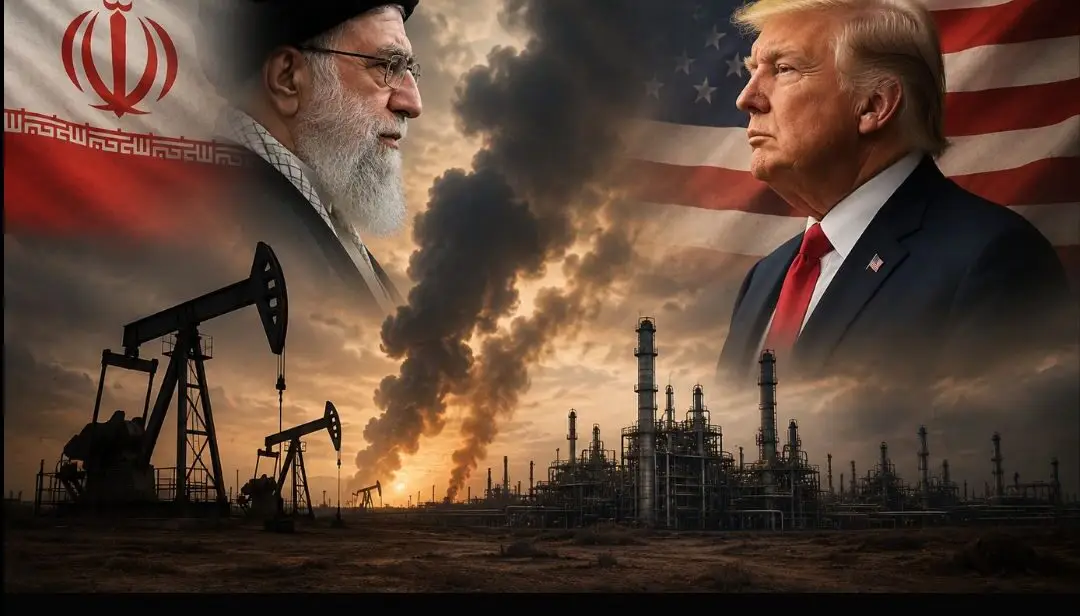
When the United States and Israel launched their war on Iran on February 28, 2026, few countries faced a more immediate energy reckoning than India. As the world’s third-largest oil importer, New Delhi has spent the months since racing to insulate itself from a crisis playing out thousands of miles away in the Strait of Hormuz — and in the process, has quietly rewritten its entire crude oil strategy.
A Dependency Decades in the Making
Before the conflict, India imported roughly 5.5 million barrels of crude oil per day, with around 52% of that volume historically transiting the Strait of Hormuz, according to data from S&P Global Commodities at Sea. Iraq, Saudi Arabia, the UAE, Kuwait, and Qatar made up the bulk of those Middle Eastern shipments. That exposure had actually been climbing in early 2026, as Indian refiners scaled back Russian crude purchases — dropping to roughly 1.15 million barrels per day, down sharply from 1.7 million barrels per day in 2025.
When the US-Iran war erupted and Iran moved to choke off the strait, that dependency suddenly became a vulnerability. Around 84% of all oil flowing through Hormuz is bound for Asia, leaving China, India, South Korea, and Japan disproportionately exposed to any disruption, according to EIA analysis. In the first quarter of 2025 alone, India imported 2.1 million barrels of crude per day specifically through the corridor.
India’s Rapid Diversification Push
Faced with the prospect of a prolonged closure, India’s Ministry of Petroleum and Natural Gas moved quickly. By March 3, 2026, the government issued public assurances that domestic stocks were sufficient to weather short-term shocks, while energy companies were directed to access supply that bypassed Hormuz entirely.
The numbers tell the story of how fast that pivot happened. As early as March 5, officials confirmed Indian refiners were negotiating incremental crude cargoes from the United States, Russia, and West Africa to offset any Hormuz-related shortfall. By March 11, the Ministry’s Joint Secretary Sujata Sharma announced that 70% of India’s crude imports were now sourced from outside the Strait of Hormuz — a dramatic shift from the roughly 48% baseline before the war. India also activated a 24/7 control room to monitor petroleum stocks and fuel availability nationwide, and issued a Natural Gas Control Order under the Essential Commodities Act to stabilize distribution.
By March 2026, India was importing crude from approximately 40 different countries — a diversification strategy years in the making but accelerated dramatically by the Israel-Iran conflict.
A Surprising Return: Iranian Oil
Perhaps the most striking pivot in India’s crude oil strategy has been the resumption of Iranian oil purchases — the first such shipments in seven years. Indian refiners secured Iranian crude under temporary U.S. sanctions relief arrangements activated during the supply crisis, with the first cargo arriving via the Strait of Hormuz at Mundra Port in Gujarat in mid-March.
Analysts described the move as more than a stopgap. It signaled India’s broader recalibration of ties with Tehran at a moment when traditional supply lines were under siege — even as the country maintained its strategic partnership with Washington.
That relief, however, proved short-lived.
The Squeeze Tightens
In mid-April, the US-Iran standoff escalated sharply. After peace negotiations between Washington and Tehran collapsed, the United States imposed its own naval blockade on ships entering or exiting Iranian ports — directly undercutting India’s newly reopened Iranian supply channel just weeks after it resumed. Compounding the pressure, a U.S. waiver that had permitted India to purchase discounted Russian crude expired on April 11, eliminating another pillar of India’s diversification strategy.
“India is facing a mounting supply squeeze, with the loss of Iranian barrels, plus not getting the Russian barrels,” Mukesh Sahdev, chief oil analyst at energy intelligence firm XAnalysts, told CNBC. India had been buying around 1.5 million barrels per day of Russian crude in March under that waiver — volume now effectively orphaned.
The Domestic Cost
The crisis has not been painless for Indian consumers. The government initially absorbed rising crude costs through excise duty cuts of ₹10 per litre on both petrol and diesel. But once state elections concluded, retail prices were raised by approximately ₹7.50 per litre, with further hikes applied to CNG and LPG — a politically sensitive but fiscally necessary correction as global crude prices stayed elevated.
According to the International Energy Agency, the transmission of lower crude prices into consumer inflation typically takes two to four months across most economies — meaning any future relief from a Hormuz resolution would only show up in India’s headline inflation figures later in 2026.
What Comes Next for India’s Energy Security
The Strait of Hormuz carries roughly one-fifth of global oil consumption, making it the single most consequential maritime chokepoint in the international energy system. For India, the lesson of this crisis has been blunt: diversification that took years to plan had to be executed in weeks.
Whether India locks in its newly diversified sourcing as a permanent shift — or reverts to Hormuz-dependent patterns once the Israel-Iran conflict resolves — will shape the country’s energy security posture for years to come. For now, New Delhi’s crude oil strategy remains a live experiment in real-time crisis management, with refiners, regulators, and diplomats all working the phones at once.
Related reading: How Hormuz Traffic Collapsed — A Visual Deep Dive | Trump Pauses Project Freedom Amid Iran Deal Talks | Strait of Hormuz Crisis: Full Timeline