Share This Article
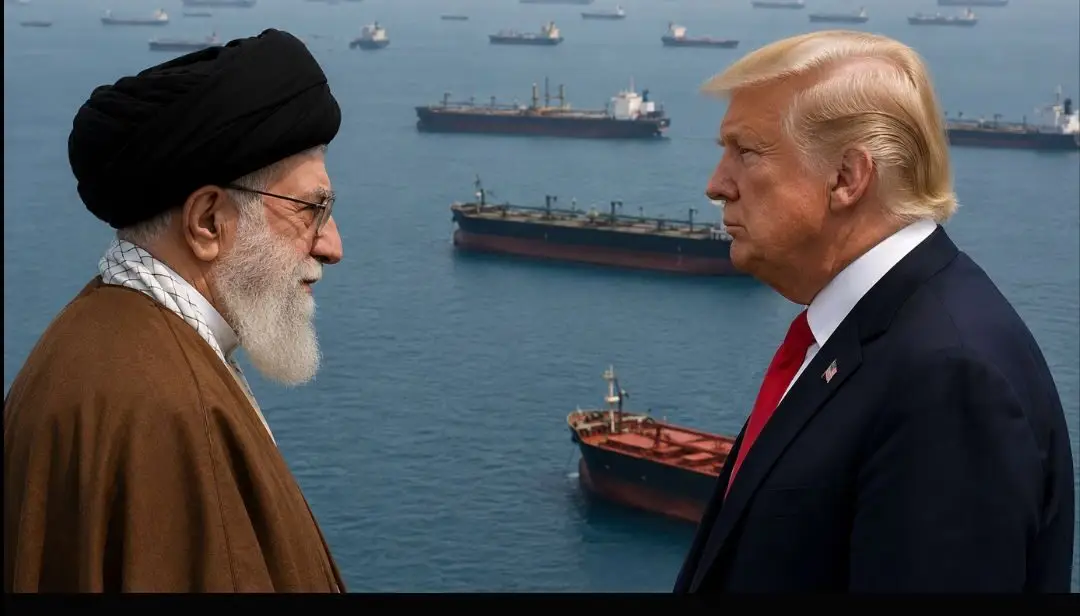
The US-Iran peace deal has been announced. The signing ceremony in Switzerland is set for June 19. But in the Persian Gulf, 600 ships sit idle engines running, crews exhausted, cargo spoiling waiting for answers that have not yet arrived.
Despite the diplomatic breakthrough that sent oil prices tumbling 4%, the shipping industry is responding not with celebration but with a single collective demand: tell us exactly how, and exactly when, the Strait of Hormuz is safe to transit again.
The Numbers Behind the Backlog
Vessel-tracking data from Kpler, published by Bloomberg on June 15, shows approximately 600 vessels trapped inside the Persian Gulf and primed to exit with an equal number of empty tankers and bulk carriers positioned outside, waiting to enter. At the crisis peak in late April, the International Maritime Organization (IMO) reported approximately 2,000 ships and 20,000 mariners stranded in the Gulf. Some 1,550 vessels were still immobilized as recently as May 8.
Before the Strait of Hormuz Crisis began, the waterway handled 100 to 130 ships per day carrying roughly 20 million barrels of oil approximately 20% of the world’s daily petroleum supply. Since February 28, just 21 tankers had actually completed transits. On June 14, the day the deal was announced, only two ships were moving through versus a pre-war norm of 94 per day.
The cost of this paralysis has been staggering. The Kiel Institute for the World Economy estimated the direct trade impact at over $4 billion per day. Supertankers stranded inside the Gulf were losing up to $150,000 per day in idle earnings. Container freight rates on key routes surged 75% above pre-war levels, with emergency surcharges of $1,500 to $4,000 per shipping container applied across major container lines.
“More Detail Needed Before Ships Move”
The shipping industry’s response to the deal has been measured and pointed. BIMCO, the world’s largest international shipping association, said it had received “only very limited information” about US plans for ensuring safe passage. Jakob Larsen, BIMCO’s head of maritime security, stated plainly: “A mine-clearance effort will most likely be needed to fully reopen the Strait.” BIMCO said the industry needs “more detail and information on how the US proposes practically how this will work before you’ll see an uptake by shipping companies.”
The IMO’s Secretary-General went further, warning that naval escorts a solution Trump’s team had floated are “not 100% safe for ships, and not a long-term sustainable solution, because ships can still be targeted.”
A joint statement from six major shipping associations ICS, BIMCO, Intercargo, Intertanko, IMCA, and OCIMF put the issue starkly: “Rebuilding confidence in the safety of theStrait of Hormuz will require not only an end to attacks, but also clear demonstrations of restraint and adherence to international law.”
The Mine Problem Nobody Is Talking About
At the center of the industry’s anxiety is a stark contradiction embedded in the peace deal itself. The US-Iran Memorandum of Understanding sets a 30-day timeline for Hormuz to reopen as Iranian forces clear the mines they laid during the conflict. But the Pentagon, briefing Congress separately, said clearing all mines would likely take six months.
The US Navy began mine-clearance operations on April 11, deploying USS Pioneer (MCM 9), USS Chief (MCM 14), and General Dynamics Mk18 Mod 2 Kingfish autonomous underwater drones to begin mapping the hazard. But the task is made harder by a strategic blunder: the US had retired its Avenger-class minesweepers from the Persian Gulf in September 2025, sending them to Philadelphia’s inactive fleet just months before the war began — leaving mine-clearance capacity severely degraded at the worst possible moment, a situation one analysis described as arriving at “worst-case scenario unprepared.”
No shipowner will send a laden VLCC worth $150 million through an incompletely cleared minefield on the basis of a diplomatic press release.
Insurance Rates Tell the Real Story
If there is a single metric that captures the gap between the deal announcement and commercial reality, it is war-risk insurance premiums. Before the crisis, shipping companies paid approximately 0.1% to 0.15% of hull value per Hormuz voyage. By June 2026, those premiums had surged to 4,000 times pre-war levels with seven-day renewable policies priced at 4% of a ship’s total value. For a Very Large Crude Carrier (VLCC), that translates to between $3 million and $8 million for a single transit.
Willis Towers Watson, one of the world’s largest insurance brokers, warned in May 2026 that “war risk rates are unlikely to fall after ceasefire” because actuarial pricing resets only when sustained incident-free transit data accumulates, “a process the industry measures in years, not press conferences.”
India’s Exposure Remains Acute
For India, the backlog has human as well as economic consequences. The Strait of Hormuz Crisis left over 18,000 Indian sailors in the broader Gulf region, with 562 aboard Indian-flagged vessels. Three Indian seafarers were killed when a US military operation struck a tanker off Oman. An India-flagged cargo vessel sank on May 13, though all 14 crew were rescued by Omani authorities.
India’s crude oil import bill had hit $174.9 billion annually by the crisis peak. New Delhi rerouted 70% of its crude imports away from Hormuz and dramatically increased Russian crude purchases moves that strained US-India Relations given India’s commitments under the February 2026 bilateral trade framework.
The 600 ships now waiting to move represent not just stranded cargo, but stranded livelihoods from Indian crews to Fujairah port workers to commodity traders in Singapore and Rotterdam. The deal may be signed. But for the maritime industry, the Iran-US War Latest chapter will not close until a cleared channel, confirmed insurance markets, and 30 days of incident-free transits prove that the Strait is truly open again.

Oil & Energy Markets
A look at crude price swings, OPEC supply moves, and how energy markets react to geopolitical shocks.

Geopolitics & Conflict
Breaking down how wars, ceasefires, and diplomatic deals ripple through global trade and security.
US Foreign Policy
Coverage of Trump administration negotiations, sanctions, and strategic decisions shaping world events.
Economy & Inflation
Tracking how commodity prices, gas costs, and supply chains affect everyday consumers.