Share This Article
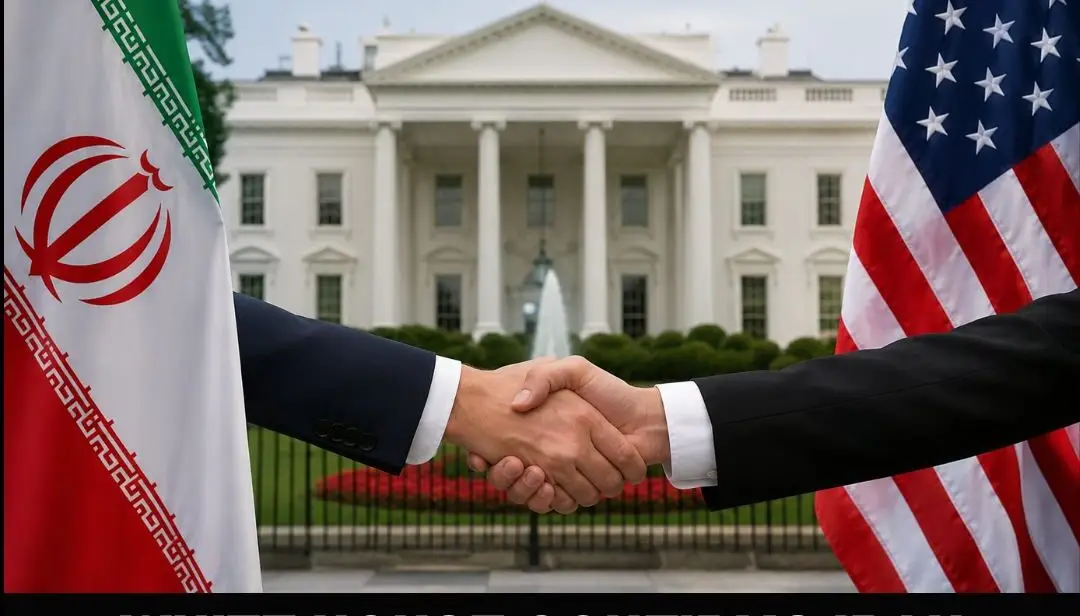
After 103 days of war, 38 premature deal announcements, a mined and shuttered Strait of Hormuz, and a nuclear stockpile large enough for eleven weapons, the Trump administration confirmed on June 12 that Iran has agreed in principle to a performance-based nuclear deal a framework that, for the first time, conditions every dollar of sanctions relief on verified Iranian compliance.
“No money will be released to Iran until it honours its commitments,” a senior Trump administration official told NBC News. The benefits, the official added, “only accrue if they actually deliver.”
Pakistan’s Prime Minister Shehbaz Sharif announced on June 12 that a “final, agreed upon text” of the peace deal had been reached, stating: “Peace has never been this close as it is now.” Trump claimed Iran’s new Supreme Leader Mojtaba Khamenei had personally approved the framework. Iranian Foreign Minister Abbas Araghchi said the deal “has never been closer” and could be signed by both sides “remotely in the next few days.”
The administration was operating with 80–85% confidence the MOU would be signed within days. That confidence has not yet been matched by a formal signature.
What “Performance-Based” Actually Means
The architecture of this deal is its defining departure from the Obama-era JCPOA, which Washington gave credit to Iran in advance releasing $150 billion in frozen assets before Iran’s nuclear obligations were fully verified. The Trump framework inverts that sequence entirely.
Under the proposed 60-day memorandum of understanding, sanctions negotiations begin immediately but implementation is locked behind a verification gate. Iran receives economic relief only once it has demonstrably performed: mines cleared, uranium removed or destroyed, IAEA inspectors back on site, enrichment ceased. Relief follows compliance. Not the reverse.
The sequencing matters enormously. The Axios deal outline confirms a phased structure: the 60-day MOU opens a technical negotiation window; a comprehensive final agreement follows; sanctions are lifted only as part of that final deal “that is verifiably implemented.” Iran cannot pocket concessions and walk. Every provision is triggered, not gifted.
The core commitments: Iran restricts uranium enrichment to a maximum of 3.67% for civilian purposes. The Strait of Hormuz reopens within 30 days. Iran removes all sea mines deployed by the IRGC. All 440.9 kilograms of near-weapons-grade 60% enriched uranium sufficient for ten to eleven nuclear devices is either transferred to the United States, destroyed on Iranian soil under international supervision, or removed to an agreed third location. Frozen Iranian assets, estimated at $24 billion, enter a negotiated release schedule tied to milestones.
Trump’s red line on the uranium: not Russia, not China. He stated explicitly he would “not be comfortable” with either power taking custody of Iran’s stockpile.
The Verification Crisis No Deal Can Ignore
The foundation of any performance-based deal is verification. Right now, that foundation does not exist.
On February 28 — the opening day of Operation Epic Fury Iran disabled every IAEA surveillance camera, removed all agency seals, and evacuated every inspector. The result: a 97-day monitoring blackout that the IAEA’s Director General Rafael Grossi called the most significant verification failure since Iran monitoring began. Nobody in Washington, Vienna, or Jerusalem knows with certainty where Iran’s 440.9 kilograms of enriched uranium currently sits.
On June 10, the IAEA Board of Governors voted 21 to 3 Russia, China, and Niger dissenting to demand Iran provide immediate access and complete disclosure of its nuclear inventory. Grossi was unambiguous: “All of Iran’s nuclear programme will require the presence of IAEA inspectors; otherwise you will not have an agreement you will have an illusion of an agreement.”
The performance-based structure depends entirely on the ability to verify performance. That capability must be rebuilt from zero.
Strait of Hormuz: First Ships Not Yet Moving
The Strait of Hormuz remains closed to commercial shipping as of June 13. Iran deployed an estimated 5,000–6,000 naval mines beginning March 10; two US Navy destroyers USS Frank E. Peterson and USS Michael Murphy — have conducted mine-clearing transits, and Britain’s Royal Navy is preparing mine-sweeping assets. But PBS News confirmed no commercial vessels have resumed transit.
A key sticking point: Iran initially proposed retaining toll authority over the Strait as a mechanism to collect war damage compensation a demand Washington flatly rejected. The MOU specifies shipping must be “unrestricted” with zero tolls. Iran’s mine-clearing obligation within 30 days of signing is one of the deal’s most concrete performance requirements, and one of the most watched.
Brent crude settled at $87.33 per barrel on June 12 down 3.4% on deal optimism while WTI fell 3.2% to $84.88. CNBC noted that markets are pricing Strait reopening as the deal’s most immediate market catalyst, with Rystad Energy projecting 85% of lost supply volumes restored by October 2026 under an optimistic phased reopening scenario.
Netanyahu: “As Long as I Am PM, Iran Will Not Have Nuclear Weapons”
Israeli Prime Minister Benjamin Netanyahu has staked his political legacy on a single outcome: verified elimination of Iran’s nuclear capability. His position on June 13 is unchanged from his first statement on the deal — and from the red line he has held throughout the Iran-US War.
“As long as I am the Prime Minister of Israel, Iran will not have nuclear weapons,” Netanyahu declared, asserting “complete agreement” with Trump on the issue. His specific conditions for accepting the deal: full dismantling of Iran’s nuclear infrastructure, and “real inspections substantive inspections, no lead-time inspections, but effective inspections for all of the above.”
Times of Israel analysis concluded that the emerging deal has forced Israel into a position of “seeking guarantees, not victory” a significant descent from the maximalist objectives with which Jerusalem entered the conflict. Israeli Defense Minister Israel Katz has reserved Israel’s right to act unilaterally if the nuclear question is not resolved to its satisfaction.
The 60-Day Clock: What Happens Next
The MOU launches a 60-day technical negotiation period targeting mid-August 2026 for a comprehensive final agreement. The gap between the two sides on enrichment duration alone is vast: Washington wants a 20-year prohibition; Tehran is offering 5 years. The HEU disposal mechanism, described by Trump himself as “a little conceptual,” remains to be worked out in concrete operational terms.
The Brookings Institution has warned explicitly: “Avoid any temporary deal on Iran’s nukes.” A 60-day window with unresolved uranium questions, a fractured verification system, and an IAEA blackout of nearly 100 days creates a structural fragility that optimistic press releases cannot paper over.
What the deal has on its side: war fatigue on both sides, Pakistan and Qatar invested in mediation success, Trump’s urgent political need for a foreign policy win before midterms, and an Iranian economy that has absorbed $1.1 billion per day in stranded export revenue since the Strait closure began.
What it has against it: a new Iranian Supreme Leader communicating through intermediaries, enrichment duration disagreements measured in decades, a verification system being rebuilt from scratch, and an Israeli PM who has made absolute demands of a deal he did not negotiate.

Oil & Energy Markets
A look at crude price swings, OPEC supply moves, and how energy markets react to geopolitical shocks.

Geopolitics & Conflict
Breaking down how wars, ceasefires, and diplomatic deals ripple through global trade and security.
US Foreign Policy
Coverage of Trump administration negotiations, sanctions, and strategic decisions shaping world events.
Economy & Inflation
Tracking how commodity prices, gas costs, and supply chains affect everyday consumers.