Share This Article
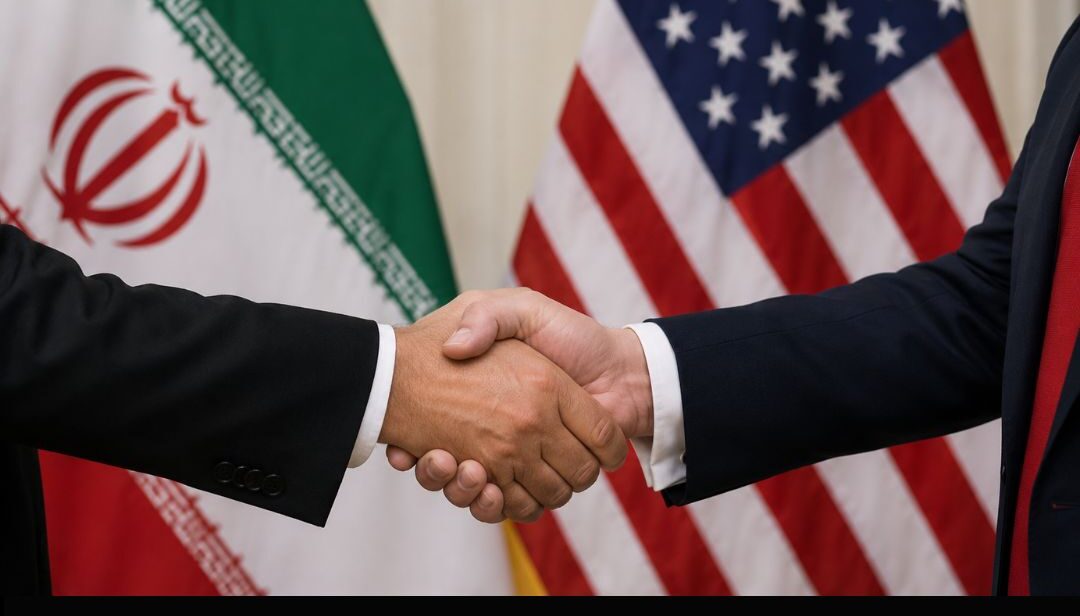
President Donald Trump stood before reporters on June 12 and delivered a declaration that was either the most consequential diplomatic announcement of his presidency or his 38th premature claim of an Iran deal in fewer than three months.
“We just made a great settlement of the war with Iran, subject to finalization of documents,” Trump said, adding that the agreement should be completed “in the next few days.” He claimed the deal’s “final points” had been “approved by all parties involved” listing the United States, Iran, Israel, Saudi Arabia, the UAE, Qatar, Turkey, Pakistan, Bahrain, Kuwait, Jordan, and Egypt.
If true, it would end the most destabilising conflict the Middle East has seen in a generation. If not, it joins a long list of announcements the Iran-US War has already swallowed whole.
What the Deal Actually Contains
Axios reporting has provided the most granular look at the proposed 14-point memorandum of understandingg a framework agreed by negotiators but not yet signed by either head of state.
The terms are ambitious. On the nuclear front, Iran would agree to a moratorium on all uranium enrichment for 15–20 years, commit to never pursuing nuclear weapons, and permit the dismantling of its three main enrichment sites Fordow, Natanz, and Isfahan. All remaining highly enriched uranium stockpiles would be transferred to US custody. After the moratorium, Iran could enrich to a maximum of 3.67% for civilian purposes only.
On the Strait of Hormuz, the deal requires Iran to reopen the waterway closed now for 103 consecutive days within 30 days of signing, with no tolls charged and full mine-clearance operations underway. The US would simultaneously lift its naval blockade of Iranian ports, allow Tehran to sell oil on international markets, and open a 60-day negotiating window on broader sanctions relief including the unfreezing of $24 billion in Iranian assets currently held abroad.
Iran would also be required to halt all support for Hezbollah and regional proxy forces, and accept verifiable limits on ballistic missile production.
On paper, it is the most far-reaching constraint on Iranian power since the Islamic Revolution. Whether those constraints survive contact with Tehran is the operative question.
Iran: Deal “Not Finalised”
Iran’s official position is a study in deliberate ambiguity. Foreign Ministry Spokesperson Esmail Baghaei told state-run IRNA that reports of a finalised agreement were “merely speculation” and that Tehran had “not yet made a final decision.” Iran’s IRGC went further, casting direct doubt on Trump’s assertion that Iran’s Supreme Leader had personally approved the terms.
US Secretary of State Marco Rubio provided an inadvertently revealing detail: Iran’s new Supreme Leader, Ayatollah Mojtaba Khamenei who assumed the role after his father was killed in the February 28 opening strikes of Operation Epic Fury has not been seen publicly since the war began. All communications, Rubio acknowledged, have been “in writing and through intermediaries.”
Trump’s counter: “I understand the answer is yes” when asked if the Supreme Leader had approved the deal. Israeli sources told their own media they had “seen no indication” of any such approval.
Baghaei’s more substantive complaint cut deeper: “Most of the text had already been finalised, but the Americans kept changing their positions.” Senior Iranian lawmakers added that “the probability of deception by Trump is high” a phrase that reflects 103 days of simultaneous negotiations and military strikes, a combination that has made trust a casualty before any formal agreement.
Netanyahu: Told to Accept It
Israeli Prime Minister Benjamin Netanyahu has been left in a position that would have been unthinkable at the war’s outset: told by Washington to accept a deal he did not shape, did not negotiate, and believes does not go far enough.
On June 7, Trump left no room for ambiguity: “Netanyahu won’t have any choice. I call the shots.” Netanyahu had reportedly called off a major unilateral Iranian strike only after Trump warned that Israel would be on its own if it escalated further.
The Times of Israel confirmed Netanyahu’s formal position: Israel is “not a party” to the memorandum of understanding. His office issued a statement of conditional appreciation noting Trump’s commitment that any final deal would include removal of enriched material, dismantling of nuclear infrastructure, missile limits, and cessation of proxy support language that reads less like endorsement and more like a demand checklist submitted after the fact.
Israeli Defense Minister Israel Katz issued a harder line: “Israel must retain the ability to act independently to prevent Iran from obtaining nuclear weapons” a statement that leaves open the possibility of unilateral Israeli military action even if Washington signs a deal.
The Strait and the Clock
The practical centrepiece of any deal and the metric financial markets are watching most closely is the Strait of Hormuz reopening.
CNBC reported that traders give only a 38% probability of normal Strait traffic returning by July 1. Baker Hughes, the energy services company, has stated the strait may not be fully operational until the second half of 2026. Nearly 80% of oil and gas executives surveyed believe reopening will not occur before August at the earliest.
The reason is physical, not political: Iran’s IRGC laid sea mines throughout the strait beginning March 10. The Pentagon initially estimated clearing them could take up to six months, though officials later disputed that timeline. Britain’s Royal Navy has confirmed it will not begin mine-sweeping operations until a formal agreement is signed.
Brent crude has already begun pricing in deal optimism falling from $97.44 per barrel on June 5 to $87.43 by June 12, a decline of over 10% in one week. Oil remains 17.79% higher than a year ago. If the deal collapses, that premium will snap back violently.
The Wider War: Far From Over
Trump’s framing of a deal to “end the Middle East War” requires pausing on what that war currently encompasses. What began as a US-Israeli air campaign against Iran on February 28 has expanded across multiple fronts.
Lebanon: Israel and Lebanon reached a conditional ceasefire on April 16, brokered by the US. It collapsed within hours. Israel struck again. Hezbollah rejected any deal not tied to a full Israeli withdrawal. As of June 12, the 2026 Lebanon war continues at least 3,593 killed and 10,990 wounded by Israeli strikes alone.
Iran: HRANA documented 3,636 deaths inside Iran as of April 7 1,701 civilians among them, including those killed when a US munition struck a girls’ school near Bandar Abbas on the first day of the war. Infrastructure damage across 307 health and emergency facilities has been confirmed. Nearly 2.4 million people fled to Tehran, with 17% lacking clean water access.
Regional displacement: UNHCR counts 4,827,052 individuals displaced across the broader Middle East conflict zone a humanitarian crisis the proposed MOU does not directly address.
A deal between Washington and Tehran, even if signed this weekend, would not automatically silence the guns in Lebanon, neutralise Iranian proxies in Iraq and Syria, or resolve the displacement crisis now entering its fourth month.
Gulf States: Cautiously Welcoming
Saudi Arabia, the UAE, and Qatar all named by Trump as deal supporters have been careful but broadly positive. Qatar’s emir welcomed efforts toward “regional and international stability.” The UAE called for the Strait to be “open unconditionally” and for a plan to address Iran’s ballistic missile program. Saudi Arabia, which shares the Gulf with Iran and has the most to gain from Strait normalisation, has remained publicly measured.
Russia has offered to take Iran’s enriched uranium as part of any settlement an offer Trump has publicly rejected, insisting the material must come to the United States. China has urged parties to “stop pushing for sanctions and inciting confrontation” while signalling readiness to assist but on terms tied to Beijing’s own strategic interests.
The Political Clock
Domestically, Trump has every incentive to close a deal fast. His net approval rating has fallen to -25 percentage points his lowest ever, according to the Economist/YouGov poll conducted June 5–8. Two-thirds of Americans believe he has been ineffective in Iran negotiations. The House has already passed a war powers resolution directing him to end the conflict. The midterm cycle is tightening.
A signed Iran deal that reopens the Strait of Hormuz, brings oil prices down, and ends the war that pushed US inflation to 4.2% would be the single most powerful political reversal available to him before November.
That calculus more than any diplomatic breakthrough may be the real engine behind Trump’s rising confidence that this time, the deal is real.

Oil & Energy Markets
A look at crude price swings, OPEC supply moves, and how energy markets react to geopolitical shocks.

Geopolitics & Conflict
Breaking down how wars, ceasefires, and diplomatic deals ripple through global trade and security.
US Foreign Policy
Coverage of Trump administration negotiations, sanctions, and strategic decisions shaping world events.
Economy & Inflation
Tracking how commodity prices, gas costs, and supply chains affect everyday consumers.