Share This Article
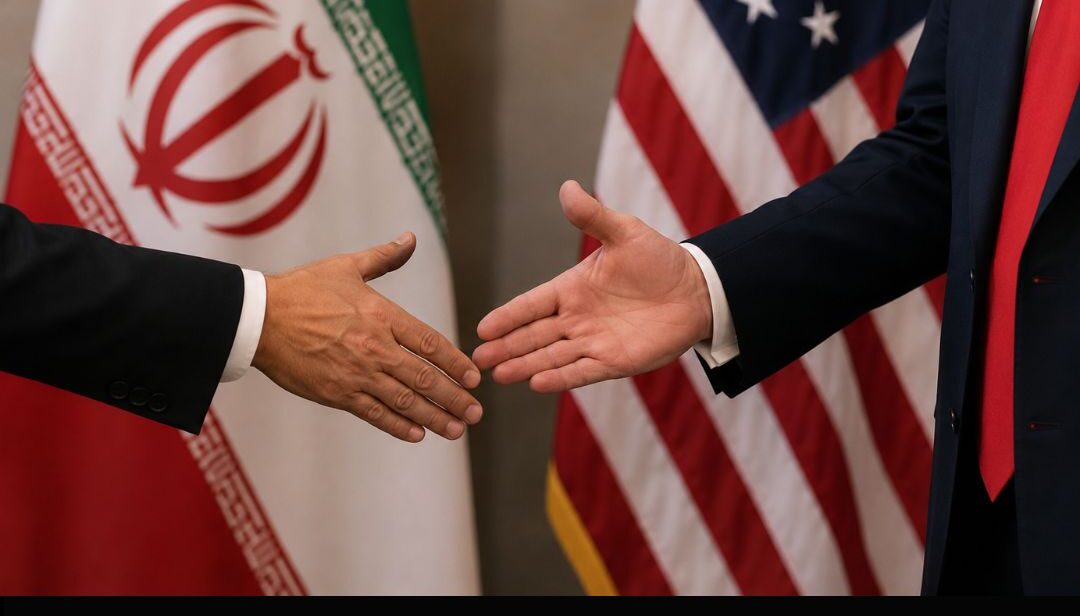
President Donald Trump is projecting confidence and this time, he is asking the world to believe him. After cancelling planned military strikes on Iran just three hours before launch on June 11, Trump declared he was “really closing” a historic deal with Tehran, predicting a signing could come “as soon as this weekend.” Oil prices fell 4%. Stock markets surged. Diplomats held their breath.
The world has heard variations of this announcement before. Between March 23 and June 9, Trump claimed a deal was imminent at least 37 times. Each time, it didn’t materialise. This time, he insists, is different. Whether Iran, Israel, Congress or the markets are willing to believe him is a separate question altogether.
What Trump Says Is On the Table
Axios reporting has provided the most detailed look at the proposed 14-point memorandum of understanding. The framework is sweeping in ambition and contested in almost every clause.
Nuclear program: Iran would agree to a temporary moratorium on all uranium enrichment for at least 12 years, after which enrichment to a maximum of 3.67% for civilian use would be permitted. The US is demanding destruction of Iran’s three main nuclear sites Fordow, Natanz, and Isfahan and the physical delivery of all remaining highly enriched uranium stockpiles to American custody.
Strait of Hormuz: Within 30 days of signing, Iran commits to reopen the strait now closed for 103 consecutive days with no tolls, no restrictions, and full mine clearance operations. Trump has stated the pause on US strikes is explicitly conditional on the “complete, immediate, and safe opening” of the Strait of Hormuz.
Sanctions and frozen assets: Washington would lift its naval blockade of Iranian ports, allow Iran to sell oil freely, and enter a 60-day negotiating window on broader sanctions relief and the unfreezing of Iranian state funds currently held abroad.
Proxy forces: Iran must cease all support for Hezbollah in Lebanon, reduce missile production, and commit to non-interference in regional conflicts.
On paper, it is the most ambitious diplomatic framework attempted with Iran since the 2015 JCPOA and structurally more demanding. The question is whether it can survive contact with the parties it requires.
Iran: “No Final Decision”
Tehran has not matched Trump’s optimism. Iran’s Foreign Ministry spokesperson Esmail Baghaei stated flatly that there had been “no final decision” on any deal. The semi-official Fars News Agency said Iranian leaders had “not approved any text with the US” directly contradicting Trump’s assertion that the agreement had been “brought to the highest level of Iranian leadership and approved.”
Iranian officials have painted a picture of a negotiation still in flux. Baghaei acknowledged that “most of the text had already been finalised, but the Americans kept changing their positions.” Senior Iranian lawmakers warned that “the probability of deception by Trump is high” a reflection of deep institutional distrust built across months of simultaneous strikes and talks.
Tehran’s own five-point counter-demands complicate the picture further. Iran is insisting on: an end to US-Israeli attacks on Iranian-aligned forces in Lebanon and Iraq; binding security guarantees against future aggression; war reparations; international recognition of Iranian sovereignty over the Strait of Hormuz; and the right to enrich uranium for civilian purposes once any moratorium expires.
The reparations demand alone — estimated by Iran at up to $270 billion has no public American counter-offer. And as of June 12, the IAEA found Iran non-compliant with nuclear obligations for the first time in 20 years — an assessment that will sharpen Congressional scepticism of any verification regime.
Netanyahu: Excluded, Not Persuaded
Israeli Prime Minister Benjamin Netanyahu’s position on this deal has been consistent and uncomfortable for Washington: he opposes it, he was not consulted on it, and he has been told he has “no choice” but to accept it.
Trump’s blunt message delivered reportedly via expletive-laden phone calls in which he called Netanyahu “f*ing crazy”** for complicating peace talks through Lebanon escalations has crystallised the power dynamic. As the Times of Israel confirmed, Israel is formally “not a party” to the memorandum of understanding. Netanyahu’s office issued a statement after the announcement not before it listing the conditions he hopes the final deal will include: removal of enriched material, dismantled enrichment infrastructure, limits on missile production, and cessation of proxy support.
Netanyahu’s concern is specific: a deal that eases economic pressure on Tehran without verifiably eliminating its nuclear capability. He has pushed for strikes on Iranian oil facilities. He has warned against lifting the naval blockade before nuclear sites are physically destroyed. His leverage, however, is diminishing. Trump has made clear that Washington dictates the trajectory of talks with Tehran and an October 2026 Israeli election in which Trump is reportedly more popular than Netanyahu himself gives the Israeli PM limited room to publicly defy his principal backer.
Congress: Sceptical and Already on Record
The House of Representatives delivered its own verdict on June 3 passing a war powers resolution directing Trump to end the Iran war by a 215–208 vote, with four Republicans crossing the aisle. Representative Thomas Massie framed it simply: “People are tired of $5 gallon gas and $6 gallon diesel.”
Al Jazeera described the vote as “a rare pushback against Trump” on foreign policy. Trump dismissed it as a “meaningless vote” taken “right in the middle of my final negotiations.” The Senate Republican-controlled — has not advanced a matching resolution. But the House vote signals that Trump’s domestic runway for continued military operations is not unlimited.
Senator Lindsey Graham, broadly supportive of the administration’s approach, nonetheless demanded the deal be “presented to Congress for review and approval” and produce something “fundamentally different” from the Obama-era nuclear agreement that Trump himself dismantled in 2018.
Oil Markets: Cautiously Pricing a Deal
The market verdict on Trump’s announcement has been the most immediate barometer of credibility. When Trump cancelled strikes and announced deal progress on June 11, Brent crude lost 4.2% to $89.15 per barrel. On June 12, it fell another 4.4% to $86.45 as reopening hopes held.
CNBC noted that “Trump keeps saying an Iran deal is close and markets keep believing it” a pattern that has played out across 37 previous claims with no final agreement. The Dow surged 810 points. Energy stocks fell. The dollar strengthened on safe-haven unwinding.
The mine-clearance problem adds a practical complication. The Strait of Hormuz mined by Iran’s IRGC and closed since late February could take up to six months to fully clear, according to initial Pentagon estimates, though officials later disputed that timeline. Britain’s Royal Navy has confirmed it stands ready to assist but will not begin operations until an agreement is formally signed. Every day of mine-clearing delay is a day the oil price relief traders are currently pricing remains theoretical.
The Verdict: Deal or Delay?
Seth Jones at the Center for Strategic and International Studies was measured in his assessment: “There is no reliable evidence that we have a deal, and if there is a deal, it is still not clear if that deal will stick.”
The obstacles are structural. Iran wants sovereignty recognition over the strait and reparations the US has not offered. Israel wants nuclear infrastructure destroyed before any sanctions relief flows. Congress wants a vote it may not get. And the IAEA has just declared Iran non-compliant precisely the moment the White House wants international bodies to stand aside for diplomacy.
Trump has claimed a deal was days away 37 times. The 38th time may be the one that counts. Or it may be another headline the Iran-US War absorbs and moves past. The Strait of Hormuz — and the world’s oil supply remains hostage to the answer.

Oil & Energy Markets
A look at crude price swings, OPEC supply moves, and how energy markets react to geopolitical shocks.

Geopolitics & Conflict
Breaking down how wars, ceasefires, and diplomatic deals ripple through global trade and security.
US Foreign Policy
Coverage of Trump administration negotiations, sanctions, and strategic decisions shaping world events.
Economy & Inflation
Tracking how commodity prices, gas costs, and supply chains affect everyday consumers.