Share This Article
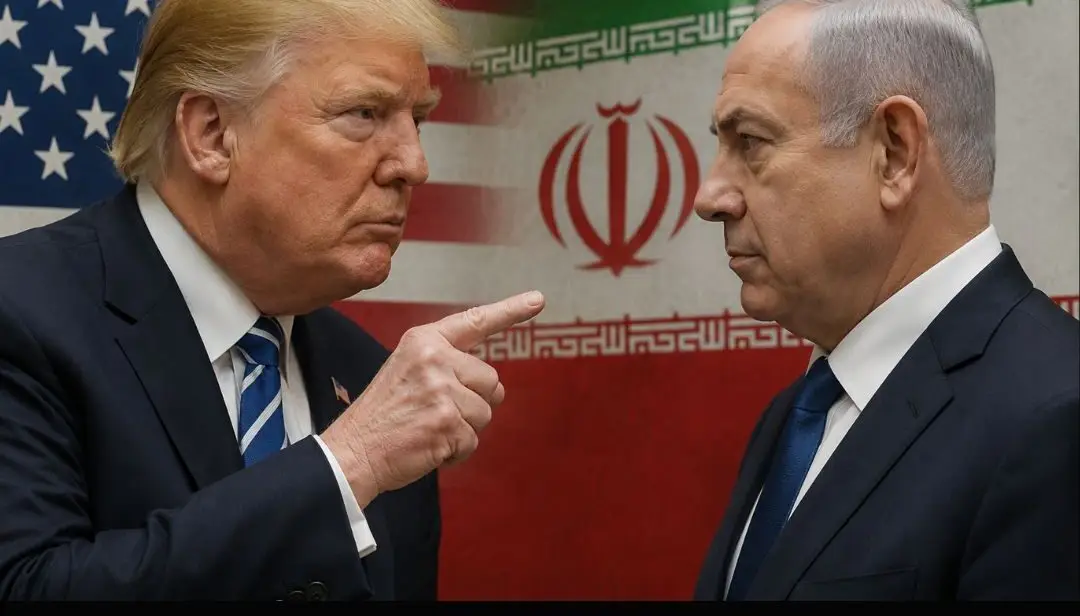
The relationship between Donald Trump and Benjamin Netanyahu forged through years of mutual political benefit and publicly performed alliance cracked open on June 7, 2026 in a way that neither leader can easily paper over. Speaking to the Financial Times roughly an hour after urging Netanyahu not to retaliate against a fresh Iranian ballistic missile barrage on northern Israel, Trump delivered a blunt verdict on the Israeli prime minister’s ability to influence the outcome of the US-Iran deal: “He won’t have any choice. I call the shots. I call all the shots. He doesn’t call the shots.”
The words landed like a verdict. For months, Netanyahu has lobbied, pressured, and publicly warned against what he calls a “bad interim deal” that would ease sanctions on Tehran without dismantling Iran’s enrichment infrastructure or removing its ballistic missile capability. Trump’s response, stripped of diplomatic courtesy, was unambiguous: the us iran deal is happening on Washington’s terms, not Jerusalem’s.
How the Rift Became Public
The friction between the two leaders did not begin on June 7. It has been building since the US-Iran war shifted from its military phase into a fragile diplomatic one and the divergence in end-game strategy became impossible to conceal.
The most public rupture came on June 1, when Trump made an expletive-laden phone call to Netanyahu over Israeli escalation in Lebanon, reportedly calling Netanyahu “fucking crazy” for actions threatening to derail Washington’s peace negotiations with Tehran. Trump confirmed the characterization publicly, telling the New York Post he was “a little bit perturbed at his constantly fighting with Lebanon.” Netanyahu downplayed the call, calling Trump “the greatest friend that Israel has ever had in the White House” and describing their differences as mere “tactical disagreements.”
The tactical disagreements, however, are strategic in substance. As CNN’s analysis framed it, Trump and Netanyahu “began the Iran war with extraordinary coordination but are now clashing over how to end it.”
What Netanyahu Wants and What Trump Is Offering
Netanyahu’s five conditions for any acceptable Iran agreement have been on the table since February 2026:
- Complete removal of all enriched uranium from Iranian territory
- Dismantlement of all enrichment capabilities
- Restrictions on Iran’s ballistic missile program
- Dismantlement of Iran’s regional proxy network including Hezbollah
- Robust, surprise-inspection-capable IAEA oversight
The emerging us iran nuclear deal framework, as reported by Axios’s exclusive on deal terms, addresses some of these demands but falls far short of others. The deal’s nuclear architecture involves a 12–15 year moratorium on high-level uranium enrichment a compromise between Washington’s demand for 20 years and Tehran’s offer of five with Iran permitted to enrich at 3.67% after the moratorium ends. IAEA inspectors would return under the Additional Protocol allowing surprise inspections at undeclared sites.
Critically, the deal does not require immediate dismantlement of enrichment infrastructure. And Iran’s ballistic missile program and proxy networks Hezbollah, the Houthis, Iraqi militias are handled in a secondary framework rather than as preconditions. Former Israeli Ambassador Michael Oren stated the current draft “addresses none of our strategic concerns.”
Netanyahu publicly confirmed his core objection on June 7: “There’s still nuclear material, enriched uranium, that has to be taken out of Iran. There are still enrichment sites that have to be dismantled.” Trump’s response was to restate his position with increasing bluntness.
The Strait of Hormuz: Trump’s Real Deadline
To understand why donald trump tells netanyahu he has no choice, the Strait of Hormuz is the key variable. The strait has been closed for 98 consecutive days. Global oil prices remain elevated above $95 per barrel. US consumers are paying crisis-level fuel prices. Every day the strait stays closed costs the global economy hundreds of millions of dollars and costs Trump political capital at home ahead of the 2026 midterms.
The deal’s maritime terms are the most immediately valuable for Washington: a 60-day ceasefire extension with the Strait of Hormuz immediately reopened, Iran clearing the sea mines it deployed, the US lifting its naval blockade of Iranian ports, and Iran permitted to freely sell oil. The economic relief of reopening the strait is something Trump can claim as a tangible, visible win regardless of whether every Israeli security condition is met.
Iran’s negotiating posture, however, has hardened. A senior adviser to Supreme Leader Ayatollah Mojtaba Khamenei, Mohsen Rezaei, told CNN in an exclusive interview that talks are “deadlocked” over Iran’s demand for $24 billion in frozen funds — $12 billion upon signing an interim agreement and $12 billion later. Iran subsequently suspended nuclear negotiations following Israeli strikes targeting Iranian military leadership on June 13, adding a fresh rupture to an already fragile process.
Netanyahu’s Diminishing Cards
The deeper problem for Netanyahu is structural. As Foreign Policy’s analysis noted, “a Trump deal with Iran could spell trouble for Israel’s Netanyahu” precisely because it is being negotiated with “near-total exclusion of Jerusalem.” Israel started this conflict with Trump as its indispensable ally. It is ending the conflict’s military phase as a party whose objections are being noted and overruled.
Netanyahu faces domestic pressure from within his own coalition to press harder against Hezbollah, Iran, and Hamas in Gaza simultaneously none of which is achievable without sustained US military and diplomatic cover that Trump is now redirecting toward a deal. As NPR’s reporting on the Trump-Netanyahu rift confirmed, Netanyahu has privately acknowledged Israel has “limited influence” on the deal’s outcome a remarkable admission from a leader who has long positioned the US-Israel alliance as a two-way strategic partnership.
On June 7 and 8, Iran fired at least 20 ballistic missiles at Israel alongside Houthi strikes from Yemen. Israel responded with two waves of strikes on Iranian petrochemical facilities in Khuzestan. Trump, watching the exchange, urged both sides to stand down and reiterated that the sides were “very close” to signing an agreement.
Whether Netanyahu accepts a deal his five conditions cannot fully accommodate, or whether he finds a way to derail it through escalation, is now the central question of the us iran nuclear deal endgame. Trump’s answer, stated as plainly as he knows how: “I call all the shots.”

Oil & Energy Markets
A look at crude price swings, OPEC supply moves, and how energy markets react to geopolitical shocks.

Geopolitics & Conflict
Breaking down how wars, ceasefires, and diplomatic deals ripple through global trade and security.
US Foreign Policy
Coverage of Trump administration negotiations, sanctions, and strategic decisions shaping world events.
Economy & Inflation
Tracking how commodity prices, gas costs, and supply chains affect everyday consumers.