Share This Article
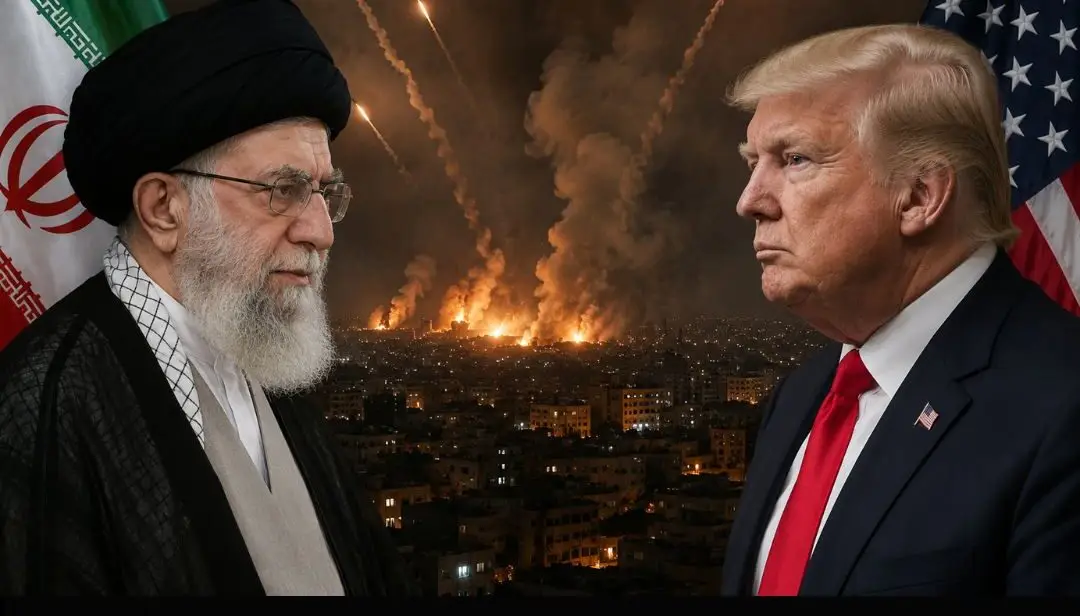
The ink was barely dry on Secretary of State Marco Rubio’s televised declaration that the Iran-US War confrontation was “effectively over” when the first missile warning sirens activated across US installations in the Gulf. Within 72 hours of one of the most premature diplomatic statements in recent American foreign policy history, Iranian ballistic projectiles were once again arcing toward American military infrastructure and the credibility of Washington’s entire strategic messaging apparatus was arcing with them.
Iran War 2026 is not over. If anything, Rubio’s statement may have made it worse.
What Rubio Said and When He Said It
Speaking from the State Department briefing room last Friday, Secretary Rubio delivered what the administration clearly intended as a victory lap. Flanked by National Security Advisor Mike Waltz, Rubio declared that US military and diplomatic operations had “fundamentally degraded Iran’s capacity and willingness to threaten the Strait of Hormuz” and that the acute phase of the US-Iran crisis had passed.
The statement was coordinated. It was deliberate. And it was almost immediately wrong.
Within 48 hours, IRGC commanders announced a new “Phase Two” operational posture in the Gulf. Within 72 hours, two US forward positions reported incoming missile fire. The Strait of Hormuz which Rubio’s team implied was secured remains under active navigational warning from Lloyd’s of London, with marine insurance premiums still carrying a 0.75% war risk surcharge that effectively prices continued conflict into every tanker transit.
The Contradiction in Real Time
The gap between Rubio’s declaration and ground reality reflects a deeper structural problem in how the Trump administration has managed the Iran War narrative. There are three specific contradictions that have emerged since the “It’s Over” statement:
Contradiction 1 — The Missile Strikes Continue: CENTCOM has confirmed at least three separate Iranian missile and drone incidents since Rubio’s briefing. None have caused mass casualties, and US defense systems have performed effectively — but their occurrence alone demolishes the premise of the “over” declaration. Iran does not conduct live missile operations against adversaries it has conceded defeat to.
Contradiction 2 — Hormuz Shipping Remains Disrupted: Commercial shipping intelligence firm Windward reports that tanker traffic through the Strait of Hormuz is operating at approximately 67% of pre-crisis volume — down from nearly 100% six weeks ago. Major energy companies including Shell and TotalEnergies have not restored normal routing through the strait. Markets do not lie the way press briefings sometimes do.
Contradiction 3 — Iran’s Domestic Posture Has Hardened, Not Softened: Iranian state media, far from reflecting the concession narrative Rubio’s statement implied, has been broadcasting footage of missile launches and IRGC mobilizations around the clock. Supreme Leader Khamenei issued a statement calling American claims of Iranian defeat “delusional propaganda.” Whatever back-channel signals may have encouraged Rubio’s optimism, the public and military posture of Tehran tells the opposite story.
“Declaring victory before your adversary has stood down is one of the most dangerous things a diplomat can do. It removes Iran’s off-ramp without removing Iran’s weapons,” said Aaron David Miller, senior fellow at the Carnegie Endowment for International Peace. Carnegie Endowment analysis →
Why the Statement Was Made Anyway
Understanding Rubio’s miscalculation requires understanding the domestic political pressure surrounding Iran War 2026. The Trump administration entered this crisis with significant public support for a firm stance against Tehran but that support carries an expiration date tied directly to gas prices, military casualties, and economic disruption.
With Brent crude at $96, grocery inflation resurging, and Congressional mid-term positioning already beginning, the White House needed an off-ramp narrative. Rubio’s statement was less a geopolitical assessment than a domestic political maneuver an attempt to declare the mission accomplished before the mission actually was, in hopes that the declaration itself would accelerate Iranian compliance.
It is a strategy with historical precedent. It also has a historically poor track record.
The US-Iran relationship has never responded well to public pressure designed for American domestic consumption. Tehran reads Washington’s internal politics with precision and consistently exploits the gap between what American officials say for their home audience and what is actually happening on the ground.
The Strait of Hormuz: Still the Central Variable
Every claim about the Iran War ending or not ending ultimately runs through the Strait of Hormuz. The strait is not a metaphor. It is a 21-mile navigational reality through which $1.2 trillion in energy commodities flows annually. Until commercial tankers transit it freely, without war risk premiums, without naval escorts, and without Lloyd’s caveats, no statement from any podium in Washington constitutes a credible declaration of resolution.
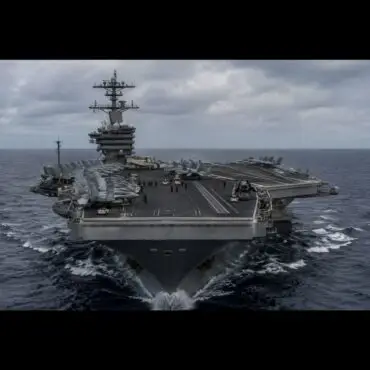
As of this writing, that threshold has not been met. Lloyd’s war risk surcharge remains active. The US Fifth Fleet remains on elevated alert. And Iran’s IRGC coastal missile batteries along the Hormuz corridor remain operational, fueled, and manned.
“The Strait of Hormuz is the only truth-teller in this conflict. Everything else is messaging,” said Robin Mills, CEO of Qamar Energy and one of the Gulf region’s most cited energy geopolitical analysts. Qamar Energy research →
What Needs to Happen for It to Actually Be Over
Analysts tracking the Iran-US War convergence identify four concrete benchmarks that would validate — rather than merely assert an end to the acute crisis phase:
- Lloyd’s war risk surcharge drops to zero on Hormuz-transiting vessels
- Iranian IRGC coastal assets visibly stand down from forward positions
- Brent crude returns below $80 on sustained volume
- Omani-mediated talks produce a publicly acknowledged framework agreement
None of those benchmarks have been reached. Until they are, Rubio’s statement remains what the missile strikes have already made it a declaration in search of a reality that does not yet exist.

Oil & Energy Markets
A look at crude price swings, OPEC supply moves, and how energy markets react to geopolitical shocks.

Geopolitics & Conflict
Breaking down how wars, ceasefires, and diplomatic deals ripple through global trade and security.
US Foreign Policy
Coverage of Trump administration negotiations, sanctions, and strategic decisions shaping world events.
Economy & Inflation
Tracking how commodity prices, gas costs, and supply chains affect everyday consumers.