Share This Article
The number on the trading screen is $96. To an oil trader in Houston or a hedge fund analyst in Manhattan, it is a data point a profit opportunity, a hedging calculation, a line on a chart. To a schoolteacher in Ohio, a nurse in Georgia, or a small business owner in Arizona, it is something else entirely: a slow, compounding squeeze on everything that holds a household together.
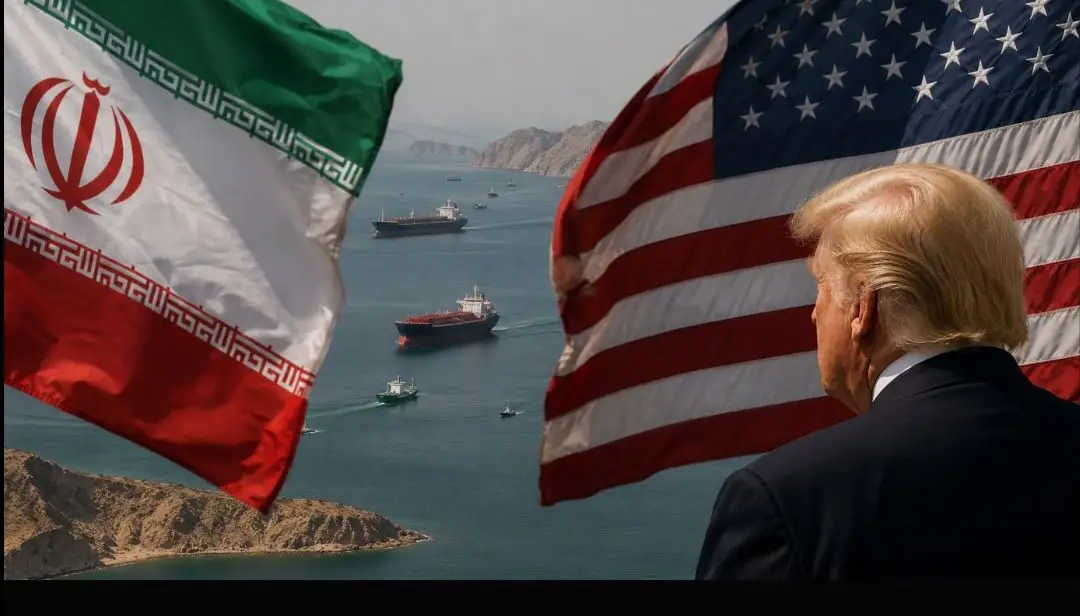
The Iran-US War escalation and the mounting threat to the Strait of Hormuz have pushed Brent crude to levels not seen since the post-pandemic energy shock of 2022. And this time, the structural conditions underneath the price spike are arguably more dangerous because they show no sign of resolving quickly.
What Oil Traders Are Actually Saying
Behind the clinical language of commodity desks, there is unusual candor this week. Traders who have navigated every oil shock from the Gulf War to COVID are describing the current Iran-US War premium baked into crude prices as unlike previous geopolitical spikes not because of its size, but because of its duration risk.
“Every other time we’ve seen a Gulf flare-up, markets priced in a 30-to-60-day resolution window,” said one senior energy trader at a major Chicago-based commodities firm, speaking on background. “Right now nobody is pricing in resolution. The base case is prolonged disruption.”
That sentiment is reflected in the futures curve. Brent crude contracts six and twelve months out are trading nearly as high as spot prices a market structure called backwardation collapse that signals traders expect high prices to persist, not normalize.
The Strait of Hormuz is the core variable. With roughly 17–21 million barrels of oil transiting the strait daily, even a partial disruption Iranian mining operations, naval harassment of tankers, insurance market withdrawal — would remove more supply from global markets than OPEC’s entire spare capacity can replace.
“The Strait of Hormuz is not just a chokepoint for oil it is a chokepoint for the global cost of living. When it is threatened, everyone pays,” said Tom Kloza, global head of energy analysis at OPIS (Oil Price Information Service). Full OPIS analysis here →
The Middle Class Math: Where $96 Crude Actually Hits
America’s middle class does not buy crude oil. But it buys everything crude oil touches and that list is longer and more intimate than most people realize.
At the Gas Pump The most direct transmission is gasoline. Historical modeling shows every $10 rise in Brent crude adds approximately 24–28 cents per gallon at the pump within two to three weeks. From the pre-crisis baseline of roughly $3.20 per gallon nationally, Americans are already seeing prices approach $3.85–$4.10 in high-cost states like California and New York. For a household driving two cars averaging 15,000 miles annually each, that translates to $600–$900 in additional annual fuel costs money extracted directly from discretionary spending.
At the Grocery Store Food inflation is the cruelest secondary effect. Fertilizer production is energy-intensive. Refrigerated trucking runs on diesel. Plastic packaging is petrochemical-derived. The USDA’s Economic Research Service estimates that a sustained $20 per barrel increase in crude prices adds 1.2–1.8% to grocery bills over a six-to-nine-month lag period. For a middle-income family spending $12,000 annually on food, that is $144–$216 quietly vanishing from the budget.
On the Mortgage** The connection between oil prices and mortgage rates is less intuitive but equally real. Sustained crude spikes feed into headline inflation figures, which pressure the Federal Reserve to maintain or raise interest rates. With 30-year fixed mortgage rates already elevated near 6.8%, any Fed pivot away from cuts — made more likely by an oil-driven inflation resurgence locks millions of aspiring homeowners out of the market for another cycle.
On Small Business For the 33 million small businesses that form the backbone of America’s middle class economy, energy costs are an existential variable. Restaurants, dry cleaners, delivery services, and light manufacturers operate on margins of 3–7%. A sustained energy cost increase of 15–20% — already materializing in commercial utility contracts cannot be fully passed to consumers without destroying volume.
The US-Iran Wildcard: How Much Worse Can It Get?
Oil traders are stress-testing two scenarios that keep risk desks awake at night.
Scenario A — Hormuz Harassment (Base Case): Iran conducts intermittent tanker seizures and naval provocations without physically closing the strait. Brent stabilizes in the $95–$105 range. Middle-class pain is significant but manageable — a slow bleed rather than a shock.
Scenario B — Hormuz Closure (Tail Risk): A US military strike on Iranian nuclear infrastructure triggers retaliatory mining of Hormuz shipping lanes. Global oil supply drops 15–20% overnight. Brent spikes to $130–$150. Goldman Sachs has modeled this scenario as triggering a US recession within two quarters, with unemployment rising 1.5–2 percentage points a direct, devastating blow to working and middle-class households.
“The middle class has no hedge against an oil shock. Wealthy households adjust portfolios. Poor households qualify for assistance. The middle absorbs it,” noted Mark Zandi, chief economist at Moody’s Analytics. Moody’s Economics Research →
What Can Be Done
Energy economists point to three levers that could cushion middle-class exposure: releasing additional Strategic Petroleum Reserve volumes, fast-tracking LNG export agreements to stabilize allied energy markets, and accelerating domestic refinery capacity approvals. The Trump administration has signaled openness to all three but policy timelines operate on months, while pump prices move in days.
For now, America’s middle class is absorbing a tax it never voted for levied not by Congress but by the geography of a 21-mile strait and the decisions made in Tehran and Washington.

Oil & Energy Markets
A look at crude price swings, OPEC supply moves, and how energy markets react to geopolitical shocks.

Geopolitics & Conflict
Breaking down how wars, ceasefires, and diplomatic deals ripple through global trade and security.
US Foreign Policy
Coverage of Trump administration negotiations, sanctions, and strategic decisions shaping world events.
Economy & Inflation
Tracking how commodity prices, gas costs, and supply chains affect everyday consumers.