Share This Article
President Donald Trump delivered one of his most direct public statements yet on the purpose and endgame of the US-Iran war this week, making two sweeping promises that go to the heart of why the United States entered the conflict in the first place: Iran will never obtain a nuclear weapon, and when this war ends, oil prices will fall.
Both pledges carry enormous weight. The first defines the non-negotiable floor of any potential peace agreement. The second speaks directly to the economic pain that millions of Americans and billions of people worldwide have felt since Iran closed the Strait of Hormuz on March 4, triggering what the head of the International Energy Agency has described as “the greatest global energy security challenge in history.”
“We Cannot Let Lunatics Have a Nuclear Weapon”
Trump has been consistent on the nuclear question from the moment the war began on February 28, when US and Israeli forces launched coordinated strikes on Iranian military infrastructure and government targets, including operations that killed Supreme Leader Ali Khamenei. The stated objective was always, in part, nuclear denial.
This week, Trump restated that mission with characteristic bluntness: “We cannot let lunatics have a nuclear weapon.”
Fox News reported that Trump defended the war as fundamentally necessary on those grounds, framing the military campaign not as aggression but as a preventive measure against a regime he described as existentially dangerous. White House Press Secretary Karoline Leavitt reinforced the message with her own pointed warning: should Iran succeed in developing nuclear weapons, there will be “all hell to pay.”
The nuclear file, however, remains the most stubborn obstacle in current peace negotiations. Wikipedia’s account of the 2025–2026 Iran–US negotiations confirms that Iran’s Supreme Leader has issued a directive explicitly prohibiting the transfer of highly enriched uranium approximately 440 kilograms enriched to 60% and above out of Iranian territory. Washington’s position is equally immovable: that stockpile must be surrendered as a condition of any deal. The gap between the two positions remains unresolved.
Oil at $120 And the Promise of Relief
If the nuclear file is the war’s deepest fault line, oil prices are its most visible human cost. The economic damage unleashed by the closure of the Strait of Hormuz has been staggering in scale and speed.
According to CNBC’s timeline of the conflict, Brent crude surged from $72.48 per barrel on February 28 to $112.57 by March 27 a 55% increase in less than a month. After Iran sealed the Strait on March 4, prices broke past $120 per barrel, stranding tankers across the Persian Gulf and cutting off roughly 20% of the world’s seaborne oil supply and a significant share of global LNG exports. The World Bank warned in April that energy prices were on track to surge 24% this year to their highest level since Russia’s invasion of Ukraine in 2022.
The cascading effects have been severe: inflation across import-dependent economies, surging food and fertilizer prices, and growing recession risk. Gulf oil producers including Kuwait, Iraq, Saudi Arabia, and the UAE collectively saw output fall by an estimated 10 million barrels per day by mid-March, compounding the supply shock.
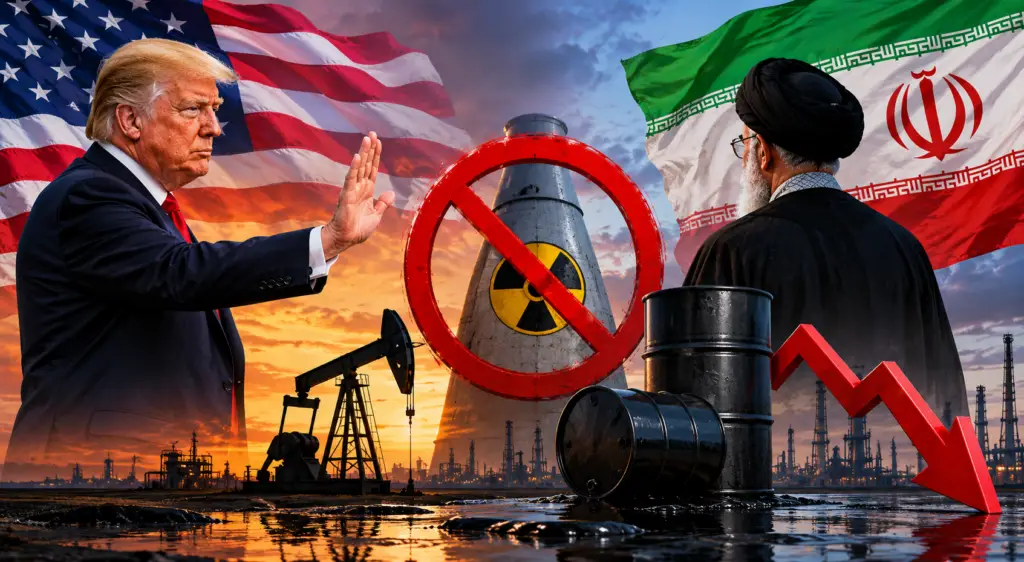
Trump, who has repeatedly cited falling oil prices as one of his signature economic policy goals, told PBS News this week that he believed the war had “a very good chance of ending” and was candid that he had expected prices to spike even higher than they did. “People predicted oil would go to $300, $350 a barrel,” Trump said. “We’re at $100. That’s not so bad.”
The implicit promise in his remarks was clear: when the war ends, so does the price pressure. CNBC confirmed that oil prices are already posting weekly losses as both sides signal progress in talks — with Brent falling more than 5% and US crude shedding over 8% this week alone on news of diplomatic momentum.
The Path to a Deal and the Obstacles Remaining
The diplomatic picture, while cautiously optimistic in parts, remains fragile. CBS News reported that Iran submitted a new offer through Pakistani mediators, but the proposal stopped well short of Trump’s core demands containing no immediate concessions on nuclear enrichment and leaving the Strait of Hormuz question unresolved.
Secretary of State Marco Rubio, who has been managing the diplomatic track, confirmed there were “slight signs of progress” but reaffirmed that the United States will not accept Iran imposing tolls on the Strait of Hormuz under any circumstances a demand Tehran has shown no sign of abandoning. Trump echoed that position directly: “We don’t want tolls. It’s international. It’s an international waterway.”
Fortune reported that Iran had previously offered to reopen the Strait amid an oil price surge, but Trump declined to engage on terms that left the nuclear program intact. The pattern Iran offering partial concessions, Washington demanding comprehensive ones has defined the negotiating dynamic since the ceasefire began.
The Weight of Two Promises
Trump’s dual commitments this week no Iranian nuclear weapon, lower oil prices after the war are not just rhetorical. They are the two metrics by which this conflict will ultimately be judged: did the US achieve its strategic objective of nuclear denial, and did the American public bear the economic cost only temporarily?
Al Jazeera noted that markets have been skeptical of every diplomatic signal so far, with oil prices refusing to fully retreat until a concrete, verified deal is in place. And energy executives, cited by CNBC, have warned that full normalization of Middle East oil supply may not occur until 2027 regardless of when the shooting stops.
For now, the world watches the Strait of Hormuz and waits. Two promises have been made. The hard work of keeping them is just beginning.

Oil & Energy Markets
A look at crude price swings, OPEC supply moves, and how energy markets react to geopolitical shocks.

Geopolitics & Conflict
Breaking down how wars, ceasefires, and diplomatic deals ripple through global trade and security.
US Foreign Policy
Coverage of Trump administration negotiations, sanctions, and strategic decisions shaping world events.
Economy & Inflation
Tracking how commodity prices, gas costs, and supply chains affect everyday consumers.