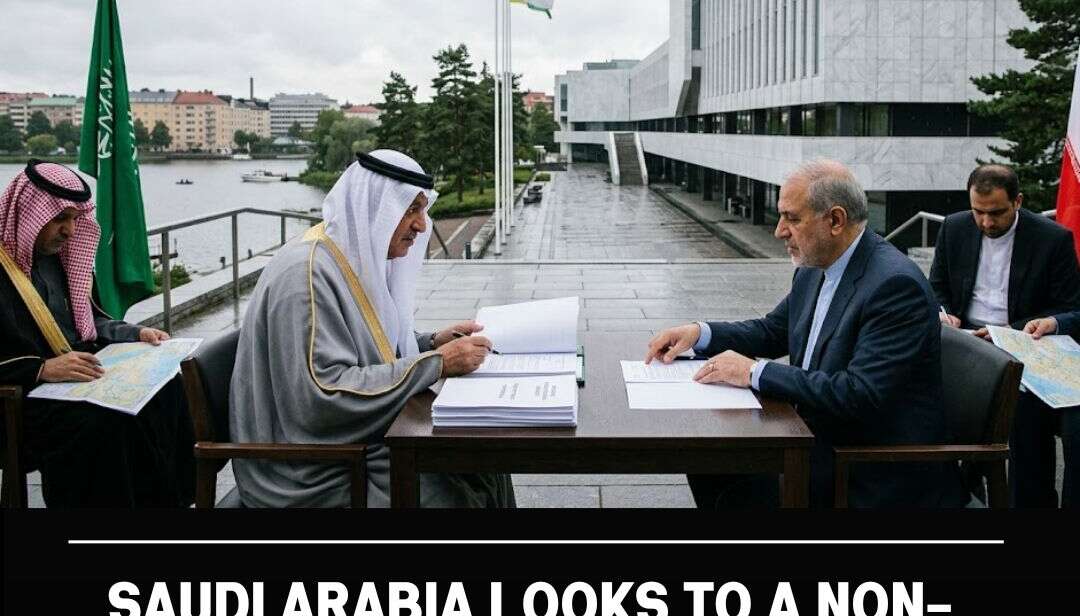
Riyadh / Washington / Brussels — May 15, 2026 — As the guns of the US-Iran War fall into an uneasy silence and ceasefire talks remain deadlocked in Islamabad, Saudi Arabia is quietly proposing one of the most ambitious regional security frameworks since the Cold War. Riyadh is floating a formal non-aggression pact between Gulf
Riyadh / Washington / Brussels — May 15, 2026 — As the guns of the US-Iran War fall into an uneasy silence and ceasefire talks remain deadlocked in Islamabad, Saudi Arabia is quietly proposing one of the most ambitious regional security frameworks since the Cold War. Riyadh is floating a formal non-aggression pact between Gulf states and Iran — modelled explicitly on the 1975 Helsinki Accords — that would seek to codify mutual restraint, verify compliance, and prevent the next war before it begins.
It is a bold idea drawn from an unlikely era. And analysts are divided on whether the Middle East is ready for it.
What Saudi Arabia Is Actually Proposing
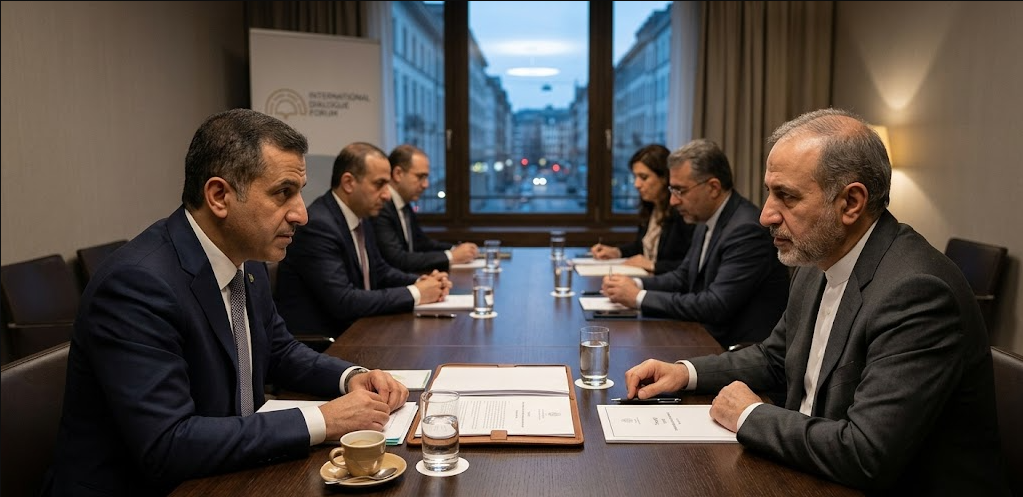
According to reporting by the Financial Times and Middle East Eye, Riyadh has been discussing the proposal with Arab allies before formally tabling it in multilateral forums. The framework would establish binding mutual non-aggression guarantees across the Gulf region — not a peace treaty in the full diplomatic sense, but a structured commitment to non-interference, territorial integrity, and restraint from proxy warfare.
Unnamed Arab diplomats cited by the Financial Times assessed that “most Arab and Muslim states, as well as Iran, would probably welcome a Helsinki-style pact.” European capitals and EU institutions have reportedly backed the initiative. The obstacles are internal: the UAE — the most hawkish Gulf state — is considered by sources unlikely to sign. Deep mistrust between Sunni monarchies and the Islamic Republic, compounded by Iranian missile and drone strikes that reduced Saudi oil capacity by over 600,000 barrels per day during the US-Iran War, remains a live wound.
The Helsinki Blueprint: Why 1975 Still Matters
The original Helsinki Final Act, signed on August 1, 1975, by 35 nations including the United States, Soviet Union, and all European states, was never designed to produce friendship. It was designed to manage enmity — to create a durable framework between blocs that fundamentally distrusted each other.
Its architecture rested on what negotiators called “baskets.” The first covered security: territorial integrity, border inviolability, peaceful dispute resolution, and confidence-building military measures. The second addressed economic and technological cooperation. The third — most consequentially — enshrined humanitarian principles: freedom of movement, cultural exchanges, and what would later become the basis for international human rights monitoring.
As the Atlantic Council has noted, the Helsinki process succeeded not because rivals became friends, but because it raised the cost of aggression, created transparency mechanisms, and gave dissidents and NGOs legal standing to hold governments accountable. The Helsinki Watch organisation — precursor to Human Rights Watch — was born directly from it.
The Saudi proposal applies the same logic to the Persian Gulf: you do not need to trust your adversary. You need to make breaking the rules expensive enough that even a weakened, post-war Iran calculates restraint as rational self-interest.
The US-Iran War Context: Why Now
Saudi Arabia’s digital lockdown on strategic ambition has been forced open by the scale of what the US-Iran War has done to the region. Iran launched hundreds of ballistic missiles and thousands of drones at Gulf targets following the February 28 U.S.-Israeli strikes that killed Supreme Leader Ayatollah Ali Khamenei. Saudi Arabia’s Ras Tanura refinery — the kingdom’s largest, processing 550,000 barrels per day — was hit twice. The Manifa and Khurais facilities were also targeted. Riyadh did not retaliate militarily, retreating from successive red lines in a calculated bid to stay out of direct conflict.
That restraint is now being converted into diplomatic capital. According to the Carnegie Endowment for International Peace, Saudi officials have “abandoned any hopes of a good working relationship with Iran” as the 2023 China-brokered rapprochement lies effectively in ruins — but they have not abandoned the principle of structured coexistence. The logic, as Carnegie analysts frame it, is stark: a weakened post-war Iran may be more — not less — dangerous, stripped of conventional deterrence and incentivised toward asymmetric escalation.
A Helsinki-style pact would offer Tehran a face-saving architecture: security guarantees and non-aggression commitments from Gulf states in exchange for a verifiable halt to proxy warfare in Yemen, Lebanon, Syria, and Iraq.
The Beijing Bingo Factor
The proposal does not exist in isolation from the Beijing bingo summit. Trump’s May 13–15 state visit to Beijing — which saw Elon Musk to Tim Cook and a trillion-dollar corporate delegation negotiate under full digital lockdown — produced one outcome directly relevant to Riyadh: Xi Jinping’s endorsement of a stable, open Strait of Hormuz and his offer to mediate between Washington and Tehran.
China brokered the original 2023 Saudi-Iran normalisation. Beijing holds leverage over Tehran that no Western power can replicate. If Xi’s post-Beijing bingo diplomatic momentum aligns with Saudi Arabia’s Helsinki proposal, the region has — for the first time — a plausible multilateral architecture for the post-war order.
The International Crisis Group has documented that Saudi Arabia, Qatar, and Oman are actively working to keep the ceasefire alive. The Middle East Council on Global Affairs notes that Gulf states are now demanding that “regional security decisions not be formulated entirely outside the region” — a direct response to years of Washington-centric diplomacy that has repeatedly destabilised the neighbourhood.
Will It Work?
The honest analysis is: possibly, with caveats that are not small. Helsinki succeeded in Europe because both superpowers wanted strategic stability more than they wanted outright victory. The Middle East of 2026 does not yet have that equilibrium.
Iran’s new post-Khamenei leadership remains undefined. The nuclear programme — Tehran insists on a phased approach to any deal; Washington demands immediate disarmament — is unresolved. And the UAE’s reluctance to sign any pact that legitimises Iranian regional presence is a structural obstacle that no amount of multilateral language will easily dissolve.
Yet the alternative — no framework, no architecture, no confidence-building mechanism — produced the US-Iran War in the first place.
Saudi Arabia’s Helsinki proposal may be imperfect. But as history has shown, imperfect frameworks for managing hostility have a habit of outlasting the hostility itself.
Market Analysis
A quick snapshot of market trends, customer behavior, and competitor movements.