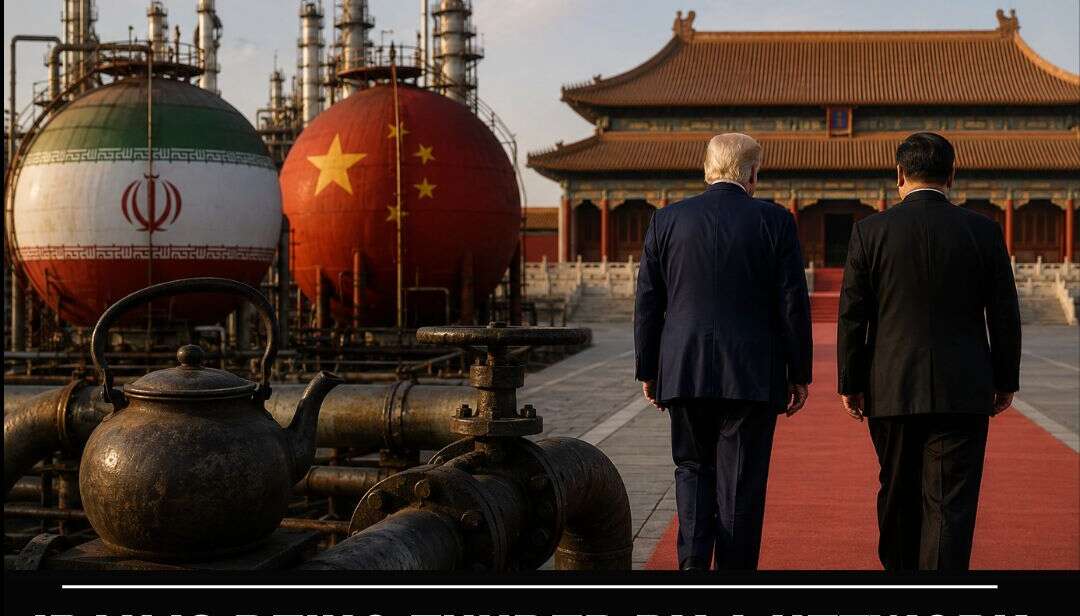
Beijing / Washington / Tehran — In the weeks before President Donald Trump boards Air Force One for his high-stakes visit to Xi Jinping in Beijing, American intelligence officials and independent energy analysts have assembled a picture of Iranian oil financing that is as audacious in its scale as it is difficult to dismantle: a
Beijing / Washington / Tehran — In the weeks before President Donald Trump boards Air Force One for his high-stakes visit to Xi Jinping in Beijing, American intelligence officials and independent energy analysts have assembled a picture of Iranian oil financing that is as audacious in its scale as it is difficult to dismantle: a sprawling network of small, independent Chinese petroleum refineries — known in the industry as “teapot” refineries — that has become the primary financial lifeline sustaining Iran’s economy, its military apparatus, and by extension the US Iran war’s most dangerous operational dimensions, while Beijing maintains official deniability through the fiction that these are private sector actors beyond direct state control.
The revelation is not merely an energy market story. It is the most explosive item on the Trump-Xi summit agenda — one that neither side has publicly acknowledged but that both know will define whether the Beijing meeting produces a genuine strategic framework or an elaborately staged performance of cooperation that changes nothing.
What “Teapot” Refineries Are — and Why They Matter
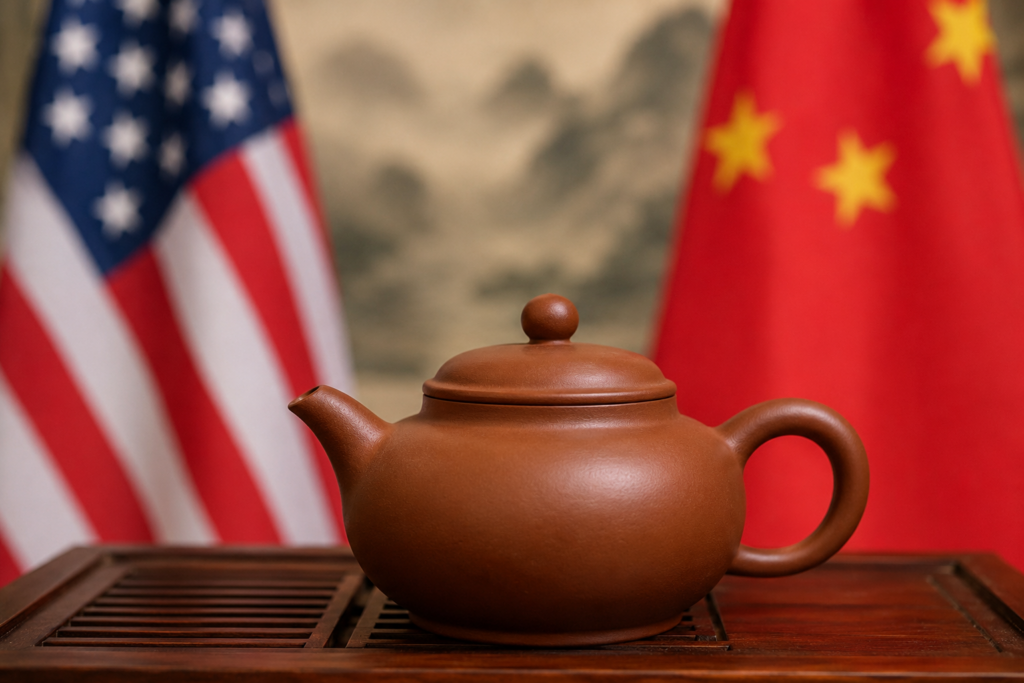
The term “teapot refinery” refers to China’s independent petroleum processing sector — smaller, privately owned refineries concentrated primarily in Shandong province that operate outside the integrated supply chains of China’s state oil giants, CNPC and Sinopec. They earned their colloquial name from their compact size relative to the massive state-owned facilities that dominate Chinese refining capacity.
What teapot refineries lack in scale they compensate for in flexibility. Unburdened by the compliance requirements, reputational concerns, and international banking relationships that constrain state-owned enterprises, teapot refineries have become the preferred customers for sanctioned oil — Iranian crude, Russian crude, and Venezuelan crude that the international market cannot formally absorb without triggering American and European sanctions consequences.
Iranian oil, sold at a significant discount to market price to compensate buyers for the sanctions risk they are nominally assuming, flows into Chinese teapot refineries through a logistics architecture specifically engineered to obscure its origin: ship-to-ship transfers in international waters, falsified cargo documentation listing alternative countries of origin, and payment systems routed through UAE-based intermediaries and cryptocurrency platforms that fragment the transaction trail beyond easy reconstruction.
The scale of this operation has grown dramatically since the US Iran war’s escalation intensified American pressure on Iranian oil exports. Current estimates from energy intelligence firms tracking vessel movements and refinery feedstock suggest that Chinese teapot refineries are absorbing between 1.2 and 1.5 million barrels of Iranian crude per day — a volume that generates approximately $35 billion in annual revenue for Tehran at current discounted prices. That revenue funds the IRGC’s operational budget, Iran’s ballistic missile program, its proxy network spanning Lebanon, Yemen, Iraq, and Syria, and the domestic security apparatus that sustains the Islamic Republic’s political control.
The Iran-Linked Network’s Financial Architecture
The teapot refinery system does not operate in isolation. It is the demand-side anchor of a broader Iran-linked network that US and UK sanctions have been systematically targeting — a network whose financial architecture is more sophisticated, more resilient, and more deeply embedded in legitimate international commerce than public sanctions designations have conveyed.
At its core, the network functions through layered financial intermediation. Iranian oil revenues, once received by IRGC-affiliated trading entities, are not held in identifiable Iranian accounts. They are immediately moved through a cascade of transactions — UAE free zone companies, Hong Kong registered entities, Turkish trading houses, and increasingly sophisticated cryptocurrency mixing operations — that transform traceable Iranian oil money into apparently clean commercial capital within four to six transaction steps.
The resulting funds re-enter the international financial system as investment capital, trade finance, and commercial payments that bear no documentary connection to their Iranian origin. From those clean accounts, disbursements flow to Hezbollah’s financial infrastructure in Lebanon, to Houthi procurement networks in Yemen, to Iraqi militia payroll systems, and to the IRGC’s own covert operational budget.
US and UK coordinated sanctions have disrupted portions of this architecture — the joint designations announced recently identified nodes within exactly this network. But disrupting nodes in a system engineered for resilience produces displacement rather than destruction: the network routes around sanctioned entities the way internet traffic routes around damaged nodes, finding alternative pathways that maintain overall throughput even as specific channels are closed.
Why Beijing Maintains Deniability — and Whether It Will Hold
China’s official position on Iranian oil purchases by teapot refineries is a masterpiece of structured ambiguity: the state does not control private sector commercial decisions, China opposes unilateral sanctions that lack UN Security Council authorization, and Chinese companies engaging in legitimate commercial activity cannot be held responsible for American policy choices that China does not recognise as binding.
Each element of this position contains a fragment of legal and factual truth. China’s teapot refineries are genuinely privately owned. China does genuinely oppose unilateral sanctions as a matter of stated international law principle. And Chinese companies are genuinely engaging in commercial transactions — purchasing oil, refining it, selling petroleum products — that are not prohibited under Chinese domestic law.
What the position elides is equally significant. China’s state banking system, state grid infrastructure, and state regulatory apparatus all interact with teapot refineries in ways that provide Beijing with substantial indirect leverage over their behaviour when it chooses to exercise it. The teapot refineries’ continued Iranian oil purchases reflect not merely private sector commercial logic but a tacit state tolerance — a deliberate decision by Beijing to allow the fiction of private sector autonomy to shield state-level policy from accountability.
That fiction is what Trump is flying to Beijing to challenge.
The Summit Confrontation: Trump’s Leverage and Its Limits
American officials preparing for the Trump-Xi Beijing meeting have identified the teapot refinery network as the summit’s most operationally significant agenda item — more immediately consequential than trade tariffs, more directly connected to active conflict than technology competition, and more personally embarrassing to Xi than any other item because it directly contradicts China’s stated commitment to regional stability.
Trump’s leverage is real. The United States can impose secondary sanctions on Chinese teapot refineries — measures that would cut designated Chinese entities off from the U.S. financial system and force international banks, insurers, and trading partners to choose between American market access and Iranian oil processing. Secondary sanctions of this scope would impose genuine pain on Chinese petroleum sector entities and create pressure that Beijing’s state-owned financial system would find difficult to entirely absorb.
The constraint on using that leverage is equally real. Secondary sanctions on Chinese refineries, applied without diplomatic preparation, would be characterised by Beijing as an act of economic warfare — collapsing the summit’s cooperative atmosphere and potentially triggering Chinese retaliation across trade, technology, and financial dimensions that the American economy would feel immediately and painfully.
Trump’s team is therefore navigating a precision diplomacy challenge: communicating the secondary sanctions threat with sufficient credibility to change Beijing’s calculus on teapot refinery tolerance, while preserving enough cooperative atmosphere to allow Xi to respond with face-saving adjustments that can be characterised as voluntary rather than coerced.
Xi’s Calculation: What Concession Costs Less
Xi Jinping’s internal calculus on the teapot refinery issue is genuinely complex in ways that Western analysis sometimes flattens into simple strategic defiance.
Allowing teapot refineries to continue purchasing Iranian oil serves multiple Chinese interests: it provides discounted feedstock that improves Chinese refining economics, it maintains Beijing’s strategic relationship with Tehran as a useful counter-leverage instrument against Washington, and it sustains the fiction of Chinese neutrality in the US Iran war that allows Beijing to position itself as a potential mediator.
But the costs of maintaining that position through the summit — with Trump arriving armed with specific intelligence about refinery volumes, transaction chains, and IRGC funding flows — are potentially higher than the costs of a calibrated adjustment. A Beijing that is seen to have responded positively to Trump’s concerns on Iranian oil financing gains significant credit in the broader negotiation — credit that can be deployed to achieve tariff relief, technology access modifications, and the strategic respect framework that Xi’s domestic audience needs to see delivered.
The teapot refineries are, in the end, a tradeable asset. The question Xi is answering is what they are worth — and whether Trump is offering enough in exchange to make trading them politically sustainable.
What the World Is Watching
As Trump prepares to visit Xi Jinping in Beijing, the teapot refinery confrontation represents the most concrete test of whether the summit produces substance or spectacle. Every barrel of Iranian crude processed in Shandong province is a barrel that funds the US Iran war’s most dangerous operational dimensions. Every day that funding continues is a day that the conflict’s resolution becomes marginally more difficult and marginally more expensive.
A genuine summit agreement on teapot refinery tolerance — one that produces verifiable reduction in Chinese absorption of Iranian crude — would be among the most significant single actions available to Washington for changing the US Iran war’s economic underpinnings without firing a shot.
Whether Trump extracts it, and what he gives Xi in exchange, is the question that the war-weary world watching Beijing this week most urgently needs answered.
Market Analysis
A quick snapshot of market trends, customer behavior, and competitor movements.