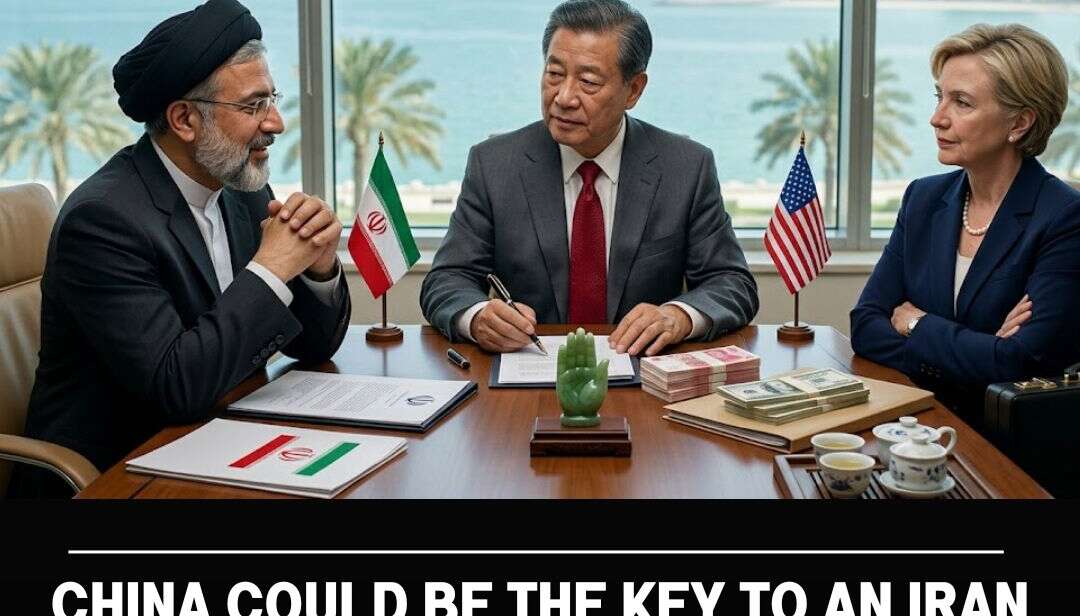
No country on earth has more economic leverage over Iran than China. Beijing buys roughly 90% of Iran’s oil exports, bankrolls its sanctions-battered economy, and has now become the most strategically important diplomatic player between Washington and Tehran. Yet analysts and officials are increasingly clear: China will only use that leverage to push for a US Iran peace deal if — and only if — Beijing gets something significant in return.
The clearest signal yet came on May 6, when Iranian Foreign Minister Abbas Araghchi flew to Beijing for his first visit to China since the war began on February 28, 2026. Meeting with Chinese Foreign Minister Wang Yi, Araghchi heard Beijing’s most direct message to Tehran yet: pursue diplomacy, reopen the Strait of Hormuz, and accept a “comprehensive ceasefire.” Wang Yi called for Iran and the US to reopen the strait “as soon as possible” — unusually pointed language for a country that has spent months publicly championing non-interference.
The timing was deliberate. The visit came exactly one week before US President Donald Trump is scheduled to arrive in Beijing for a summit with President Xi Jinping on May 14–15, making it the most consequential diplomatic convergence of the entire conflict.
What China Brings to the Table
The case for Beijing as the pivot point in any peace deal with Iran rests on raw economic arithmetic. China purchases over 90% of Iran’s oil exports, largely through a network of independent “teapot” refineries, often at discounted prices. Iranian revenues flow back largely as payment for Chinese goods and services. During the war, as Western buyers vanished and the Strait of Hormuz closed, that dependency deepened further.
China has also positioned itself as the potential custodian of a critical piece of any nuclear agreement. Beijing has signalled openness to taking custody of approximately 970 pounds of Iran’s highly enriched uranium — one of Washington’s core demands in the ongoing Iran and US nuclear deal negotiations. For Trump, having China absorb Tehran’s enriched stockpile would defuse the most dangerous variable in the region. For Xi, it would cement Beijing’s irreplaceable role in any post-war architecture.
On top of this, China has already demonstrated it can apply economic pressure when it chooses. After the US sanctioned Hengli Petrochemical and 40 Iranian shadow fleet shipping firms as part of “Operation Economic Fury,” China’s Ministry of Commerce fired back — invoking its blocking statute for the first time, directing Chinese companies not to comply with American sanctions. The message was blunt: Beijing controls the terms of its own economic relationship with Tehran, and it will not simply absorb Washington’s extraterritorial legal pressure without a response.
The Price Beijing Is Asking
Yet every analyst watching the Trump-Xi summit preparation reaches the same conclusion: China’s help on the Iran peace deal is not free. According to multiple sources, what Beijing wants in exchange is substantial — a package of concessions on issues far removed from the Persian Gulf.
At the top of China’s list is Taiwan. Beijing wants Washington to shift from “non-support” to active “opposition” to Taiwan independence — a linguistic distinction with enormous political consequences in Beijing’s domestic narrative. China is also pressing for a relaxation of restrictions on high-end technology exports, the removal of Chinese companies from US sanctions lists, and a reduction in US naval transits through the Taiwan Strait.
In essence, Beijing is proposing a grand transaction: Iran’s compliance in exchange for movement on the issues China cares about most. CNN’s analysis was direct — China could push Iran toward a peace deal, “but only if it gets something in return.”
The Complications Beijing Faces
None of this is straightforward, even from China’s perspective. Beijing remains deeply conflicted about the war and its outcome. The Strait of Hormuz supplies roughly a third of China’s total oil imports — the entire Persian Gulf region accounts for nearly half. Every week the strait stays closed is a week the world’s largest manufacturer operates under an energy chokehold. The economic incentive to end the conflict is enormous.
But China also has limited faith in its own leverage over Tehran. Despite years of economic intimacy, Iran has consistently acted on its own strategic interests, and Chinese officials are privately uncertain whether Beijing’s nudges will translate into Iranian concessions at the negotiating table — especially on red lines like domestic uranium enrichment, which Tehran has declared non-negotiable.
What Happens in Beijing on May 14
The Trump-Xi summit now carries the weight of multiple crises simultaneously. Trump arrives hoping to use progress on Iran as leverage over China. Xi arrives having already met Iran’s top diplomat, signalling Beijing’s centrality to any resolution.
Whether the summit produces a genuine framework — linking Iran peace deal progress to trade concessions, Taiwan assurances, or nuclear custodianship commitments — will define whether 2026 becomes the year diplomacy caught up with war, or the year the world discovered that even the most powerful levers of geopolitical pressure have limits.
For now, Beijing is keeping its cards close. It is urging peace, building optionality, and waiting to see exactly what Washington is willing to pay.