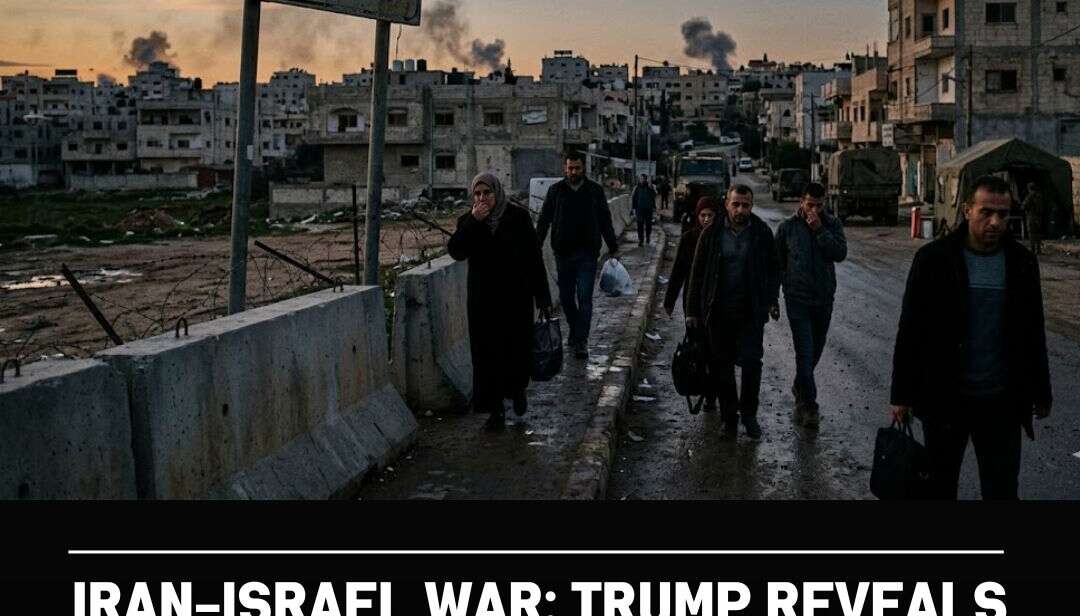
Iran-Israel War: Trump Reveals Why He Paused the Hormuz Operation in Push for Iran Deal
Theo Jorden
Share This Article
Washington / Tel Aviv — As the Iran-Israel war continues to dominate global headlines, former and now-returned U.S. President Donald Trump has broken his silence on one of the most consequential and least understood — decisions of the escalating Israel-Iran conflict: why he ordered a pause on a planned U.S. military operation targeting Iran’s access
Washington / Tel Aviv — As the Iran-Israel war continues to dominate global headlines, former and now-returned U.S. President Donald Trump has broken his silence on one of the most consequential and least understood — decisions of the escalating Israel-Iran conflict: why he ordered a pause on a planned U.S. military operation targeting Iran’s access to the Strait of Hormuz.
In a candid statement that sent shockwaves through diplomatic and defense circles, Trump confirmed that the Hormuz operation was real, planned, and ready but deliberately halted in favor of pursuing a diplomatic resolution with Tehran.
Trump’s Reasoning: “A Deal Is Better Than a War”
Speaking to reporters, Trump stated plainly: “We had it ready to go. But I’m not someone who wants to blow up the world when there’s a chance a real chance to make a deal.”
The Strait of Hormuz, through which roughly 20% of the world’s oil supply transits daily, had been identified as a strategic pressure point. A U.S. operation to restrict or threaten Iranian naval control over the waterway would have been one of the most aggressive economic warfare moves in decades and potentially a direct trigger for full-scale military retaliation from Tehran.
Trump’s decision to stand down, insiders say, came after backchannel communications between U.S. envoys and Iranian officials indicated that a framework for a new nuclear and regional security agreement was within reach.
Iran-Israel War Latest News: Where the Conflict Stands
The broader Iran-Israel war latest news paints a picture of a conflict that has moved well beyond proxy skirmishes. Since Israel launched a series of precision strikes on Iranian military infrastructure and missile production sites, Iran responded with a large-scale ballistic missile and drone campaign targeting Israeli territory — the most direct Iran and Israel war exchange in modern history.
Israel’s Iron Dome and the U.S.-Israel joint Arrow missile defense systems intercepted the majority of projectiles, but damage was recorded in several regions. Iran’s Islamic Revolutionary Guard Corps (IRGC) has since claimed responsibility for multiple retaliatory strikes, framing each as a defensive response to Israeli aggression.
The Israel Iran war has also drawn in regional actors. Hezbollah in Lebanon, the Houthis in Yemen, and Iranian-backed militias in Iraq and Syria have all escalated activities broadening the conflict into what analysts increasingly describe as a multi-front war.
The Hormuz Card: Maximum Pressure or Maximum Risk?
U.S. military planners had reportedly developed the Hormuz operation as part of a “maximum pressure 2.0” strategy using economic strangulation rather than direct bombardment to force Tehran to the negotiating table. However, critics within the Pentagon and State Department warned that any interference with Hormuz shipping lanes could trigger Iranian retaliation against Saudi, UAE, and Qatari energy infrastructure potentially destabilizing global oil markets overnight.
“The risk-reward calculation changed,” one senior U.S. official told reporters anonymously. “When the diplomatic window opened, the President made the call to keep it open.”
Iran Deal Talks: Closer Than They Appear?
According to sources familiar with the negotiations, U.S. and Iranian delegations have held three rounds of indirect talks — mediated through Omani and Qatari intermediaries over the past six weeks. The emerging framework reportedly includes:
A cap on Iranian uranium enrichment levels below weapons-grade thresholds
Phased sanctions relief tied to verified compliance
A de-escalation agreement between Iran and Israel, brokered through regional Arab states
A freeze on Iranian support for proxy forces targeting Israeli positions
Israel has not officially endorsed the framework, with Prime Minister Netanyahu publicly reiterating that “no deal that allows Iran to keep its nuclear infrastructure is acceptable.” However, Israeli officials have quietly acknowledged that a diplomatic pause is preferable to a prolonged multi-front war with no defined endpoint.
What Comes Next in the Israel-Iran Conflict
The israel iran conflict remains at a dangerous inflection point. Trump’s Hormuz pause has bought time, but analysts warn the window is narrow. Iran faces mounting domestic economic pressure, while Israel’s military continues targeted strikes on Iranian-linked assets in Syria and Iraq.
The next 30 to 60 days, diplomatic sources say, will determine whether the iran israel war de-escalates into a negotiated framework — or whether the Hormuz operation, and options far more severe, return to the table.
Oil & Energy Markets
A look at crude price swings, OPEC supply moves, and how energy markets react to geopolitical shocks.