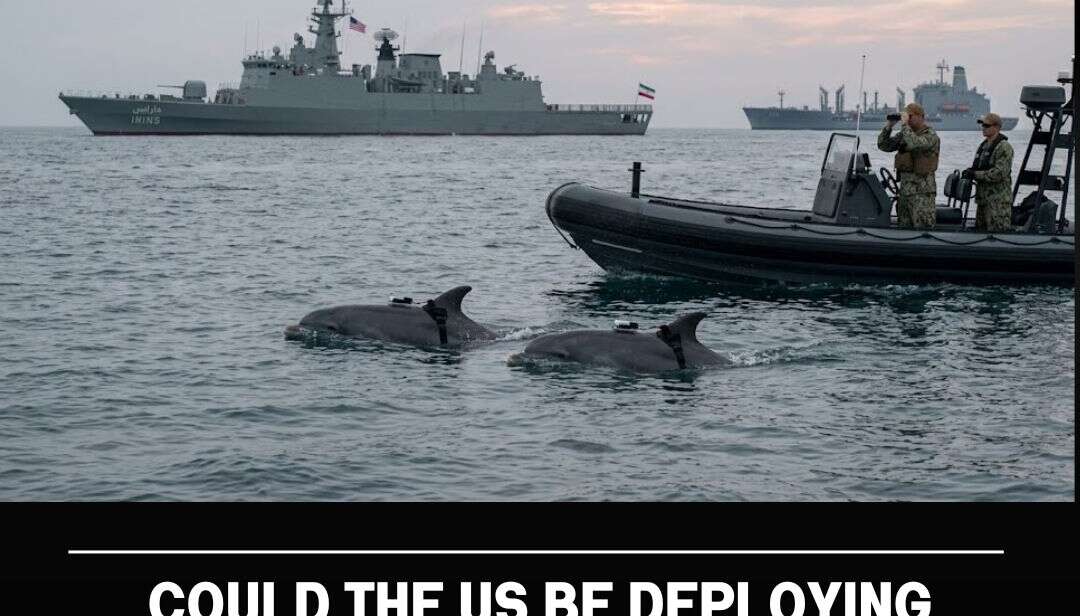
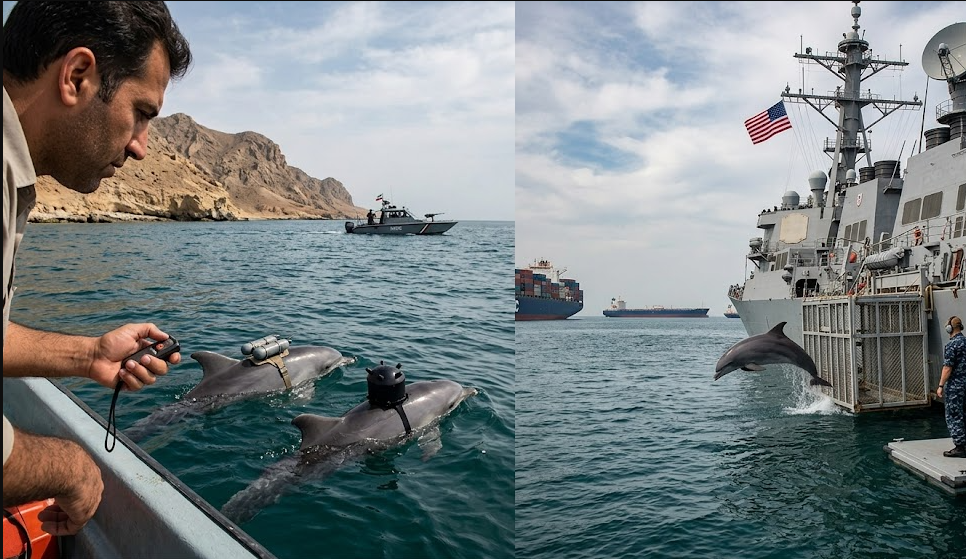
Washington, D.C. — May 6, 2026 When Pentagon press briefings start fielding questions about “kamikaze dolphins,” you know something remarkable is unfolding in global geopolitics. Last week, that is precisely what happened — and the answers offered a rare, unfiltered glimpse into one of the US military’s most secretive and fascinating programs: the US Navy
When Pentagon press briefings start fielding questions about “kamikaze dolphins,” you know something remarkable is unfolding in global geopolitics. Last week, that is precisely what happened — and the answers offered a rare, unfiltered glimpse into one of the US military’s most secretive and fascinating programs: the US Navy Marine Mammal Program.
As tensions escalated in the Strait of Hormuz amid a fragile ceasefire between Washington and Tehran, US Secretary of Defense Pete Hegseth was asked point-blank whether Iran could deploy trained dolphins against American naval vessels. Hegseth said he could “confirm” that Iran didn’t have dolphins to deploy as part of operations, but said he would neither “confirm nor deny” whether the US possessed what some have called “kamikaze dolphins.” The room reportedly laughed — but the question was far from absurd. CNN
What Is the US Navy Marine Mammal Program?
The US Navy Marine Mammal Program has been operational since 1959, focused on training bottlenose dolphins and California sea lions to detect and recover objects underwater. Far from a Cold War curiosity, the program is very much alive today. It operates as part of the Intelligence, Surveillance, and Reconnaissance (ISR) Department within Naval Information Warfare Center Pacific.
The program’s purpose is purely defensive, not offensive. According to Scott Savitz, a senior engineer at RAND who previously worked with the now-decommissioned US Navy mine warfare command, marine mammals are used “to help detect objects under water and to protect ports by detecting intruders” — and not in any kamikaze capacity.
The science behind it is extraordinary. The Marine Mammal Program’s own documentation states that dolphins “possess the most sophisticated sonar known to science,” and that underwater drones are “no match for the animals.” The program further notes that both dolphins and sea lions have excellent low-light vision and underwater directional hearing, allowing them to detect and track undersea targets even in dark or murky waters.
Are Military Dolphins Actually in the Strait of Hormuz Right Now?
The short answer: almost certainly not. One source familiar with US operations in the Strait of Hormuz told CNN that the US military is not using dolphins as part of its current efforts in the Strait. CNN
That is consistent with how the program has historically been deployed. Military dolphins are not frontline combat assets — they are post-conflict tools. Dolphins are not typically used in an active combat environment. Instead, they have been deployed to detect mines after fighting has concluded. The clearest example came during the Iraq War: in 2003, Navy dolphins were deployed to help identify underwater mines and booby traps near the Iraqi port of Umm Qasr, only after US and coalition forces had effectively secured the area. As Savitz put it, “You’re not trying to fight your way in with dolphins.” CNNGulf News
How Do Navy Marine Mammals Actually Work?
The operational process is sophisticated. Dolphins are trained to search designated areas using sonar clicks that bounce off underwater objects. If a dolphin detects something resembling a mine, it returns to its handler and signals the find. The dolphin is then sent back to attach a marker buoy near the object so Navy divers or mine-clearing teams can safely neutralise it. Gulf News
Crucially, the animals are never harmed in the process. A key aspect of the program is that the dolphins and sea lions have the opportunity to leave every time they go out into open waters for training or operations. They choose to return because of the food rewards, the mental engagement of the search tasks, and the protection from natural predators. CNN
The Global Race for Military Dolphins
America is not the only nation to have pursued this capability. Russia has used trained dolphins to guard ports, and Iran purchased dolphins from Russia in 2000, according to the BBC. However, there is no public evidence that Tehran currently operates an active military dolphin program. Reports circulating in recent weeks suggested Iran could consider reviving such a program as tensions with Washington intensify — a prospect that prompted Hegseth’s now-famous non-denial denial at the Pentagon podium.
Why This Program Still Matters
Decades after the Cold War arms race first pushed navies toward biological alternatives for underwater warfare, the US Navy Marine Mammal Program endures for a simple reason: nature still outperforms machines in certain critical environments. No drone has yet replicated the biological sonar precision of a bottlenose dolphin at depth, in murky water, under pressure.
As the Strait of Hormuz remains one of the world’s most sensitive maritime chokepoints — handling a significant portion of global oil and LNG shipments — the strategic value of every detection capability, including the Navy’s secret marine mammal warriors, has never been more relevant.
The dolphins aren’t storming Hormuz today. But they remain on call, trained, and ready — America’s most unlikely, and perhaps most effective, underwater sentinels.
Market Analysis
A quick snapshot of market trends, customer behavior, and competitor movements.