Share This Article
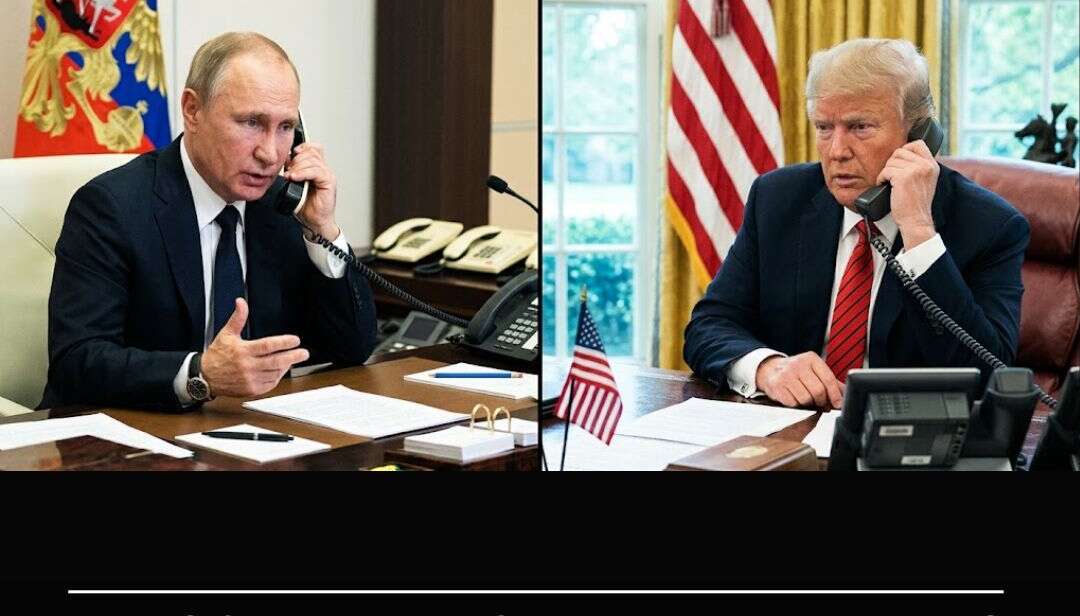
In one of the most consequential phone calls of the ongoing Iran war crisis, Russian President Vladimir Putin sat down with US President Donald Trump on April 29, 2026, for a 90-minute conversation that covered two of the world’s most dangerous active conflicts and delivered a blunt Russian warning about what happens if the American war with Iran escalates any further.
The call, initiated by Moscow and described by the Kremlin as “friendly and businesslike,” touched on the Iran ceasefire, a proposed Ukraine truce, and a surprising offer from Putin involving Iran’s nuclear programme. But at its core, it was Putin’s direct warning about the consequences of renewed hostilities in Iran that dominated the diplomatic world’s attention.
Putin’s Warning: “Dire Consequences” and a Red Line on Ground Forces
Kremlin foreign policy adviser Yuri Ushakov, briefing reporters after the call, made Putin’s position on the Iran war unmistakably clear. Putin drew attention to what he described as “the inevitable, extremely harmful consequences not only for Iran and its neighbours, but also for the entire international community” should the United States and Israel resort to military action again.
Here are Some Related Blogs to Read
- NATO chief calls US strikes on Iran “absolutely necessary”
- Will gold rally as US-Iran tensions escalate
- Oil jumped but the market stayed calm
- 5 takeaways from Tuesday’s 2026 primaries
- US tariff system reset across 60 economies
- Trump tariffs Section 122 surcharge expires
- Trump had deliberately paused Hormuz operations to force Iran into a deal.
- JD Vance claims Hegseth has been misleading Trump on the Iran war.
- Iran has been digging out hidden missile stockpiles after rejecting Trump’s peace offer.
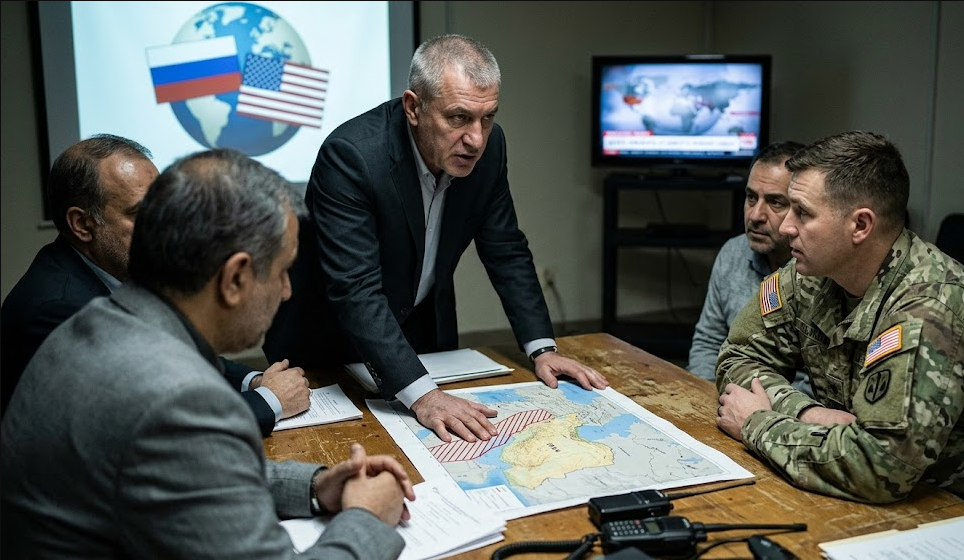
Going further, Ushakov stated that Putin had communicated directly to Trump that “the option of a ground operation on the territory of Iran seems completely unacceptable and dangerous.” This was not diplomatic ambiguity it was Moscow drawing a red line in explicit terms, putting on record that Russia views any US ground incursion into Iran as a threshold that should not be crossed.
The warning carries weight beyond rhetoric. Russia has been one of Iran’s most significant diplomatic partners and economic lifelines throughout the conflict. While Moscow has not directly intervened militarily, its political support for Tehran and its opposition to an expanded American war with Iran shapes the diplomatic landscape within which any negotiated settlement must operate.
The Uranium Offer: Russia as Nuclear Broker?
One of the most surprising elements of the 90-minute call was a proposal from Putin regarding Iran’s nuclear programme. According to Trump himself, who spoke to reporters following the conversation, Putin offered to assist the United States in dealing with Iran’s uranium enrichment as part of a broader nuclear deal framework essentially positioning Russia as a potential intermediary or co-guarantor in any future nuclear agreement with Tehran.
Trump’s response was characteristically transactional. He told reporters he had said to Putin: “I’d much rather you be involved in ending the war with Ukraine.” In other words, Trump was not dismissing Russia’s potential role in Iran negotiations but he was conditioning it on progress in Ukraine. Russia wants to be seen as an indispensable global mediator; Trump is telling Moscow that indispensability has a price.
Trump’s Read: More Ukraine Than Iran
While Putin’s team emphasised the Iran war warnings as central to the call, Trump offered a slightly different framing when speaking to reporters. He said the conversation had focused more on Ukraine than on Iran, and that Putin had offered to “help” end the US-Israeli conflict with Tehran but that he had told the Russian leader to end his own war first.
Trump also reaffirmed that despite the extended ceasefire with Iran, the US naval blockade of Iranian ports remains firmly in place. The blockade, which Trump has described as a lever to force Iran’s government to submit a “unified” peace proposal, continues to strangle Iranian oil exports and is now in its third week. The Iran war latest news confirms that Tehran has rejected the US 15-point peace framework, while 261 of 290 Iranian parliamentarians have issued a joint statement backing their negotiating team a show of political unity that complicates American hopes of exploiting internal Iranian divisions.
Victory Day Ceasefire and the Ukraine Thread
The 90-minute call was not exclusively about Iran. Putin used the conversation to formally propose a temporary ceasefire in Ukraine timed to Russia’s Victory Day celebrations on May 9 the date Russia commemorates its Soviet victory over Nazi Germany in World War II. Trump actively supported the initiative, a gesture that will be welcomed in Moscow and interpreted as a sign that the US remains open to a negotiated off-ramp in Ukraine.
Putin’s foreign policy aide Ushakov also claimed that Russia holds “the strategic initiative” in Ukraine, a characterisation that Washington has not accepted but that reflects the mood in Moscow heading into the symbolic May 9 anniversary.
A $25 Billion War With No End in Sight
The Iran war latest news from Washington is sobering on its own terms. A Pentagon official testified before Congress that the American war with Iran has cost an estimated $25 billion so far a figure that will climb with every additional day the blockade is maintained, the ceasefire holds but no peace deal materialises, and three US aircraft carriers sit on station in the Persian Gulf.
Trump has said there is “no time frame” for ending the war. Iran’s army spokesman has warned the world not to consider the conflict over. And now Putin has put on record that any escalation particularly a ground operation would have consequences that extend far beyond the Strait of Hormuz.
The 90-minute call did not resolve the Iran war. But it clarified, with unusual precision, exactly how many interests are now entangled in its outcome and how much further it could yet go.

Oil & Energy Markets
A look at crude price swings, OPEC supply moves, and how energy markets react to geopolitical shocks.

Geopolitics & Conflict
Breaking down how wars, ceasefires, and diplomatic deals ripple through global trade and security.
US Foreign Policy
Coverage of Trump administration negotiations, sanctions, and strategic decisions shaping world events.
Economy & Inflation
Tracking how commodity prices, gas costs, and supply chains affect everyday consumers.