Share This Article
When President Donald Trump ordered strikes against Iran on February 28, the political fallout was immediate, fierce, and entirely predictable. Democrats condemned the war as illegal and reckless. A handful of Republicans quietly flinched. The public, caught off guard, divided sharply along partisan lines.
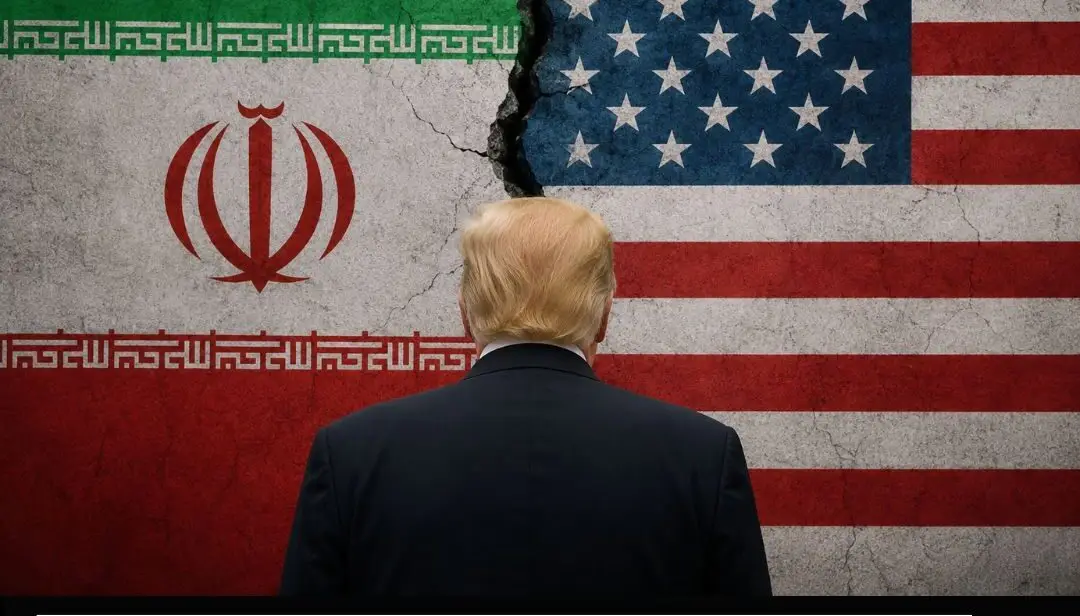
Now, nearly three months later, Trump is trying to end that war and the political storm that greets the peace may be just as savage as the one that greeted the fighting.
As CNN’s analysis documented, a possible Iran deal is shaping up to be almost as divisive as the decision to wage war itself attacked simultaneously from the right for being too weak, from the left for arriving too late, and from an increasingly impatient public that is paying for it at every petrol station. In the treacherous political terrain of the US-Iran talks, there may be no version of this deal that satisfies everyone. The question is whether Trump can find a version that satisfies enough.
The Right: “Not Remotely America First”
The loudest and most pointed criticism of Trump’s emerging Iran deal is coming from within his own political universe from the Republican hawks who were the war’s most enthusiastic supporters and are now its most alarmed observers.
Former Secretary of State Mike Pompeo delivered the sharpest rebuke, writing on X that the deal as described was “not remotely America First.” His prescription was blunt: “Open the damned strait. Deny Iran access to money. Take out enough Iranian capability so it cannot threaten our allies in the region.” Newsweek confirmed that Pompeo’s attack was accompanied by warnings from former National Security Adviser John Bolton, who wrote that if news reports about the emerging deal were accurate, “the ayatollahs will have won a significant victory” and would be “back on the road to nuclear weapons, supporting global terrorism.”
In the Senate, Arkansas Democrat-Gazette reported that Roger Wicker, chairman of the Armed Services Committee, called the proposed 60-day framework a “disaster” warning that “everything accomplished by Operation Epic Fury would be for naught.” Ted Cruz framed it as a betrayal of the war’s founding purpose: “The president’s decision to strike Iran was the most consequential of his second term. He should not let up now.” Lindsey Graham warned that any deal leaving Iran as a dominant regional force capable of striking Gulf oil infrastructure would be “a nightmare for Israel” and a humiliation for Washington.
PBS NewsHour confirmed the hawkish critique centers on a core strategic fear: that Trump is about to accept Iranian assurances that are not verifiable, allow Tehran to retain the Strait of Hormuz as perpetual leverage, and leave Iran’s nuclear program intact enriched, intact, and only theoretically subject to future negotiation. The Philadelphia Inquirer’s sweeping account documented a unified hawkish chorus: the deal as described is not victory. It is a managed retreat dressed as a triumph.
Trump’s response has been characteristically combative. “Don’t listen to the losers,” he told reporters — dismissing his critics as people who “know nothing” about the details of a deal that, he added, is “not even fully negotiated yet.”
The Left: Too Little, Too Late
Democrats are approaching the Iran deal from a fundamentally different angle and arriving at a similarly damning conclusion.
Having opposed the US-Iran war from the moment it began, Democrats criticized Trump for starting it without congressional authorization, faulted his management of it through three months of stalemate, and are now attacking the deal’s endgame as inadequate on the very nuclear issues Trump cited as his justification for going to war in the first place.
Senator Cory Booker captured the Democratic critique precisely: “The president said he went into this to deal with their nuclear program. This does not deal with that.”
NPR’s polling report confirmed that Democrats see political opportunity in the public’s mounting frustration with the war’s costs. With gas prices surging and inflation hitting a three-year high of 3.8% by late April, Democrats believe majority opposition to the war among voters could deliver them a midterm edge if the Republican Party remains associated with both the war and a deal that falls short of its stated goals.
The Washington Times noted that this left-right pincer hawks attacking Trump for going soft, Democrats attacking him for going to war at all leaves the White House in an almost uniquely difficult political position: the deal pleases neither the people who wanted the war nor the people who opposed it.
The Public: Paying the Price, Losing Patience
Beneath the Washington debate lies a voter landscape that has shifted sharply against the war and against the president. Time Magazine’s analysis documented Trump’s approval rating falling to a second-term low of 37%, with the Marist Poll and a CBS poll finding that 66% of Americans disapprove of Trump’s handling of the Iran situation and 61% oppose all military action against it.
The Hill reported the decline is most acute among the voter groups that delivered Trump his 2024 victory 71% of Hispanic voters, 70% of independents, and 76% of voters aged 18–29 now disapprove of his job performance. The economic driver is unmistakable: 58% of Americans cite the cost of living as their top economic concern, up from 50% before the war began and the Hormuz blockade, which has constricted global oil supply and pushed Brent crude past $120 per barrel, is a direct cause.
The Mirror US noted that Trump’s numbers have hit their lowest point of the second term precisely as he is trying to sell a peace deal meaning the political rewards of ending the war may arrive too late to reverse the damage the war itself has already done.
The Deal’s Political Paradox
What makes Trump’s Iran deal politically unique and uniquely treacherous is that it faces rejection from ideologically opposite directions for opposite reasons. CNN’s companion analysis of Republican hawk fears noted that hawks want more war, the public wants less war, and Democrats want accountability for the war that happened and no version of a 60-day ceasefire memorandum satisfies any of them fully.
The deal that Secretary Rubio called “still a work in progress” on Sunday must somehow thread that needle: strong enough on nuclear commitments to satisfy Wicker and Cruz, clear enough on Hormuz to reassure global energy markets, generous enough on sanctions to bring Iran across the line, and tangible enough in its immediate results to give a weary public and a sliding president something credible to point to.
As Yahoo News summarized, the uncomfortable political truth is that the war was controversial when it started and peace, when it comes, will be just as controversial when it arrives.

Oil & Energy Markets
A look at crude price swings, OPEC supply moves, and how energy markets react to geopolitical shocks.

Geopolitics & Conflict
Breaking down how wars, ceasefires, and diplomatic deals ripple through global trade and security.
US Foreign Policy
Coverage of Trump administration negotiations, sanctions, and strategic decisions shaping world events.
Economy & Inflation
Tracking how commodity prices, gas costs, and supply chains affect everyday consumers.