Share This Article
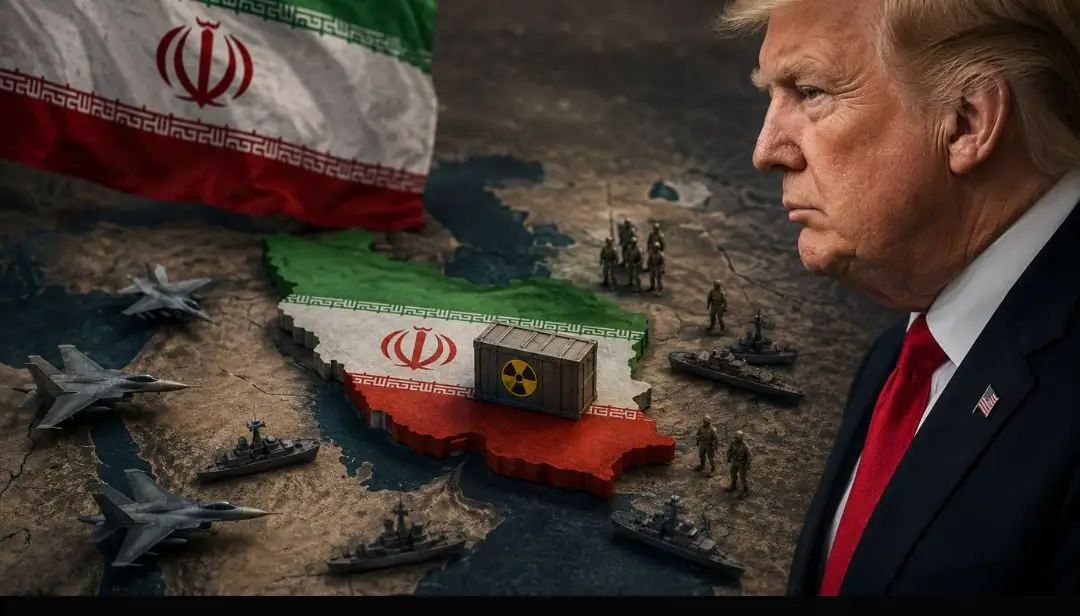
President Donald Trump seriously considered sending US special forces into Iran to physically retrieve the country’s stockpile of highly enriched uranium a mission so operationally complex and geopolitically explosive that he ultimately stepped back from it, choosing diplomacy over direct action. The plan, now publicly reported by Axios and the Bulletin of the Atomic Scientists, offers a rare window into just how seriously Washington is treating the question at the center of the entire US-Iran talks crisis: where is Iran’s enriched uranium and who controls it?
The answer, as of June 2026, is deeply unsettling. Nobody outside Iran knows for certain.
The Mission That Was Planned and Shelved
According to publicly reported accounts, Trump’s national security team examined multiple military options for neutralizing Iran’s uranium stockpile following the February 28, 2026, strikes that triggered the Iran war. Those options included:
- A sustained aerial campaign targeting underground enrichment facilities
- Deployment of special operations forces to infiltrate Iran’s tunnel complexes and physically secure or destroy the uranium on-site
- Sending in nuclear experts to dilute enriched uranium in place
- A large-scale ground force insertion an option described by planners as requiring troop numbers well beyond what a special forces mission could provide
Trump himself acknowledged the gravity of the ground option, describing it as requiring “excessive military deployment” before backing away. The core problem was not just operational risk it was location. By the time serious planning began, US and allied intelligence was not confident they knew precisely where Iran’s enriched uranium was stored.
That uncertainty changed everything.
Where Is Iran’s Enriched Uranium? What the IAEA Found
The question of where is Iran’s enriched uranium has become one of the most consequential unanswered questions in international security in 2026. IAEA Director General Rafael Grossi has confirmed that the agency has had zero inspector access to Iran’s nuclear facilities for 97 days since June 2025, when inspectors were withdrawn for safety reasons following the first wave of strikes.
What Grossi can confirm, based on satellite imagery: 18 blue containers carrying roughly 440 pounds of highly enriched uranium were observed entering a tunnel at Isfahan’s underground complex on June 9, 2025 hours before Israeli-US strikes hit enrichment infrastructure. As Foreign Policy reported, Grossi believes the uranium is likely still at Isfahan but critically, the IAEA cannot confirm whether international seals remain intact, whether the material has been moved, or whether it has been further processed.
By February 2026, satellite imagery analyzed by the Bulletin of the Atomic Scientists revealed that all entrances to the Isfahan tunnel complex had been completely backfilled and buried with soil physically concealing access points and making any ground retrieval mission exponentially more complex.
Iran’s known stockpile stood at 440.9 kg enriched to 60% purity just a technical step below weapons-grade — plus 184.1 kg enriched to 20%. At 60% enrichment, experts estimate the material could be weaponized within days to weeks if Iran chose to push to the final threshold.
Trump’s Public Ultimatum: Hand It Over or We Take It
Even as the covert military option was being shelved, Trump escalated rhetorically. He publicly declared that Iran’s uranium “will be unearthed by the United States in close coordination and conjunction with the Islamic Republic of Iran, plus the International Energy Agency, and DESTROYED.” In a separate statement posted on Truth Social, he wrote: “It was my great honor to Destroy All Nuclear facilities & capability, and then, STOP THE WAR!”
His administration set five formal preconditions for US-Iran talks as of May 17, 2026:
- Iran must deliver 400 kg of enriched uranium to the United States
- Iran must maintain only one operational nuclear facility
- Iran must never pursue nuclear weapons
- The Strait of Hormuz must be immediately opened to unrestricted shipping
- Comprehensive sanctions architecture must be accepted before relief is granted
Treasury Secretary Scott Bessent made the administration’s position unambiguous, stating that Iran turning over its uranium was a “red line” for Trump not a negotiating chip.
Why Iran Rejected It and Where Talks Now Stand
Iran’s response has been equally firm. Tehran has categorically rejected surrendering its enriched uranium stockpile and insists that domestic enrichment capability is “non-negotiable” framing it as both a sovereign right and a security guarantee in a neighborhood that has just watched military strikes kill its Supreme Leader.
On June 9, Iran formally rejected the Trump administration’s latest proposal but signaled a willingness to submit a counteroffer through Omani mediators keeping the diplomatic channel technically open while hardening the substance. Iranian Foreign Minister Araghchi has repeatedly stated there is “no progress” on core nuclear terms, even as broader ceasefire language has edged toward agreement.
The proposed memorandum of understanding that both sides have been circling includes a 60-day ceasefire extension, a temporary enrichment moratorium, and a framework for the Strait of Hormuz reopening but the uranium disposal question sits unresolved at the center of it all, the hardest node in a negotiation full of hard nodes.
As CSIS analysts have noted, there are no good options for resolving Iran’s nuclear stockpile military, diplomatic, or otherwise. The special forces mission was shelved not because it was impossible, but because the uranium’s location is uncertain, the tunnel complex is now buried, and a failed retrieval attempt would be worse than no attempt at all.
Trump backed down from the mission. The uranium remains underground. And the clock on what Iran could do with it keeps running.

Oil & Energy Markets
A look at crude price swings, OPEC supply moves, and how energy markets react to geopolitical shocks.

Geopolitics & Conflict
Breaking down how wars, ceasefires, and diplomatic deals ripple through global trade and security.
US Foreign Policy
Coverage of Trump administration negotiations, sanctions, and strategic decisions shaping world events.
Economy & Inflation
Tracking how commodity prices, gas costs, and supply chains affect everyday consumers.