Share This Article
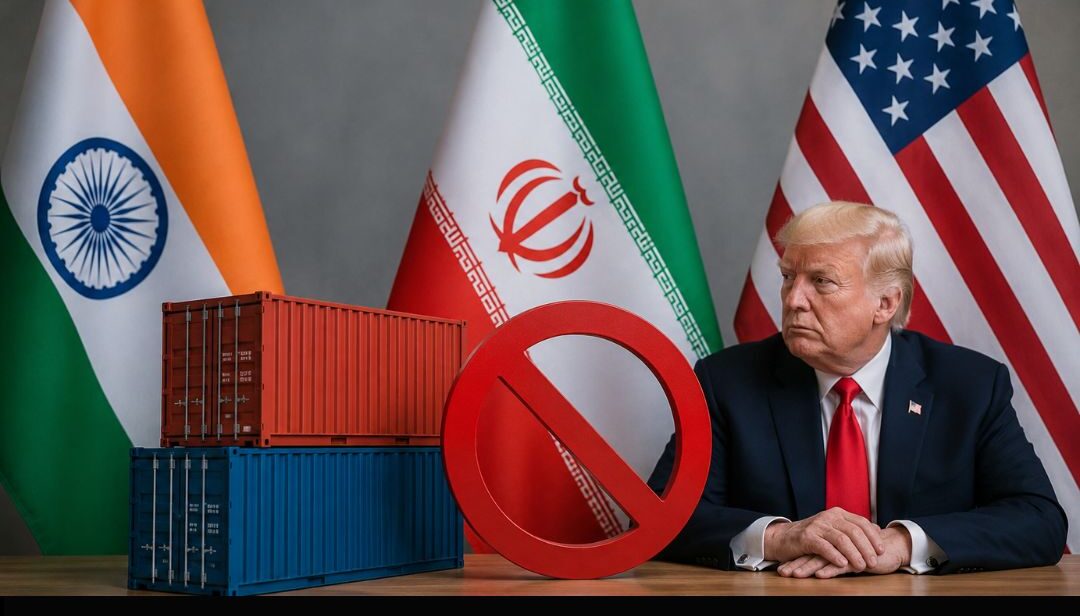
New Delhi and Washington have spent the better part of eighteen months cultivating the diplomatic optics of a transformative trade partnership joint press conferences, ministerial handshakes, carefully worded joint statements about “unprecedented bilateral momentum.” Behind that carefully staged optimism, sources familiar with the negotiations tell a different story: the India-US Trade Deal is effectively frozen, blocked at the technical level by a Section 301 investigation that neither government wants to discuss publicly but neither can move past privately.
The timing could hardly be worse. With the Strait of Hormuz crisis driving a Global Energy Crisis that is hitting India with particular severity, with Iran-US War Latest developments reshaping the entire geopolitical environment in which the deal would operate, and with silver prices and commodity markets in turmoil, the two largest democracies in the world are discovering that shared values and strategic alignment do not automatically translate into resolved tariff schedules and market access agreements.
What Section 301 Actually Is and Why It Matters
The Section 301 investigation at the center of the trade deal blockage is not a new development it has been quietly operative since late 2024, when the Office of the United States Trade Representative initiated a formal review of Indian trade practices under Section 301 of the Trade Act of 1974. The provision empowers the USTR to investigate and respond to foreign government actions, policies, or practices that are “unreasonable or discriminatory” and burden or restrict US commerce.
The current investigation targets three specific Indian practices that American industry groups have lobbied against aggressively: India’s data localization requirements affecting US technology companies, price controls on medical devices that cap returns for American healthcare manufacturers, and tariff structures on agricultural products — specifically almonds, apples, and dairy that American farm state senators have described as systematically discriminatory against US exporters.
None of these issues are new. All three have featured in US-India trade friction for years. What has changed is the current administration’s decision to formalize them under Section 301 a designation that carries the implicit threat of retaliatory tariffs and that India’s trade ministry regards as a negotiating ultimatum rather than a legal proceeding.
New Delhi’s position is equally firm. Indian officials, speaking on background to multiple financial publications, describe the Section 301 framing as “a gun placed on the negotiating table” that makes meaningful compromise politically impossible for any Indian government facing domestic constituencies protective of data sovereignty, healthcare affordability, and agricultural market access.
“Section 301 is the nuclear option of American trade law. Using it against a strategic partner in the middle of the most consequential geopolitical realignment since the Cold War is either very sophisticated coercive diplomacy or a significant strategic miscalculation — and right now it is not clear which,” said Alyssa Ayres, senior fellow for India at the Council on Foreign Relations. Council on Foreign Relations India Analysis →*
The Strait of Hormuz Factor Nobody Is Discussing
The India-US Trade Deal blockage cannot be understood in isolation from the Strait of Hormuz crisis because India’s entire negotiating posture has been materially altered by the energy shock the Hormuz disruption has delivered.
India imports approximately 85% of its crude oil, with a significant portion historically transiting the strait. The Iran-US War Latest escalation has forced Indian refiners onto spot markets at crisis premiums, driven fuel subsidy costs to levels that are straining the Union budget, and created inflationary pressure that the Reserve Bank of India is struggling to contain without triggering a growth slowdown.
In that environment, New Delhi’s leverage calculus has shifted in ways Washington has not fully absorbed. India is simultaneously more dependent on US LNG and crude alternatives which increases American leverage — and more politically constrained domestically by economic pain that makes any trade deal concession appear as capitulation to a partner whose military adventures are partly responsible for India’s energy crisis.
Prime Minister Modi’s government faces a parliament in which opposition parties are already framing the energy crisis as a consequence of excessive alignment with American foreign policy. Signing a trade deal that involves visible concessions to Washington’s Section 301 demands in this political environment, at this economic moment — carries domestic political costs that no amount of strategic partnership rhetoric can offset.
Silver Prices, Commodity Volatility, and the Trade Deal’s Economic Context
The commodity market turbulence cascading from the Strait of Hormuz disruption is adding a further layer of complexity to India-US Trade Deal negotiations by making the economic modeling that underpins any trade agreement essentially unreliable.
Trade deals are built on economic projections — estimated gains from market access, tariff revenue impacts, sectoral growth forecasts — that require stable baseline assumptions about commodity prices, energy costs, and currency values. With silver prices crashing on Fed rate hike fears, crude oil volatile between $88 and $98, the Indian rupee under depreciation pressure, and US inflation resurgent, every economic model underpinning the deal’s projected benefits has been rendered temporarily unreliable.
American negotiators are working from GDP and trade flow projections built on pre-crisis baseline assumptions. Indian negotiators are working from a fiscal reality shaped by energy import bills running 40% above those projections. The two sides are, in a meaningful sense, negotiating in different economic universes — a gap that no amount of goodwill can bridge until the underlying commodity volatility stabilizes.
“Trade negotiations require both parties to be able to model the future with reasonable confidence. The Hormuz crisis has destroyed that confidence simultaneously for both sides. Nobody can credibly tell you what the deal is worth right now because nobody knows what the economy will look like when it takes effect,” said Arvind Subramanian, former chief economic advisor to the Government of India and senior fellow at the Peterson Institute. Peterson Institute International Economics →*
What Both Sides Actually Want and Why They Cannot Say It
Strip away the diplomatic language and the Section 301 procedural machinery, and the core of the India-US Trade Deal stalemate is straightforward. Washington wants three things: meaningful technology market access for American digital companies, reduced agricultural tariffs that can be sold to farm state senators, and a framework that reduces India’s residual economic relationship with Iran including the discounted Iranian crude purchases that New Delhi has continued despite American sanctions pressure.
New Delhi wants three things in return: H-1B visa expansion and protection for Indian technology workers, removal of steel and aluminum tariffs imposed under Section 232, and a formal American acknowledgment that India’s Iran energy relationship is a sovereign economic necessity rather than a sanctions violation requiring punishment.
Neither side can publicly state these actual priorities without triggering domestic political backlash. The Section 301 investigation provides procedural cover for a negotiation that is really about something else entirely and resolving it requires a political agreement that no trade ministry technical team is authorized to make.
That political agreement requires presidential and prime ministerial engagement at a moment when both leaders are consumed by the Iran-US War crisis, North Korean nuclear escalation, and domestic economic pressures that leave limited bandwidth for the patient, unglamorous work of trade deal construction.
When Does the Blockage End?
Sources on both sides identify the same prerequisite for meaningful forward movement: a verified stabilization of the Strait of Hormuz situation that allows energy prices to normalize and economic projections to become reliable again. Until that baseline is restored, neither government has the fiscal predictability or the political bandwidth to make the concessions a genuine trade deal requires.
The Section 301 investigation has no statutory deadline. It can run indefinitely, providing bureaucratic cover for political delay without forcing the confrontation that a formal breakdown of negotiations would require. In Washington and New Delhi, that procedural ambiguity is currently the most politically convenient outcome available.
The India-US Trade Deal is not dead. It is in suspended animation waiting for a world that is currently too unstable to sign anything meaningful, and a diplomatic calendar that is currently too crowded to prioritize something that both sides privately want but neither can publicly deliver.

Oil & Energy Markets
A look at crude price swings, OPEC supply moves, and how energy markets react to geopolitical shocks.

Geopolitics & Conflict
Breaking down how wars, ceasefires, and diplomatic deals ripple through global trade and security.
US Foreign Policy
Coverage of Trump administration negotiations, sanctions, and strategic decisions shaping world events.
Economy & Inflation
Tracking how commodity prices, gas costs, and supply chains affect everyday consumers.