Share This Article
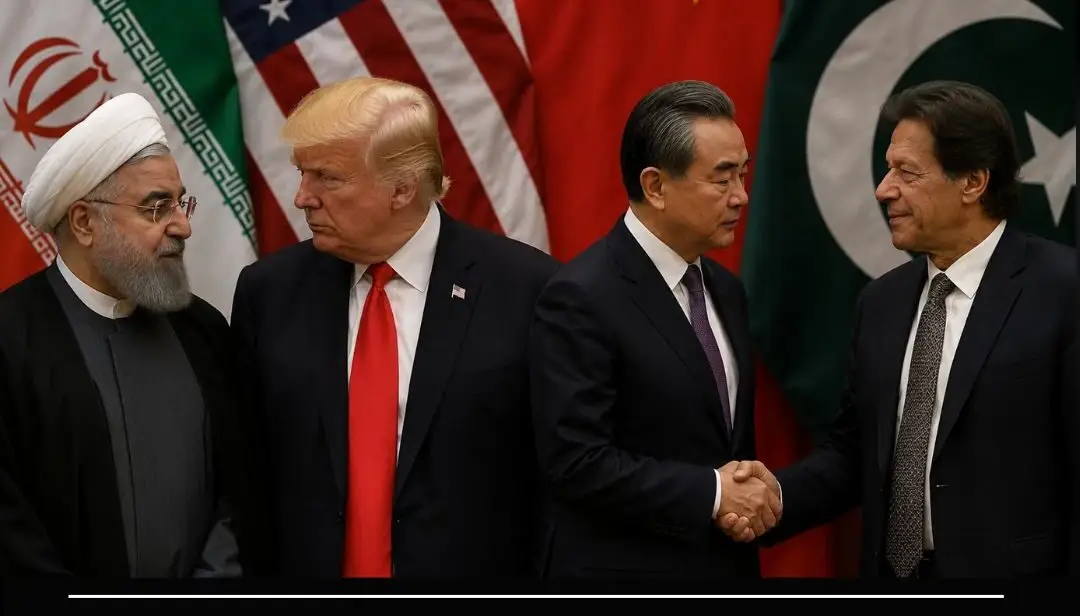
When Chinese Foreign Minister Wang Yi publicly declared this week that Beijing “supports the active mediation by Pakistan and other countries” in the US-Iran war, the statement was framed as a diplomatic endorsement of a peace process. It was also something considerably more calculated: a carefully positioned move in a geopolitical game that stretches from the Strait of Hormuz to Taiwan, from Beijing’s energy supply lines to the future architecture of US-China relations.
Wang’s remarks came after a meeting in Beijing with Pakistani Field Marshal Asim Munir the same military leader who has been shuttling between capitals as Islamabad’s lead mediator in US-Iran talks. Wang told reporters that China had been maintaining “continuous communication with the key players” the US, Iran, and Pakistan and called on Islamabad to “step up mediation efforts” and contribute to “properly addressing issues related to opening the Strait of Hormuz.”
The public endorsement was notable. The strategic reasoning behind it is even more so.
Pakistan’s Mediation Role and China’s Fingerprints
Pakistan did not become the primary interlocutor in the world’s most consequential active conflict by accident. Secretary of State Marco Rubio has repeatedly credited Islamabad as doing an “admirable job” a remarkable tribute from Washington to a country that sits squarely within China’s most important regional partnership. The China-Pakistan Economic Corridor (CPEC), Beijing’s flagship Belt and Road project, makes Pakistan one of China’s most strategically embedded partners. When Islamabad mediates between Washington and Tehran, Beijing’s influence travels with it invisibly, but unmistakably.
China.org.cn confirmed that Wang Yi specifically called on Pakistan to “intensify” its mediation efforts in May a directive, not merely a compliment. The Express Tribune reported that Wang also stressed the importance of a “durable ceasefire” and ensuring “normal passage through the Strait of Hormuz” two outcomes China needs far more urgently than its measured public statements suggest.
Pakistan Today confirmed that China has consistently reiterated Pakistan’s mediatory role across multiple diplomatic engagements since the war began in February building a pattern that positions Beijing as the silent architect of a peace process nominally led by Islamabad.
Wang Yi and Araghchi: The Beijing Back-Channel
Before endorsing Pakistan’s role publicly, Wang Yi had already been working the Iran angle directly. On May 6, Wang held talks with Iranian Foreign Minister Abbas Araghchi in Beijing a meeting that Al Jazeera described as potentially shaping “the direction of the US-Iran war.” During the talks, Wang pushed Iran toward diplomatic resolution, urged Tehran to refrain from resuming hostilities, and called specifically for the Strait of Hormuz to reopen “as soon as possible.”
CNBC confirmed that Wang’s pressure on Araghchi was timed deliberately ahead of the Trump-Xi summit in Beijing a signal to Washington that China was exercising influence over Tehran and could be a constructive partner in ending the conflict. CNN’s analysis asked the direct question: “Could China push Iran into a peace deal? Only if it gets something in return.”
That “something” is the subtext beneath every Wang Yi statement and every Chinese diplomatic gesture in this conflict.
What China Actually Wants: Three Interlocking Goals
Beijing’s support for Pakistan’s mediation role is genuine but it is not selfless. Three overlapping strategic interests drive every Chinese move in this conflict.
First: Energy Security: Approximately 40% of China’s crude oil imports and 30% of its LNG transit the Strait of Hormuz. Since Iran closed the waterway on March 4, China has absorbed elevated energy costs, supply chain disruptions, and a 25% year-on-year decline in Gulf oil imports.GIS Reports noted that China’s “careful hedging” in the Iran war reflects a government that needs the Strait open for purely economic reasons — every day it remains closed is a direct cost to Chinese GDP. Beijing wants tankers moving. Period.
Second: Taiwan Leverage: This is the most strategically significant element of China’s Iran mediation support and the least publicly discussed. GIS Reports and RFE/RL both confirmed that during the April negotiations in Pakistan, China exerted direct pressure on Iran to participate in talks despite Tehran’s initial reluctance — and Trump expressed personal gratitude to Beijing for doing so. In return, Chinese analysts and officials have been explicit: Beijing hopes that its cooperative role on Iran will “lay the groundwork to strike a deal with the US on the Taiwan issue” at minimum, delaying or canceling US arms sales to Taipei. Helping end the Iran war peace deal is, for Beijing, a down payment on a Taiwan concession it intends to collect.
Third: Global Standing: China has spent years positioning itself as a responsible alternative to American-led diplomacy its 2023 Saudi-Iran normalization deal was the most visible expression of that ambition. Supporting Pakistan’s mediation in the Iran war is another iteration of the same narrative: Beijing as a stabilizing force, contrasted against Washington’s military adventurism. The Washington Times confirmed that China pushed for a “comprehensive ceasefire” positioning itself as the advocate of total de-escalation while the US conducted airstrikes and maintained a naval blockade.
The Limits Washington Sees and Republicans Call Out
Not everyone in Washington is persuaded by China’s cooperative framing. US Senator Lindsey Graham stated bluntly that Pakistan as a “mediator” between the US and Iran is “more than problematic” an indirect acknowledgment of the China-Pakistan strategic alignment that sits beneath Islamabad’s visible diplomatic role.
Al Jazeera’s earlier analysis confirmed the structural tension: US officials want China to use its leverage over Iran more aggressively, but Beijing will only do so in exchange for US concessions almost certainly on Taiwan that significant parts of the Washington establishment are unwilling to grant.
Wang Yi’s endorsement of Pakistan’s mediation this week is, at its core, China’s way of saying it is indispensable to this peace process without paying the full diplomatic cost of leading it directly. It is influence by proxy, wrapped in the language of multilateralism.
The Strait of Hormuz, the Iran deal, and Taiwan’s security are now linked by China’s strategy, whether Washington chooses to acknowledge it or not.

Oil & Energy Markets
A look at crude price swings, OPEC supply moves, and how energy markets react to geopolitical shocks.

Geopolitics & Conflict
Breaking down how wars, ceasefires, and diplomatic deals ripple through global trade and security.
US Foreign Policy
Coverage of Trump administration negotiations, sanctions, and strategic decisions shaping world events.
Economy & Inflation
Tracking how commodity prices, gas costs, and supply chains affect everyday consumers.