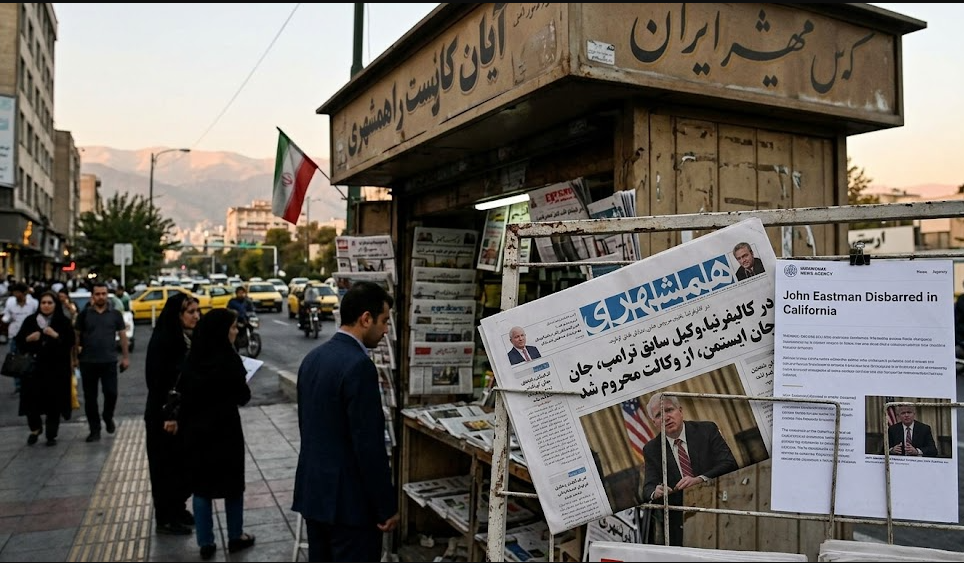
Trump pardoned him. California disbarred him anyway. John Eastman — the architect of the legal strategy to overturn the 2020 election — has been stripped of his law license in a landmark ruling that exposed the limits of presidential pardon power and sent a direct message to every lawyer who puts loyalty above the law.
Trump pardoned him. California disbarred him anyway. John Eastman — the architect of the legal strategy to overturn the 2020 election — has been stripped of his law license in a landmark ruling that exposed the limits of presidential pardon power and sent a direct message to every lawyer who puts loyalty above the law.
SACRAMENTO / WASHINGTON — A presidential pardon reaches the federal courthouse. It does not reach the California State Bar.
John Eastman — the former Chapman University law professor, former clerk to Supreme Court Justice Clarence Thomas, and principal architect of the legal memos that gave the January 6, 2021 Capitol attack its intellectual framework — has been formally disbarred by the California Supreme Court, ending a years-long disciplinary proceeding that outlasted two federal indictments, one presidential pardon, and every political intervention his allies could mount.
The ruling is one of the most consequential attorney discipline decisions in American legal history. And it arrives with a message that reverberates far beyond one man’s license to practice law: the power of the presidency does not extend to the ethics rules of a state bar.
Who John Eastman Is — and What He Did
To understand why this disbarment matters, you have to understand what Eastman actually wrote.
In the days before January 6, 2021, Eastman produced what became known as the “Eastman Memos” — a two-part legal memorandum arguing that Vice President Mike Pence had the constitutional authority to either reject electoral votes from states where Trump alleged fraud, or unilaterally delay certification of the 2020 presidential election results. Legal scholars across the ideological spectrum — including conservative constitutional lawyers — described the memos as ranging from “deeply flawed” to “an attempted constitutional coup dressed in footnotes.”
Eastman presented the six-step plan to Trump directly. He spoke at the Ellipse rally on January 6, calling for Pence to “have the courage” to act. He continued pressing the scheme on Pence’s counsel even as rioters breached the Capitol building.
The California State Bar opened disciplinary proceedings in 2022. The trial — conducted before a hearing referee — ran through 2023. In March 2024, the referee recommended disbarment, finding Eastman had violated multiple Rules of Professional Conduct including making false statements of law, attempting to deceive a tribunal, and conduct involving moral turpitude.
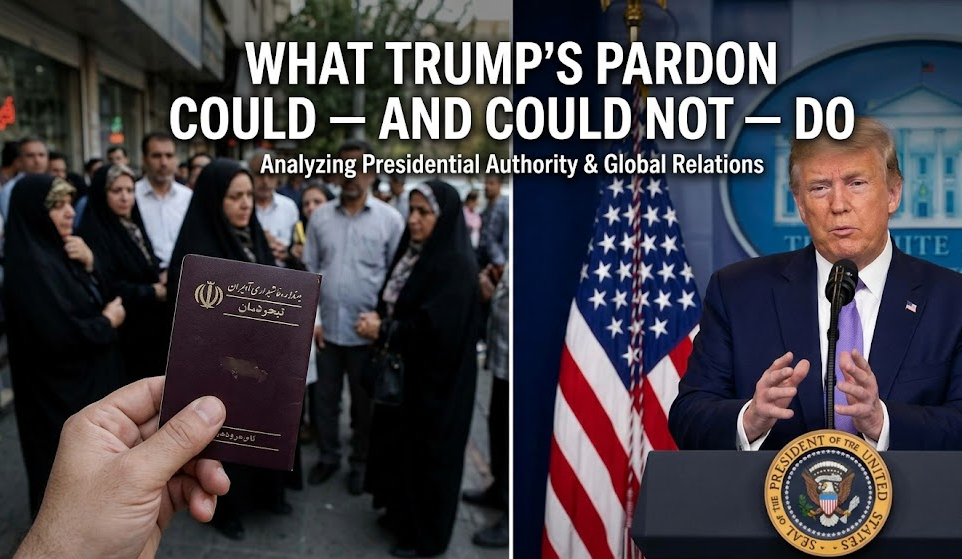
What Trump’s Pardon Could — and Could Not — Do
When Trump returned to the White House in January 2025, Eastman was among the first beneficiaries of a sweeping pardon that covered his federal criminal exposure — including his indictment under the federal election interference case brought by Special Counsel Jack Smith, which was subsequently dismissed, and his inclusion in the Fulton County, Georgia RICO indictment, which was separately complicated by the change in federal posture.
The pardon cleared Eastman’s federal criminal slate.
It did not — and legally cannot — touch the California disbarment proceedings.
Presidential pardon power is constitutionally limited to federal offenses. State bar disciplinary proceedings are neither criminal nor federal. They are professional licensing determinations conducted under state law by independent judicial bodies. The California Supreme Court’s disbarment ruling is based on findings of professional misconduct — not federal criminal conviction. A pardon of the conviction does not undo the underlying conduct the bar found disqualifying.
Eastman’s legal team argued strenuously that the pardon demonstrated the federal government’s own assessment that Eastman’s conduct was lawful and protected. The California Supreme Court rejected that argument directly, noting that a pardon “reflects executive clemency, not a finding of innocence, and has no bearing on the independent professional standards this Court is charged with enforcing.”
The Broader Legal Reckoning
Eastman is not alone in facing bar consequences for his role in the post-2020 election legal campaign. Rudy Giuliani was disbarred in New York and suspended in Washington D.C. Sidney Powell received a disciplinary suspension in Texas. Jeff Clark, the former Justice Department official who drafted letters pressuring Georgia officials to overturn election results, faced his own bar proceedings.
Together, these cases represent a systematic professional accountability process that has proceeded — sometimes slowly, sometimes against significant political headwinds — independently of the criminal justice outcomes that Trump’s return to power reversed or complicated.
Legal ethics scholar Deborah Rhode of Stanford Law School, writing before her death, described the pattern as “the bar’s essential function: ensuring that officers of the court cannot weaponize their legal credentials against the constitutional order and then escape consequence through political protection.”
The California Supreme Court’s Eastman ruling is the most prominent expression of that function yet rendered.
Eastman’s Response and What Comes Next
Eastman’s legal team immediately indicated plans to seek reconsideration, arguing the disbarment is “politically motivated” and that his memos represented legitimate legal advocacy protected by the First Amendment. The argument that legal advice — however extreme — constitutes protected speech has been a consistent thread of his defense throughout the proceedings.
The California Supreme Court addressed this directly in its ruling: “The First Amendment does not protect an attorney who knowingly advances legal arguments he knows to be false before a tribunal, or who uses the color of legal authority to facilitate conduct he knows to be unlawful.”
Trump has not publicly commented on the disbarment. The White House did not issue a statement. Several conservative legal commentators called the ruling “judicial persecution.” The Claremont Institute — whose Center for Constitutional Jurisprudence Eastman founded — called it “an attack on conservative legal thought.”
The California Bar has called it a matter of professional standards. The ruling stands.
What This Means
The Eastman disbarment does something the federal pardon could not: it makes permanent the professional consequences of January 6’s legal architecture. Eastman can be pardoned from prison. He cannot be pardoned back into the California Bar.
In a presidency defined by the erasure of January 6 accountability — pardons, dropped prosecutions, dismissed indictments — the California State Bar’s ruling is a reminder that some institutions operate beyond the reach of executive power.
John Eastman wrote the memos. He kept his freedom. He lost his license.
Market Analysis
A quick snapshot of market trends, customer behavior, and competitor movements.