Viktor Orbán’s stunning election defeat hands Trump and Putin a geopolitical loss — and hands the EU a historic opening. But Peter Magyar’s Hungary will be more complicated than Brussels is celebrating. It was, in retrospect, a remarkable alignment of interests. The President of the United States and the President of Russia rarely back the
Viktor Orbán’s stunning election defeat hands Trump and Putin a geopolitical loss — and hands the EU a historic opening. But Peter Magyar’s Hungary will be more complicated than Brussels is celebrating.
It was, in retrospect, a remarkable alignment of interests. The President of the United States and the President of Russia rarely back the same candidate in a foreign election. In Hungary’s April 12 vote, they did — and they both lost.
Viktor Orbán, the man who spent 16 years turning Hungary into a template for nationalist “illiberal democracy,” conceded defeat Sunday night after a landslide that left his Fidesz party with just 55 seats in the 199-seat parliament. Péter Magyar’s Tisza Party won 138 seats on 53.6 percent of the vote — not just a majority, but a two-thirds supermajority, the constitutional amendment threshold. Voter turnout hit a record-breaking 80 percent. The message was not subtle.
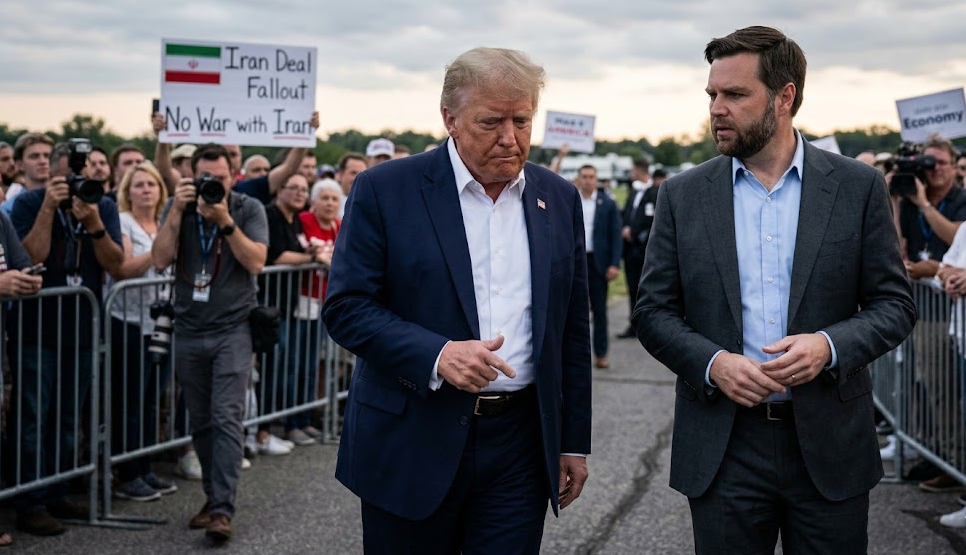
The White House’s investment in Orbán was not passive. Vice President JD Vance appeared alongside the Hungarian Prime Minister during the campaign. President Trump called in to a Fidesz rally — an extraordinary intervention by a sitting American president in a foreign election. In March, Trump had described Orbán as one of Europe’s most important leaders and a model for nationalist governance.
The return on that investment: a crushing, historic defeat that ended the Orbán era and handed his opponent a mandate large enough to rewrite the Hungarian constitution.
For Moscow, the loss is equally significant. Orbán was the Kremlin’s most reliable wrecker inside the European Union — the leader who single-handedly blocked the EU’s €90 billion loan package to Ukraine, frustrated sanctions coordination, and maintained energy ties with Russia long after every other EU member had made visible moves to exit. “Moscow’s biggest advocate at the EU leaders’ table is now gone,” said Harry Nedelcu, senior director for geopolitics at Rasmussen Global.
Who Is Péter Magyar?
Magyar, a former Fidesz insider and member of the European Parliament, built his campaign on a deceptively simple foundation: corruption and cronyism. He did not run as an ideological liberal or a pro-Ukraine crusader. He ran as someone who had seen Fidesz from the inside and was prepared to name what it had become — a patronage network masquerading as a political party.
His Tisza Party is centre-right by European standards, broadly pro-EU, and committed to restoring judicial independence and democratic institutions that Orbán systematically hollowed out over 16 years. In his first press conference as prime minister-elect, Magyar laid out an ambitious reform agenda: “Our two-thirds mandate allows us to do a lot.”
EU leaders reacted with undisguised relief. Polish, French, and German leaders offered rapid congratulations. European Commission President Ursula von der Leyen called the result a victory for European values. In Brussels, there was celebration — and a to-do list.
What the Defeat Unlocks — and What It Doesn’t
The immediate geopolitical dividend from Orbán’s fall is substantial. The EU has held approximately €18 billion in funds earmarked for Budapest in suspension over democratic backsliding, corruption concerns, and LGBTQ policy. A Magyar government committed to rule-of-law reforms could begin unlocking that money — but there is a hard deadline: Magyar has until the end of August to push through sufficient reforms or Hungary permanently loses €10 billion in COVID recovery funds. The clock is already running.
In Ukraine, the picture is more complicated. The €90 billion EU loan that Orbán blocked for months may now clear its primary obstacle. But France24, the Kyiv Independent, and multiple EU diplomats are tempering expectations. “We shouldn’t expect Hungary to become super pro-Ukraine membership all of a sudden,” said a senior EU diplomat. Magyar’s Tisza party did not campaign on a pro-Ukraine platform. The Hungarian public remains skeptical. And other EU members who quietly hid behind Orbán’s opposition to Ukrainian membership may now have to step into the open and explain their own positions — a dynamic that could complicate the path to Kyiv’s accession regardless of what Budapest does.
Slovakia’s Prime Minister Robert Fico — the EU’s other most Moscow-aligned leader — remains in office and may now find himself more exposed as the bloc’s primary internal dissenter on Russia policy.
The Deeper Question: Will Orbánism Survive?
Chatham House posed the question Europe’s political analysts are now wrestling with: “Orbán has been defeated — but will Orbánism survive?”
The answer is not straightforwardly no. Orbán’s Fidesz still commands 37.8 percent of the Hungarian vote. The institutional infrastructure of 16 years of one-party rule — the aligned judiciary, the captured media landscape, the constitution rewritten to entrench Fidesz advantages — does not dissolve on election night. Magyar will need the full force of his supermajority, and considerable political will, to dismantle what Orbán built.
He has the mandate. Whether he has the time, the coalition cohesion, and the institutional capacity to use it is the question that will define Hungary’s next four years — and determine whether this election was the end of Orbánism, or merely a pause.
For Trump and Putin, the question is simpler and already answered. Their poster boy is gone. The model they promoted — that illiberal nationalism could survive and thrive inside the European democratic framework — just lost by 16 points in the country where it was invented.
Market Analysis
A quick snapshot of market trends, customer behavior, and competitor movements.