With the ceasefire expiring April 21, Trump told the New York Post talks could restart “over the next two days” — even as his blockade leaks, sticking points remain, and the Mossad warns the mission isn’t over. The signal came not from a formal White House statement or a CENTCOM briefing. It came from a
With the ceasefire expiring April 21, Trump told the New York Post talks could restart “over the next two days” — even as his blockade leaks, sticking points remain, and the Mossad warns the mission isn’t over.
The signal came not from a formal White House statement or a CENTCOM briefing. It came from a phone call.
President Trump spoke to the New York Post on Monday afternoon and initially suggested that a second round of US-Iran negotiations would be “a little bit slow” and would likely take place in Europe. Then, roughly 30 minutes later, he called back. The update was pointed out: talks “could be happening over the next two days” — back in Islamabad.
That callback, that revision, that second call — each detail reflects the pace at which the diplomacy surrounding the Iran crisis is now moving. One conversation, two different answers, half an hour apart. That is the window within which the fate of the ceasefire is currently being decided.
What Trump Actually Said
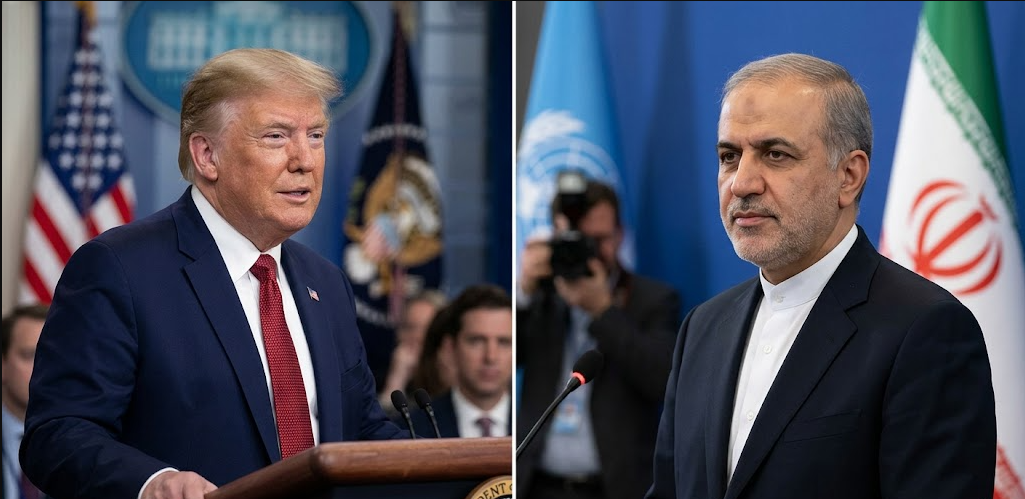
Trump’s comments to the Post were the most concrete signal yet that the United States is actively pursuing a second round of face-to-face negotiations, less than 48 hours after Vice President JD Vance boarded Air Force Two in Islamabad without a deal. On Tuesday, Trump went further, telling reporters the war was “close to over” — a characteristically optimistic framing that nonetheless carried diplomatic weight given how precisely the administration has been managing public expectations throughout the conflict.
The White House offered an official qualifier: “Future talks are under discussion but nothing has been scheduled at this time.” Islamabad and Geneva are both under consideration as host cities. The composition of the delegations had not been finalized. But the direction of travel was unmistakable.
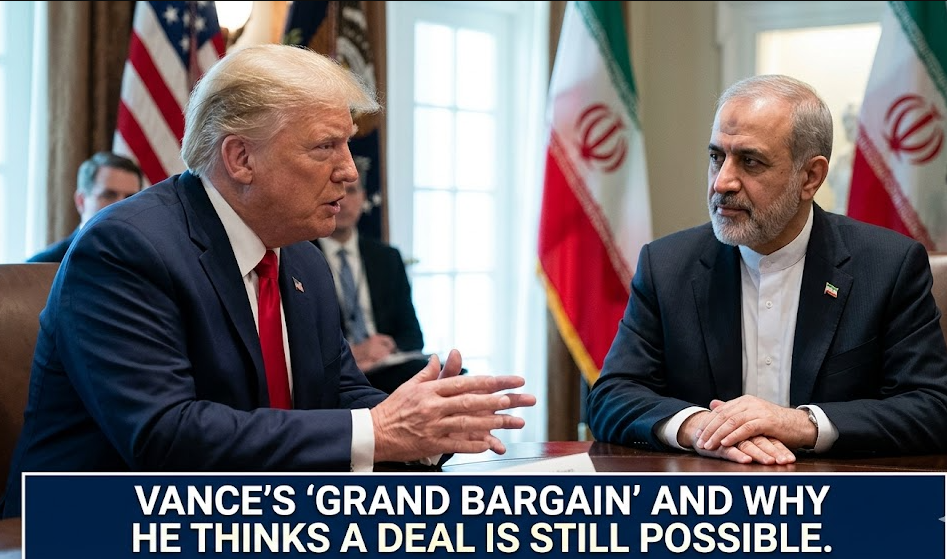
Vance’s “Grand Bargain” and Why He Thinks a Deal Is Still Possible
Vice President Vance, expected to lead any second round of talks, publicly reframed the Islamabad outcome in terms that were notably more optimistic than his terse departure press conference suggested. He told reporters he believed the Iranian negotiators “wanted to make a deal” — a judgment that, if accurate, matters enormously for the second round’s viability.
Vance described the broader vision as a “grand bargain”: a framework in which Iran permanently forfeits a nuclear weapon, ceases state sponsorship of terrorism, and in return is allowed to reintegrate into the global economy. “The people of Iran can thrive and prosper,” he said, framing the deal not as a punishment but as an economic opening — a pitch designed as much for the Iranian public as for its negotiators.
The Washington Post’s inside account of the Islamabad talks characterized the sessions as “friendly” despite their failure to produce a deal — a detail that suggests the personal chemistry between delegations may be more functional than the collapsed outcome implied.
The Core Gap: 20 Years vs. 3 to 5
What broke Islamabad — and what any second round must bridge — is now quantified. According to TIME’s reporting from US officials briefed on the talks, the United States asked Iran to suspend uranium enrichment for 20 years. Iran countered with 3 to 5 years. The gap between those two numbers is not simply arithmetic. It is a gap between two fundamentally different theories of what the deal is for.
A 20-year suspension, from Washington’s perspective, is a generational constraint — long enough that the geopolitical landscape will have shifted before enrichment resumes. A 3-to-5 year suspension, from Tehran’s perspective, is a temporary concession that preserves the strategic option and buys economic relief without structural surrender.
Iran also formally rejected the U.S. nuclear proposal on Tuesday, with Foreign Minister Araghchi reiterating via social media that the American team’s approach involved “maximalism and shifting goalposts.” The rejection was expected. The question is whether it is a negotiating position or a final answer.
The Blockade Is Leaking
One factor quietly undermining Washington’s leverage: the naval blockade announced with such force on Monday appears, at least initially, to be porous. BBC Verify reported that on the first full day of the blockade’s operation, at least four ships connected to Iran crossed the Strait of Hormuz. A US-sanctioned Chinese tanker transited through without interdiction. Fortune headlined it plainly: “Trump’s leaky blockade: ship sneaks through and talks with Iran resume.”
China called the blockade “dangerous” and signaled it would not instruct its tanker operators to comply with what Beijing considers an illegal interdiction of international shipping lanes. If China — Iran’s largest oil customer — continues routing sanctioned tankers through Hormuz regardless, the blockade’s economic pressure on Tehran diminishes significantly, which in turn reduces the urgency driving Iran back to the table.
The Shadow Over Any Deal
One voice not celebrating any diplomatic opening: Israel. Mossad chief David Barnea told an intelligence conference Tuesday that “our mission isn’t over until the regime falls.” The statement was not coordinated with Washington. It was a reminder that Israel’s red line — not a constrained Iran, but a transformed one — sits well beyond any deal the Trump administration is currently constructing.
The tension between a Trump deal that leaves Iran’s government intact in exchange for nuclear concessions, and an Israeli posture that views regime change as the only acceptable outcome, is the fault line that no amount of Islamabad or Geneva diplomacy has yet resolved.
Six Days Left
The arithmetic is stark. The ceasefire expires April 21. Today is April 15. A second round of talks, if it happens in the next two days as Trump suggested, would need to compress into roughly 48 hours what 21 hours in Islamabad could not achieve — while closing a 15-year gap on enrichment timelines, resolving the Hormuz toll dispute, and navigating Israeli objections.
It is possible. The call-back to the New York Post suggests the White House believes it is. Whether Iran reads the same window the same way will determine whether the next 48 hours produce a deal — or a second failure with no ceasefire left to absorb it.
Market Analysis
A quick snapshot of market trends, customer behavior, and competitor movements.